| The Digital Library of Liberty & Power incorporating the Guillaumin Collection of the Great Books of Liberty |
Home | New | Authors | Works | Papers | Blog | About | Email | Search |
 |
|
CHARLES COMTE,
[CR] "On the French Monarchy since the return of the House of Bourbon on 1 April 1815 (Monlosier)
(Sept. 1815)
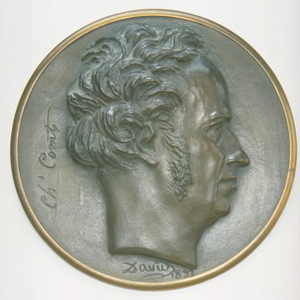 Charles Comte (1782-1837) |
 |
|
[Created: 8 May, 2026]
[Updated: 26 May, 2026] |
Source
, [CR] "On the French Monarchy since the return of the House of Bourbon on 1 April 1815 (Montlosier)," Le Censeur T.7 (Sept. 1815), pp. 184-214.http://davidmhart.com/liberty/FrenchClassicalLiberals/Comte/CenseurAnthology/C1-17-en.html
Charles Comte, [CR] "On the French Monarchy since the return of the House of Bourbon on 1 April 1815 (Montlosier)," Le Censeur T.7 (Sept. 1815), pp. 184-214.
This is a translation of [G.F. = CC], [CR] “De la monarchie française depuis le retour de la maison de Bourbon jusqu'au 1er avril 1815,” Le Censeur T.7 (6 septembre, 1815), pp. 184-214.
It is also available in French in a facsimile PDF of the original and in HTML.
This essay is part of a collection: Charles Comte and Charles Dunoyer, Censoring the State: An Anthology of Articles by Charles Comte and Charles Dunoyer from Le Censeur (1814-1815) and Le Censeur européen (1817-1819). Edited and translated by David M. Hart (Pittwater Free Press, 2026).
The anthology is available in the following formats:
- all 35 essays in one file in French [HTML] and in English [HTML]
- the 17 essays from Part 1 Le Censeur (1814-1815) in French [HTML] and in English [HTML]
- the 18 essays from Part 1 Le Censeur européen (1817-1819) in French [HTML] and in English [HTML]
- all the essays listed in a sortable table with links to the individual French and English language versions.
Charles Comte, "On the French Monarchy since the return of the House of Bourbon on 1 April 1815" (Sept. 1815)
Review of Montlosier, On the French Monarchy since the return of the House of Bourbon on 1 April 1815
[184]
ON THE FRENCH MONARCHY SINCE THE RETURN OF THE HOUSE OF BOURBON. Up to the 1st of April 1815.
Considerations on the state of France at this time; examination of the Constitutional Charter, of its defects, and of the principles on which the social order must be rebuilt; by M. de Montlosier. With this epigraph:
Multa dies variusque labor mutabilis œvi
Retulit in melius, multos alterna revisens,
Lusit … fortuna …
"Many a day, and the varied toil of a changing age,
Has brought back things for the better, revisiting many in turn,
Fortune has played …"
Books also have their destiny; this one is indeed the proof; the first parts, written for Napoleon's government, were published under Louis XVIII; the last, which we announce today, written for the Bourbon government, [185] has in its turn been recently published under the reign of Napoleon.
This volume would undoubtedly have produced quite a strong sensation among the public, if the Bourbons had continued to reign; it might perhaps have caused some serious reflection among the unreformable minds who ruled them, because it is the only work in which the faults of that court are expressed with as much frankness as clarity, without being sharpened with that tone of bitterness and hostility which is natural to the other defenders of a humiliated nation, and so well justified up to the last moment by an insolent and hypocritical ministry. M. the Count of Montlosier, bound as much by his beliefs and his personal situation as by his love for the fatherland to the greatest glory of the royal government, presents himself less as an indignant accuser than as an ardent friend who is intent on forestalling the evils which he had foreseen.
"Certainly," he says, "after the revolution of last March, it was not I who could be astonished by a change of the political scenery. I had already predicted it. I admired the unbelievable security of [186] those princes who believed that they were peacefully established upon soil which, a result of its many mistakes, was sinking day by day and collapsing, etc."
Six weeks ago, the first part of this volume was much less interesting than the second. The first part contains an examination of the government of the Bourbons in 1814; the second, an discussion of the political beliefs of M. de Montlosier. At that time, we had begun the article destined for this publication with an analysis of the second part, believing that it ought to have been the first part, since the second is only a more or less direct application of the principles contained therein, and since it also provides the solution to that long-standing enigma which we had tried to unravel in giving an account, two months ago, of the three preceding volumes. Today, events having madea sudden reversal, take all of our attention back to the first part, which now appears to be more of a work of circumstances, and which leaves us little time to think about pure theory. If this is the case, then we [187] have no need to criticize an author, we scarcely need to do anything more than to listen in silence to the voice of a citizen who is full of good sense, of prudence, and I will even say of impartiality, despite all his patrician theories.
And also, you ill-fated counsellors of a monarch who was unfortunate for having followed your advice and for still following it now, should listen to these reflections of a true French gentleman concerning the national flag.
This passage and all those we shall cite are all the more striking, in that they were written before the event which has so cruelly justified them.
"The first, the greatest difficulty of the House of Bourbon, on returning to France, consisted, I have said, in the double danger of lowering itself by re-entering into the revolution, or of losing itself by remaining outside of it; there was only one way of escaping from this difficulty: first, to separate the revolution from that part which was contemptible; and having done that, to throw oneself wholly into that part which was honorable, glorious, [188] and brilliant; to enter into it completely; to take up from the very first moment its nuances, its different shades of colour.
"In this regard, words are never sufficient. Henri IV is still, on this point, a great example. A Protestant, he could never have done anything favorable for the Protestants without embittering the predominant Catholics and giving them grounds for mistrust and suspicion. Henri IV, a Catholic, was able to issue the Edict of Nantes; if Henri IV, as a Protestant, had attempted it, he would have brought back the League. …
"With a little skill, but above all with much frankness, anold regime king could therefore, if he wished to, govern absolutel revolutionary France. I fear that there is another thought to consider. One would wish to convert France and to change it. This course seems to me very dangerous. It seems to me moreover that in adopting it, one does not do what is needed to succeed. Everything seems arranged in this matter not to instill confidence, but incite fear.
"I cannot say whether the members of the provisional government who deliberated long and seriously on the propriety [189] of abandoning the tricolour flag and taking up the white cockade, felt full importance of this measure, whether they foresaw all its subsequent results. In any case, at least, it was desired that the king, with the understanding and the goodness which characterize him, might appreciate, in its future consequences, this act which was not the result of reflection, but done entirely out of courtesyand respect for him.
"When, following the scenes of the 14th of July, they [1] brought the tricolour flag to us at Versailles, we might have shuddered at the sight of this travesty of the ancient flag of the lilies; but, with time, when this flag had become the emblem of a great change whciuh had taken plkace in the State; when, measuring itself against the old white flag, as well as against all the flags of Europe, it had come forth in triumphant out of these struggles; when, borne into battles, it had been imbued with all the colors of glory; when it had floated with honor upon all the seas, in all the lands of Europe; when it had been saluted by the entire world, and respected by all [190] potentates; it must be said further, when it had come to signify the revolution itself, the upheavals it had caused, and the advantages that had issued from it in favor of the most numerous and most considerable part of the nation; a new government, which had announced itself as entering upon this wholly revolutionary soil, with the sole purpose of maintaining and repairing it, ought to have treated with greater importance a measure which a certain party would naturally be inclined to regard as a triumph. It ought to have foreseen that, as a result of this act, the part of the nation which was alarmed, would believe that it had lost the guaratee of its revolutionary gains, while the other part would imagine it now possessed a guarateee of its complete restoration; it ought to have foreseen that the part of France would see in the new flag a denial of the constitutional charter, and perhaps also support for a contrary charter of counter-revolution; it ought finally to have foreseen that all reparation would henceforth become difficult, in that it would inspire fear; the slightest return to anything of the old regime would become impracticable, in that [191] it would appear to be the beginning of an return to the entire old order.
"Struck by these considerations, I avow, with all my preference and respect for the white flag, that if I had been consulted on the propriety of its restoration, I would have regarded it as a fortunate thing for the service of His Majesty, if, I could have persuaded those closest to the king of the advantage of the course which I will now state.
"It would have been the following: in London, after having accepted the white cockade which had been sent to him with such enthusiasm, to accept it only to surrender it immediately after the entry into Paris. The king would then have gone to the Hôtel-de-Ville; and there, in the presence of the generals and the marshals, he would have laid aside his blue ribbon and his cross of Saint Louis, in order to pick up just the tricolour cockade and the grand cordon of the Legion of Honour. If after that, our youngest princes had agreed to accept the rank of colonel and joined the ranks of the army with that simple grade; and as such were willing to learn the [192] lessons and receive the counsel of our old generals, to learn about the details of their glory and of their feats under arms, some remnant of hope here and there might have emerged out of their sadness. And I also believe that the entire nation would have been very grateful for this act.
"When Henri IV, at the gates of Paris, came to French people to renounce the religion into which he was born, was it because he had been struck down suddenly like Saint Paul by the lightning bolt of the grace of God? It is probable that it was rather out of a sentiment of reason and of goodness. Politics could afterwards say: The kingdom of France is well worth a mass. Louis XVIII, by taking the colors of the revolution and sacrificing his own to it, would have led people to say somethign similar: The kingdom of France is well worth a ribbon.
"The truth is, that with the white cockade Louis XVIII can do almost nothing today without causing danger for his companions in misfortune and for his friends. With the tricolour cockade, he could have done anything that he would have wished."
[193]
"From that moment on, everything had its mirro image; the white cockade had the charter, the cross of Saint Louis had the cross of honour, the revolution had the old regime, the king had the fatherland. By taking up the tricolour cockade, the king would have had no fear that a party would raise up against him the opposing cockade. Today, God preserve us from new political movements, for it seems that one has deliberately wanted to have a standard for revolt."
Here indeed are the oracles of good sense. M. de Montlosier must lament, as we do, to have made so few mistakes. But my goodness, his lessons still remain; and they have become more important than ever!
Parte maliquam, venti, divam referatis ad aures!
Winds, carry some part of her divine words to my ears.
(Virgil's Eclogues (Eclogue 3.8))
This is a vain hope! Haven't we heard the extraordinary address to the army and the discontented people that compelling reasons have prevented the court from adopting the three colours? This recalls one of the most memorable examples of the most insane delusion and of the most [194] obstinate pride, when, surrounded by all the forces of Europe, Bonaparte, doubtless also by compelling reasons, refused to accept the peace that was offered him; while our unhappy France was crumbling on all sides around him.
As it is impossible for us now to consider this work otherwise than in its relation to the miseries of the fatherland, we warn the reader that we shall provide extracts rather than an analysis of this first part, and that we will change the order of the subjects covered according to the degree of their present importance. The question of the national flag leads us naturally to that of national sovereignty, represented by our tricolour cockade. It may be objected to us that Louis XVIII could not accept the sign without admitting the thing signified; that consequently it would have been necessary to sacrifice nineteen years of a reign memorable no doubt, plus the kingdom of Navarre, and the grace of God, which would have lost all its efficacy by being found coupled with the Constitution of the State. It would have been necessary to accept [195] a constitution, the best it is true of all those which have existed until now, but to accept it, instead of granting it! and to accept it from the hands of a Lanjuinais, of a Flauvgergues, of a Lafayette…! One cannot think of it: they are jacobins! It is very true that WE WANT ALL THAT WILL SAVE FRANCE, except however … everything that could save her. In a time of factions, do not speak to us of what could appease the factions; in these times when the divisions within the army and of the government can annihilate France, do not speak to us of that scrap of three colours which could remind us about our soldiers and our brothers. As for the rest, ask us to make any sacrifice; we will make, as stingily as possible, improvements to our charter…; the candidates of the arrondissement colleges, the presidents of the electoral colleges named by us, and the law of a thousand francs of direct taxes, reassure us about our own largesse… Colonel, ask me whatever you wish; but, for my life, that is not possible.
[196]
Frenchmen of all parties, of all opinions, of all classes, I ask you: have we any other sovereign than the safety of the fatherland? That which can secure the safety of the nation, is all that constitutes the sovereignty of the nation, and nothing else ought to be understood by this deadly word which has been so disastrous for us, as a result of the importance that has been put in turn on celebrating it or proscribing it. No - the people has no will, and never has had any. In revolutions, it has only passions and furies; in the ordinary state, it has only the will of its government, good or bad. No - likewise, a monarch is not the absolute sovereign of a nation; a monarch does not control the political rights of his subjects, any more than of their civil rights: cattle have fodder only insofar as the herdsman gives it to them; shall people have liberty only on the same condition? What then is the true origin of governments? It is by chance, the force of things; it is God who causes governments to be born in a manner more or less bizarre, [197] more or less irregular, and who sends despots upon the earth just as he sends brigands and highway robbers? Where then is the supreme law? In the safety of the fatherland; who is the judge? The reason, the conscience of good citizens and of good kings. Let us quickly turn to its applications.
A good prince, like that which we find in any state of Europe you please, reigning in an equal and peaceful manner, by succession, over subjects who all love him equally, with the aid of ancient moral beliefs, the respectable and constantly respected customs of his kingdom, sustained and surrounded by an old nobility which is powerful and esteemed throughout the land, may well, in the midst of the uninterrupted calm of the monarchy, give, grant, bestow, as he pleases, a charter or an ordinance of reformation, which introduces national representation into the system of government; he has no need to think about the sovereignty of the nation, or rather he obeys the will of the people, in that he consults his conscience and his reason about the [198] greatest public good, which is the supreme law, and the sovereign of kings. Nevertheless, he abstains from using all those equivocal and dangerous words, which, if they do not signify what we have just said, signify only horrors or follies, like the sovereigns of 95, or the registers of Napoleon. All the subjects of this good prince bless the paternal intentions and the generosity of their monarch, without any of them taking it into their head to cover themselves with ridicule by invoking national sovereignty.
But, on the contrary, we see a prince who, having been twice exiled from his country, re-enters it twice with the help of foreign armies and of a fanatical party, which is hateful and self-interested like all the parties which have existed in the world; a prince who, brought back into the bosom of his ruined fatherland, has no other means of saving its last remnants than by restoring union there by some meagre sacrifices demanded by honor and opinion, or if you will, by the fanaticism of the opposite party; when a brave and unfortunate army wishes to yield only with the honors of war; when, after a shameful revolution [199], a proud and sensitive people, falling back upon what may be honorable and exceptional [2] in this revolution, at least in its expressions, attaches all of its pride to upholding vain words, vain formulas, in order not to blush so much, and to rest upon the honors of that same revolution; what will this prince do, who is unknown to the army, to the nobility, to the new generation who confronts the previous generation with unpleasant memories; who is slandered especially by the the ambitions and animosities of his own partisans? He will consult, before anything else, his reason and his conscience concerning the safety of the fatherland; and he will recognize, smiling with pity, that all these poor people do not want him to say, I grant, but indeed, I accept, and that the others will all have themselves heroically slaughtered rather than receive from him a white ribbon. After being assured that it is only a matter of words and not of things, he will accept, as solemnly as possible, a cockade and a constitution which is as wise, and as monarchical as he could have made himself. And, gentlemen, the sovereign people is not worth the noise that is made about it; the sovereign people [200] will sign, provided it knows how to write, the registers which will be opened in all the municipalities, and the counting of these registers will be done in the chamber of representatives, as seriously as possible. All that is very ridiculous, but the fatherland has been saved; the nineteenth year of our reign is not much less so, and the peerage has been lost. Let us return to M. de Montlosier; we have lost sight of him less than might be thought.
"We must give thanks to Louis XVIII for wishing to attach the present monarchy to the ancient monarchy, and to count, from the first moment of his return, the years of his reign which have already passed. I say this, not as a simple servant of the king, but as a citizen. I say it in the interests of all the partisans of a hereditary monarchy. I do not use any theory to examine this subject. I put aside the theory of the sovereignty of the people which I do not share; but even using the meaning of that theory, if it were true that [201] as the people, or the French people, we had the right to dethrone Louis XVI and to put Louis XVIII on the throne, once the thing was done, one must hasten, in my view, to disavow this right or to put it into the shade.
"In fact, once it is established that there has been, in the name of the right of the people, a king who has been deposed and another king who been raised up, you may proclaim afterwards a hereditary monarchy as much as you like, you will never again have it with security. I have just re-read, with much attention, the debates on the trial of Louis XVI; it is clearly shown that he was put to death by the very decree which proclaimed, as a concession, that his person was sacred and inviolable. You pretend today to be sovereign people. Well, sovereign people of today! You may do what you will, you can never strip the people of tomorrow, of the day after tomorrow, and of subsequent years, of the sovereignty which you have just seized for yourselves. Proclaimed by a great example, this sovereignty will be pursued without ceasing and will be destroyed without ceasing."
[202]
We have the presumption to believe that we can without difficulty destroy this line of reasoning.
Whether it is legitimate or illegitimate, what is necessary for a government to be maintained? It must have in its hands sufficient force to preserve itself; it must be constituted with enough vigor that it need fear no attack. What does the origin of a power matter, provided that this power exists and is sufficient for its needs? If it is too weak, it will necessarily fall sooner or later; and it is not by virtue of having national sovereignty that it will fall, but by virtue of its own weakness. If, at its origin, its power has not recognized the sovereignty of the people, seditious people will take advantage of the fact that it has not recognized this, and that will be a pretext among a thousand others, of which they could very well dispense. If, on the contrary, it has recognized it, seditious people will not hesitate to say that it was fraudulently recognized, irregularly consulted, tricked, circumvented and betrayed, etc., etc.; but it is quite evident that the sovereignty of the people is, [203] by itself, as incapable of overthrowing thrones as of raising them up. If Louis XVI perished, it was because he had no real guarantee of power, and that the power which his masters left him on paper was too weak. The sovereign nation is and can be only an abstraction which can do harm to no one. It was not this, whatever Napoleon may have said, which had raised him to the positrion of emperor, and which lately had bannished the Bourbons. Whatever M. de Montlosier may say, Napoleon no more feared the sovereign people of tomorrow than that of yesterday. For more than a hundred years this harmless sovereign has been recognized in England by the House of Brunswick, and it has not caused a single moment of uneasiness; and the reason is not very difficult to conceive. It would probably not have been the same if that family had been obstinate in asserting its hereditary rights and had refused to accept the Great Charter and the Bill of Rights. In a word, national sovereignty is nothing without political clubs, without sedition, without armies. Close the clubs, take care of the seditious elelments, [204] get the army on your sideu, and know how to flatter this chimera which is the sovereign people, when this chimera can save the fatherland without taking anything away from your true power.
Let us conclude that we cannot see any wisdom in these statements by M. de Montlosier, which, moreover, contradicts the passage we cited earlier, and a great number of others which we are going to cite, and which are far less in the spirit of his class and his theory than in the spirit of the public good.
Let us pass to the judgment of M. de Montlosier concerning the French army. Such is the folly of parties, that they are always disposed to see in the opposing party legions of monsters and demons. There are very few people reasonable enough never to be astonished at anything on the part of a multitude, to trace back to the natural causes which make it act, and to reserve their hatred and their indignation for the very small number of guilty men who work to seduce it, or who neglect all legitimate means of satisfying it, [205] or who finally irritate it and stir it up by daily injustices and insults.
"I do not know," says M. de Montlosier, "if anyone has taken the trouble to observe accurately the condition of the French army. Under Bonaparte, this army is not only fatigued and tormented; it is apparently neglected in a thousand ways. No depots, it is said, no provisions, no regular ambulance service, no hospitals. This army nonetheless belongs to him and is devoted to him.
"That is not enough: after having abandoned it once on the plains of Egypt, he returns to abandon it again on the deserts of Russia; the part of this army that survives still belongs to him.
"At Leipzig, it is defeated; the mutilated remnants still tie themselves to his destiny. Finally, the population of the whole world throws itself upon the remains of this army, which is again torn to pieces; these pieces are still devoted to him. They still believe that they live in a time of miracles: are these miracles the result of circumstances or of some particular process [206], or is it simply the unique rising up of an old and great, fortunate and glorious, event? What is certain is that, from the first moment of its renunciation, the French army has generally been the object of people's attention. It was surprising that, given that it is not burning to adopt new things, this army had regrets for another government and another time.
"Ah! people do not understand what an army is. Some torment themselves trying to know what it thinks; others see in it only cannons and bayonets; for some, the soldiers are citizens; for others, they are automatons; some think only of their passive obedience, which they continually take to be a mechanical and material impulse; the least reflection in a soldier seems to them to be a disorder, the least observation is a revolt: others would like to introduce into the army political reasoning and liberal ideas.
"All that, in my opinion, is taken from a false point of view. Let us frankly examine [207] what a soldier and an army are.
"When a citizen finds himself standing beside a man dressed like himself, he must naturally be disposed to recognize in that man an equality or superiority of understanding. It will not be the same when he finds himself standing beside a soldier in uniform. He who must fight for us has as his first duty to think like us. Don't complain about the dividing up of values whereby we give to him (the soldier) the highest value, that of courage. France is not made in this way. Feelings here are all considered to be higher than ideas. The forces of the mind may have some importance, but they must yield before the forces of the heart.
"The French army has, more than any other army in the world, been noted for having these tendencies. Never has it known what a principle was, what a system of government was. Never has it been devoted to a faction or to a party. Everything (of value) is in the action; little (of value) is in the thinking. These are a unque group of people within the people at large. They always follow the flag and its nuances of colour. [3]: they are aristocratic under Marshal de Broglie; [208] constitutional under M. de La Fayette; Girondin under Dumouriez; and Jacobin under Robespierre. They have always been what the State has been; and it will always be so.
"Given the lack of understanding about this aspect of its character, I get inquiries every day about the thinking of those in the army. The army has feelings and it has impressions; but it has no opinion. The nation, the State, and the government are charged with doing the thinking for it. If the public thinks one thing then the army will think the same; if the public changes its mind the army will also change its mind immediately.
"At the time of the return of the House of Bourbon, when I passed through Orleans, it seemed to me that the ranks of this army were bristling with lions; I had no difficulty in hearing very distinctly, and repeatedly, the name of the sovereign of the island of Elba being pronounced. "This is a bad army", they told me. Excellent; those lions have now become lambs. They were asked for their flags and they let their flags be torn from them; they were asked for their cockades and they give them up. That is not all: new men [209] from all parts of Frances are added to the ranks, and these men seem in many ways to come from another species. The army accepts these new men and they show them obedience and respect. If these are not good soldiers and good people, then I know nothing about the matter[4]."
"Yet, on this very point, one must [210] exercise caution in going beyond a certain point; the absence of reasoning and the intensity of feelings, which is this double character which I have previously discussed, shows the sort of service that the army can provide, and the sort of management it requires. When Brennus led his Gauls into Greece, he did not concern himself with giving them long harangues, he showed them the rock of Delphi. ‘There,’ he said to them, ‘are the riches of the world.’ We must not forget that, for more than twenty years, Europe has been presented in the same way to the French soldiers. I hope, as does everyone, that this path of ambition is closed forever. But if, at the same time, within the army, in its composition, in its system of organisation, in its customary methods [211] of reward and advancement, one thought one had to close off completely every path, if one wished to return without excercising caution, too quickly or too soon, to the old discredited methods or to a detested regime, one would create in the army a seed of sadness, of weariness, and of discouragement which could grow there in a terrible way, especially if it were warmed up by a similar ferment in other parts of the State.
"In every case, one must well understand the kind of internal service that one can expect to get from this army. I am convinced that with the enlightenment and wisdom of our monarch, we are no longer destined to suffer from internal disturbances. But if (God forbid) there were to spring updivisions among us, one must determine beforehand what service the army will be able to render to those divisions.
"At first sight, if one knows how to manage properly this troop of young officers, enamoured as tney are with the dangers they might face, of their advancement, and of their future adventures, I do not doubt that they would all rush blindly and headlong wherever one [212] might lead them. However, take care not to have to fight only partial and fleeting interests; for if all interests are not suppressed at once; if it is necessary to start fighting a campaign in one’s own fatherland; if you have to quarrel among yourselves, to dither, and to procrastinate, whoever you may be, you need to know that this army will not remain in your hands. It will immediately seek out the State, the nation, the fatherland; as soon as it believes it has found them, it will abandon you. It will thus happen, to your great astonishment, that an army which, at first sight, had thrown itself without hesitation against the bulk of the nation, a week later will align itself with it and fight for it. This defection, which will take place in every case, will be done with great rapidity, if, because of the way one treated in the past certain expectations, conceits, and hopes, seeds of discontent were sown which matched similar discontent which already existed within the State."
Here again are prophecies which one would be tempted to think were made after the event, if M. de Montlosier, in his [213] preface, did not declare that he refrained from making any changes to his book after the revolution of the month of March.
I would like to be able to describe here all the sound reflections and useful and practical ideas that M. de Montlosier has about views held by the different classes in France, and, in particular, by the old nobility; on the thinking and the conduct of the clergy, and the attitudes of the nation towards it; on the character of the murder of Louis XVI, and the way in which it was fitting to recall its memory on the 21st of January; but I can only recommend to the attention of readers this first part of the work where the soundest and simplest views are set out with that vigor and originality which characterize the talent of the author. The subject of the second part is too little connected with that of the first for the analysis of the one and of the other to be merged in the same article. We will content ourselves with observing here that M. de Montlosier is particularly intent on recognizing in the customs, in the organization of the household, of the family and of the lower levels of the administration [214] the true basis of the social edifice; and that he distinguishes himself among most French politicians, in that he wishes finally to get us to understand how mistaken are those people who see the whole State as consisting of constitutions, and rest on everything else once they have regulated the relations of two or three great powers which are placed at the summit of the State.
The style of this last volume deserves the same praise and the same criticism as that of the preceding ones. One finds here speed, vigor, and imagination. One regrets the lack of more study [5] and care: there are a great number of inaccuracies and oversights. It is very unfortunate that our best writers increasingly neglect to speak their own language correctly.
G. F.
Endnotes
[1] M. de Montlosier was deputy to the Estates-General.
[2] [EN: he says "spécieux" (specious) but "special" works better here.]
[3] [EN: he says "les couleurs et les nuances"]
[4] The latest events in no way weaken the truth of this judgment of M. de Montlosier. Napoleon by himself, after an absence of less than a year, was able to get his former companions in arms to break away from the State . Whatever might have been done to offend this brave army in its honor and in its interests, we are persuaded that he alone could have lessened its effect. And if its honor and its interest, which are also in part those of the nation, had not been compromised, Napoleon would never have dared to disembark in France. After having risen up, as we did under Napoleon, against military power, we should not be suspected in declaring that we do not believe in the possibility of a military government among modern nations which are civilized. It is enough to cast a glance on the state of things which favor such a government among the Turks and in the ancient Roman Empire, to be assured that it is in every way incompatible with our institutions, our manners, our enlightenment and our needs of every kind. // But today above all we shall be very careful not to spread such a suspicion over an army in mourning for half its brave soldiers, and which has at last saved France, in spite of everyone, by its noble and firm bearing, by its sublime sacrifices which ought never to have been imposed upon it.
[5] And not of extent, as it pleased the printer to make me say in the preceding volume.