| The Digital Library of Liberty & Power incorporating the Guillaumin Collection of the Great Books of Liberty |
Home | New | Authors | Works | Topics | Papers | Blog | About | Email | Search |
 |
|
CHARLES DUNOYER,
"A review of J.-B. Say's "A Small Volume containing some insights into men and society",
Le Censeur européen T.7 (Mar. 1818)
 |
 |
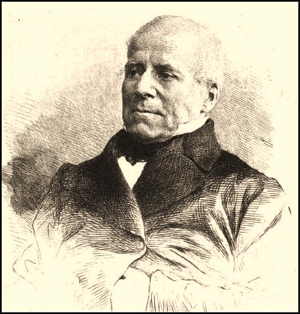
| Charles Dunoyer (1786-1862) |
|
[Created: 7 August, 2025]
[Updated: 7 August, 2025] |
Source
, "A review of J.B. Say's "A Small Volume containing some insights into men and society", Le Censeur européen, T.7 (Mar. 1818), pp. 80-126.http://davidmhart.com/liberty/FrenchClassicalLiberals/Comte/CenseurAnthology/EnglishTranslation/C2-14-Dunoyer_CR_Say_PetitVolume_T7_1818.html
Charles Dunoyer, "A review of J.B. Say's "A Small Volume containing some insights into men and society", Le Censeur européen, T.7 (Mar. 1818), pp. 80-126.
A translation of: Charles Dunoyer, CR “Petit volume contenant quelques aperçus des hommes et de la société;” par J.-B. Say. Le Censeur européen, T.7 (Mar. 1818), pp. 80-126.
This title is also available in enhanced HTML and a facsimile PDF of the original French.
This is part of an Anthology (in French originally) of writings by Charles Comte (1782-1837), Charles Dunoyer (1786-1862), and others from their journal Le Censeur (1814-15) [ToC] and Le Censeur européen (1817-1819) [ToC].
See also other works by Charles Comte and Charles Dunoyer.
Charles Dunoyer, "A review of J.-B. Say's "A Small Volume containing some insights into men and society", Le Censeur européen T.7 (Mar. 1818)
[80]
PETIT VOLUME CONTENANT QUELQUES APERÇUS DES HOMMES ET DE LA SOCIÉTÉ; Par J.-B. SAY, De l'académie impériale de Saint-Pétersbourg, de la Société royale de Madrid, etc. (Seconde édition, corrigée et augmentée) [1]
There are very few writers whose works are likely to contribute as powerfully as those [81] of M. Say to the progress of society and the improvement of governments. The influence that the theory of political economy—theory he has had the merit of elevating to the rank of the most concrete and most well-formed of the moral sciences—are destined to exert on politics itself is truly immense. By drawing our attention to the phenomenon of production, and by leading us to consider this phenomenon in its full scope, political economy tends to set us, by the use of reason, on the true path of civilization, which we have so far followed only by a sort of instinct, and from which harmful passions have too often led us astray. It leads us to recognize that all that is truly useful to the happiness of men in society is accomplished by labor, labor which is applied to the development of all our faculties and to the creation of all the goods our needs demand. It brings us to see how salutary is the direction which labor gives to our activity, how pernicious is the direction imparted by the pursuit of power, the taste for conquest, and the passion for ruling over others. Labor destroys any reason for hostility among men, [82] it reconciles them, it aligns the interest of each with the interest of all; it is a principle of universal union and prosperity. The spirit of domination, on the contrary, simultaneously divides all men; it raises some only by lowering others; it is a principle of ruin for all, even for those whom it enables to enjoy momentarily a kind of prosperity. Such is the fundamental truth to which the principles of political economy lead. Now, from this truth, once generally felt, must result a great change in the direction of our thinking. A new purpose presents itself for the actions undertaken by everyone; actions which individuals and nations once aspired to exercise over others are now gradually turned towards things; labor acquires the esteem and dignity which it lost under the spirit of domination; it becomes the general passion, the foundational purpose of society.
The first effect of economic theory is therefore to place society on its real foundation, to attach it to its true purpose, which is labor. But this is not their only effect. While presenting industry, considered in its innumerable applications, as the natural purpose of human association, [83] they also teach the true interests of industrious people; they show what regime would be most favorable to them, and it is chiefly in this regard that their influence on politics is great. They attack the root of the military and mercantile systems, and above all that regulatory regime which tends to invade and paralyze everything; which would willingly keep all our faculties captive; which claims to direct their development, to determine their operations; to decide in advance about everything including what one must believe and what one must practice; to prescribe how one must praise God, how to raise one’s children, how to write, how to speak, how to be silent, how to sow one’s field, how to manufacture, how to trade: a kind of monster with a thousand arms, which tightly binds the tree of civilization and hinders its development and growth from all sides. Political economy teaches us that the first need of industry is to be free of constraints; to work at regulating it is to strive to destroy it; to limit the scope of its operations is to narrow the range of its benefits. Its second need is to be able to enjoy securely the fruits of its labor; it is [84] as much a friend of peace as it is an enemy of coercion, and one can paralyze it by robbing it of its products just as by preventing it from producing. Liberty and security, then, are its motto; it needs only that to prosper—but it needs at least that; and one sees it constantly rise or decline according to the degree of liberty and security it enjoys.
Thus, while economic theory leads us to recognize the true purpose of society, it also teaches us to see the positive purpose of governments. The purpose of society is production considered from the broadest and highest point of view; that of governments is, while allowing production full freedom, to ensure that producers enjoy the security that is indispensable to them. Everything that tends to disturb security—that is the job, and the only job, for governments. Their action can go no further.
From this arises, in politics proper, a very significant change, one which cannot be emphasized enough. The action that governments should exercise upon society is no longer a direct action, but an indirect and, so to speak, negative one. Their task is not [85] to dominate it, but to preserve it from all domination. They are not charged with assigning it a goal and leading it there, but only with removing the obstacles that more or less hinder its march toward the goal determined by its own nature and needs. Society gets its purpose from itself; it follows it by its own impulse. Men who claim to direct it would resemble the coachman's fly, and would perhaps be a bit more ridiculous. To see the movement of society in the action of governments is to confuse the fly's flutterings with the carriage's advance. To believe that the world moves only because governments decree, regulate, spur it on—that is to believe the coach moves forward because the fly buzzes, scurries, lands on the driver's nose, and demands from the horses payment for its effort. It is true that, in society, the horses do pay; but that is no reason to conclude that the flies are pulling the coach. While a few men make the laws, make buzzing noises when they give speeches, stage parades, wage battles, multiply and engage in much unproductive hustle and bustle, and thus think that they govern the world, the human race, guided [86] solely by the laws of its own organization, populates the earth, makes it a living and fertile place, multiplies infinitely the products of the technical arts, enlarges the domain of the sciences, perfects all its faculties, increases all the means of satisfying them, and thus fulfills its destiny. This immense movement of the human species is beyond the action of those vain men who claim to lead it, and they could vanish without its being either held up or slowed down. It is therefore not in the power of governments to direct society; all they are capable of is making its path a little easier or a little harder, depending on whether they use their power to strengthen or to weaken the resistance it encounters. It is only upon this resistance that they must act; their task is to overcome them, and only that.
From that point forward, any government action that goes beyond this purpose is an actual usurpation; any effort by governments to assign a particular end to society, or to guide it along paths other than its own toward the end it ought to attain, is a veritable tyranny. Thus, any organization whose purpose would be to make a people sovereign, a people conquering, a people devout, would be [87] equally absurd and tyrannical; and any measure whereby one would attempt to direct the movement of an industrious people toward its natural end—any intervention by governments in commerce, the technical arts, agriculture, religion, the sciences, education, printing—would likewise be an act of folly and of tyranny. It is well understood that governments must not interfere in such matters; these are matters for society, not for government. The individuals who make up society cultivate, manufacture, trade, write, raise their children, worship the gods according to their needs, their reason, their conscience; and good governments enter into this great movement of human society only to identify what disrupts it and strive to suppress it. Their task is to ensure the security of all, taking as little as possible from each person's time, income, and liberty.
From that point forward, the best government will evidently be the one that takes the least from our liberty, from our means of living, and yet provides the greatest security.
[88]
From that point forward, between a government that spends billions, multiplies prohibitions and constraints, and under which one is nonetheless exposed to all sorts of indignities and acts of violence, and a government that, for a few million dollars and while taking almost nothing away from the liberty to act, shields everyone from every kind of insult; between the government of the United States, for example, which, for less than 50 million dollars and while leaving the greatest latitude to freedom, enables twelve million Americans to enjoy the most perfect security, and some government of Europe which, in a country of sixteen million inhabitants, will spend nearly 2 billion francs, arm itself with emergency laws, burden liberty with shackles, and yet provide its subjects only with precarious security—one immediately sees which one fulfills its purpose more effectively.
From that point forward, disputes over leaders become impossible, as do revolutions to change who holds power, or civil wars to transfer rule from one party to another. The bulk of the public finally has the good sense to understand that it is no better to be exploited by Whigs than by Tories, by ministers than by Ultras, by Jacobins [89] than by Bonapartists. The only remaining question is whether it would be possible—and how it would be possible—to be exploited less by anyone at all.
From that point forward, all discussions about forms of government lose relevance unless their direct purpose is to make government milder, less expensive, and at the same time more favorable to security. The issue is not to make it accessible to all, but useful to all. The question is not whether powers are balanced, but whether their exercise serves the public good. It is not about ensuring that aristocracy, democracy, and royalty reign peacefully together, but about preventing all of them from treating society as their personal domain. What truly matters is not whether the government carries the label of monarchy or republic; for either word can equally denote horrors or absurdities. What matters, regardless of the insignia of the company entrusted with maintaining common security, is that it costs little and hurts no one.
From that point forward, words like "constitution" and "representative government" lose their magic. One can conceive of having juries, municipal councils, [90] departmental and national councils, and still paying dearly to be badly mistreated. If, by their composition or due to clever maneuvering, these institutions are typically filled with men owned by the ministers; if the oversight of government lies in the hands of its own agents; if the supposed check on arbitrary rule is the means (by which this is carried out); if public involvement in its affairs amounts only to an increase in the executive power which is used against it (the public); if the executive power ends up being equipped with all the coercive powers which are then used against it; if the public thus becomes, against its own will, the architect of its own misfortunes; if it places itself under a regime of emergency laws, burdens itself with crushing taxes, harasses, pillages, and devours itself; then it becomes clear that the system which turns its forces against it (the public) is nothing but a cruel deception, the most terrible of all tyrannies. It is therefore not enough to have a so-called representative government to find oneself under the best regime. That regime may indeed be the best, but it may also be the worst: it all depends entirely on how the immense forces it mobilizes are used. It is the worst if the ministry [91] can dispose of these forces at will, and add their power to its own to oppress the country more violently and securely. It is the best if these forces serve to restrain its action and cut its expenses whenever they overstep the bounds; if they grant it only the power strictly necessary for maintaining security, and thereby leave liberty the full scope it should have.
This is how economic theory, while pointing out the purpose of government, never allows it to be lost from view. One is not distracted from it by the flags they wave, nor by the forms under which their activity appears, nor by the kind of men they employ, nor by the pomp they display, nor by the sentiments they feign. In vain might they present themselves surrounded by sumptuous monuments; in vain might they proclaim they have made the country triumph, that they sanctify the people, that they associate the people with the power exercised over them. These are not the signs by which their merit is judged. One asks only: what degree of security do they provide to citizens, and what sacrifices do they require of them to preserve them from all disturbance? The greater the security and [92] the lighter their activity, the more perfect they are deemed. It is thought that they improve as they make themselves less felt, and that the best-governed country would be one where the maintenance of security no longer required the intervention of a special and permanent force, where the government could, so to speak, disappear, leaving to the inhabitants the full enjoyment of their time, their income, and their liberty.
Let us add that, by revealing what constitutes good government, economic theory also leads us to see how governments can be improved. If governments improve themselves in proportion to how little they are felt, and if they can become less perceptible in proportion as the maintenance of security demands less use of its force, it clearly follows that the only way to improve them is to act on what requires the use of this force, to eliminate, so to speak, the reason for their activity, to remove what threatens security. It would be as difficult to establish a mild government in a country full of idlers, of ambitious men, and of thieves, as it would be to establish a violent one in a country where all the inhabitants are devoted to [93] useful occupations and find in their labor reliable means of providing for their well-being and comfort. Government would be violent in the first case simply because there would be many men aspiring to rule and many who would need to be restrained, and this would be so no matter what form the government took; for the form would not change the substance: it would be only a new means of making use of it, a new framework in which ambitions would be stirred up. In the second case, on the contrary, government would be mild simply because there would be very few men aspiring to power and very few on whom power would need to be exercised, and this too regardless of the constitution; for the constitution would not alter men's dispositions, nor would it make them inclined to exercise or submit to domination, if their habits inclined them only toward labor and made them equally averse to domination and servitude. Look at America, where all men work, where none can rise except by work; where instead of stealing or conquering, one works; where instead of begging, lobbying, scheming, or conspiring, one [94] works; the government there is so mild that it is scarcely perceptible, and it would be very difficult for it to exercise strong action; for who would exercise it, and upon whom would it be exercised? People so occupied, so content through labor, need neither to govern nor to be governed. Look at Europe, on the contrary, where so many men do not work, where one becomes rich by domination far more easily than by labor; where instead of working, people wage war, pillage; where instead of working, they seek favors, intrigue, scheme, plot; there, governments are of disproportionate size and activity: nations vanish behind these colossi; they are crushed under the weight of their actions, and it would be very difficult to confine them within a narrow framework and to make them less felt; for what would one do with this mass of government-artists they set in motion, and with those they keep in check who wish to take part in that activity? How can one be lightly governed in lands where everyone wants to be become one, and where the only way to succeed is to be in government? One might try everything, one might vary the forms of power as much as one likes, but the strength of its activity will inevitably be proportional to the number [95] of men who want to take part in it, or upon whom this force must be exercised. The only way to make it less felt, then, is to work at steadily reducing the number of such men.
Finally, while economic theory leads us to recognize that the only way to improve governments is to dry up their resources, to reduce the number of the ambitious and the idle men who need to govern or be governed, it also tends, in a very direct way, to bring about this fortunate result; for it attacks ambition and idleness at their very source, that which generates and sustains them, which is the unnecessary expenditures of governments.
There is no doubt that if in our Europe, and especially in France, where it might be so easy to gain honor and wealth through useful labor, one sees so many people seeking their fortune by shameful means, so many people living off power or theft, so many scoundrels and office-holders, it is above all to the excess of public expenditure that this disorder must be attributed. These expenditures, by drying up the natural sources of wealth, divert men of all ranks [96] from honorable occupations and lead them, in order to elevate themselves, to resort to shameful expedients; they drive those of the lower classes into begging, theft, and vagrancy; those of the higher classes into the pursuit of posts, into intrigue, cabals, and factions, thus populating society with that multitude of men for whom or against whom governments are necessary. One cannot deny that the direction followed by this multitude of people is particularly determined by the direction taken by a considerable portion of society’s income due to public expenditure. Well-bred people would not chase after offices so much if taxes did not cause the public's money to flow toward those offices. So many wretches would not turn to theft as a means (of earning a living) if taxes, by exhausting those who might otherwise employ them, did not deprive them of the capacity to seek a more honorable menas (of earning a living) through labor. The best way to redirect this swarm of ambitious and dishonest men toward honest and useful occupations, to thereby free society from those who disturb it, and by that very fact to exhaust the resources of the government, is thus to reduce public expenditure, to gradually [97] return to their natural course the immense portion of society’s income that such expenditures absorb, and to ensure that labor becomes both the only and the increasingly reliable means of attaining comfort and well-being. Now, political economy cannot fail to bring about this result sooner or later. It sheds, in fact, such a clear light on public consumption, and it provides such certain and simple means of evaluating it, that it seems impossible that the bulk of the public should not one day be struck by the uselessness and disastrous effects of most expenditures made at its expense, and that once enlightened about these abuses, it should not sooner or later obtain some redress.
Thus, economic theory leads us to recognize that the purpose of every civilized society is labor, considered in all its useful applications; that the sole purpose of governments must be to ensure the tranquility of society, while allowing the widest possible scope for its liberty; that the best government is the one which provides the greatest security to its citizens, while taking the least from their time, their income, and their freedom; that, from this point on, governments improve in proportion to how little [98] they are felt; that they can become less intrusive as society becomes more civilized, as the number of people who need to govern or be governed diminishes; that the true way to reduce the number of such people is to make it increasingly difficult to become wealthy by means of access to power, and increasingly easier, on the contrary, to rise up by means of labor; and finally, that the best means of obtaining this latter result is to progressively reduce public expenditures, to gradually restore the immense amount of capital, which these expenditures have diverted/misappropriated and destroyed unproductively, to their natural purpose, namely (the) reproduction (of capital, or itself). These are the main political truths to which political economy gives rise. We now understand how this science can contribute to the progress of society and to the improvement of governments; and it would be difficult, considering the immense good it is destined to produce, not to feel some gratitude for the writer to whom we owe its removal from the realm of speculation and its placement within the reach of all minds. M. Say’s work on political economy is without [99] doubt one of the most eminently useful things which have been produced this century, one of those that best respond to its needs and seem most likely to influence its direction.
The small work by the same writer, which has prompted these present thoughts, is undoubtedly far from having the same importance; nevertheless, it possesses far more substance than its title might suggest, and, without departing from our subject, we may say that it contains views capable of likewise influencing the direction of ideas and contributing effectively to the progress of society and the improvement of governments. The proof of this truth will soon become apparent.
We say that one of the best means of advancing society is to reduce public consumption. But how can this reduction be brought about? How can we obtain a government that spends little? In a word, how can the abuses of a bad government be reformed?—a great question, which M. Say does not raise in his little volume, but upon which one of his thoughts seems to shed a brilliant light.
Is it through lectures, complaints, [100] or just and severe criticism that the excesses of power can be restrained? Is it through threats, revolts, or revolutions? Or, finally, is it by institutions designed to contain it within certain limits? These are nearly the only expedients that have been tried. The vulgar crowd of reformers, like the stupid animal that knows only to bite the stone that strikes it, know no better way to correct tyrannical governments than to topple them and replace them with others. Honest and moderate men reject these violent means and believe that, to stop their excesses, it is sufficient to show people their dangerous consequences. A more skillful class of men fears revolutions and has little faith in complaints, but places boundless confidence in constitutions; constitutions are their great war-horse, and they do not doubt that, to render a government powerless to harm people, it is enough to erect around it, under the names of chambers, juries, municipal councils, several kinds of redoubts in which the public may place people to defend it. All these parties have this in common: [101] to correct power, they try only to act upon power itself; each in his own way, but all aim their efforts in the same direction.
Is this a well-informed position to hold? Is it really on governments that it is most appropriate to act in order to correct the abuses of governments? That is the question on which the thought we have mentioned seems to shed a vivid light. The author inquires what constitutes the morality of literary works.
“When I ask,” he says, “what is meant by a moral work, I am told it is a work in which vice ends up being punished and virtue receives its reward. That seems quite simple. But if this punishes no one, where is the morality? Look, observe, reflect. What does the scoundrel who lives in the world think upon seeing his counterpart on the stage being punished? According to him, it is a fool whom the author has led into a trap to please the public’s good-nature. If he gains anything from this example, it is that he needs to be a bit more cunning to avoid becoming the laughingstock of decent people. As for virtuous people, [102] when they see, at the end of a fifth act, virtue rewarded and vice confounded, they say with a sigh: That’s all very well for the theatre, or for novels; but that’s not the story of the real world. And the world goes on as before.”
“It is satisfying, I admit, to see even in fiction the wicked punished: it delights the soul, and I like the author who gives me that small satisfaction, in default of a more real one; but a skillful writer, to be truly moral, knows how to employ other means.”
“Look at Molière! If he damaged the business of the Tartuffes, do you think it was by making the great monarch intervene at the end, like a deus ex machina, to rescue Orgon’s family from the disaster into which the father’s foolishness had plunged it? If the scaffold doesn’t frighten thieves, do you think letters of cachet will terrify hypocrites? They know that this thunderbolt, no more than the other, is unlikely to strike the wicked preferentially. Who can claim to have ever met a reformed hypocrite? So where is the morality, the usefulness? Here it is. You don’t correct Tartuffes, but you reduce the number of Orgons. Swindlers disappear like any other [103] vermin when they lack nourishment. Do you believe there would be fewer Tartuffes than before, if we still had as many simpletons to listen to them?”
“Now that is a very real moral utility, the kind that results from Molière’s masterpiece. And note that the moral utility here does not come from the wicked being punished; on the contrary, if he were not punished, the moral force would be even greater. Who can deny that if Tartuffe succeeded in his aims, if he managed to rob Orgon’s family, to expel him from his own home, and to portray them all as slanderers, we would all feel even more acutely the danger of letting a ‘spiritual advisor’ settle into one's household? Molière did not choose that ending—not because he judged it immoral, but probably because he feared that such a conclusion would step outside the bounds of comedy; and the proof is that he employed just such an ending in another play where the offense is not quite so grave. He humiliated good sense and justice; he made vice and deceit triumph: George Dandin apologizes to his unfaithful wife for having suspected her—when in fact, he no longer merely suspects, he is [104] certain. This drew cries of immorality, and no one noticed that if Molière had confounded the wife instead of the husband, his play would no longer have exposed the perils of mismatched marriages and would have lost all moral force.”
“The same criticism was made against Voltaire with respect to Mahomet. Fanatics had good reason to want Mahomet punished. When a pickpocket is caught in the act and manages to get away, the others make sure to shout stop thief!”
“So it is utter folly to imagine that books will correct hypocrites, wanton women, conquerors, usurpers, petty tricksters, or those who work their frauds on a grand scale. But what one may hope to achieve through books is to correct their dupes.”
There is the thought. One does not correct the Tartuffes, but one reduces the number of Orgons. One does not reform the tricksters, but one may hope to correct their dupes. Can one reform bad governments? Is it to attack arbitrary power at its root to attack it in governments? Is one working to uproot arbitrary power when one merely shifts power from one set of hands into another, or changes [105] its form? These, we have said, are the main methods of repression which are used. One need only ask a simple question to judge their effectiveness: is there one Orgon fewer in a country after it has changed leaders or altered the form of its government? If there are still the same number of idiots, what would prevent the new ruler from behaving just as badly as the last? What would prevent the new form of government from being used, like the previous one, to plunder and oppress the country?
A people cries out in its misery: Oh! if only we had another prince! if only we had Francis instead of William! Alas! would you be any more enlightened? That Francis’s friends say such things and prefer his reign to that of William is only natural; if Francis reigned, they would reign with him and share in the feeding frenzy. But you, miserable flock of sheep, whose fate is to be the prey of every party—what will you gain from a change of leader? If you do not know how to defend yourselves from William’s government, how will you defend yourselves from that of Francis? Once again: will you be more [106] enlightened under Francis than under William? Francis, you say, will be less wicked; and if his heir is worse, will you then change his heir too? Will this ever end? Don’t you see that it would be far simpler to begin by changing yourselves? All you Orgons, wise up, and you will no longer need to change masters. Try to understand your true interests, and those who live—and those who seek to live—off your stupidity will disappear in turn: the tricksters and the ambitious disappear, like any vermin, for lack of sustenance.
Place at the head of the United States, with the most unlimited authority, any great or cunning despot you like; let this despot wish to treat the Americans as he might treat the people of Europe; let him wish to have at his discretion the money and men of the entire country. Do you think America would need to rise up in revolt to prevent this madman from carrying out his plans for domination? That would be to do him a great injury. These plans, which a handful of sensible men among you might vainly resist, would collapse of their own accord over there. It is because everything necessary for their execution is lacking; because, for want of materials, there would be [107] no craftsmen; because, in the absence of people willing to see value in a government of the sort this man would want to establish, there would be no one ready to risk helping him. In short, this man would be supported by no one, and there the most obstinate despot would be forced to behave as the most sincere friend of liberty. So the way to have good leaders is not to keep changing them until you find the right ones, but to acquire enough sense, moderation, and firmness to make even the worst of them powerless to do any harm to you.
You have sometimes complained that your princes were not popular. These are rather blind or superfluous regrets. One of two things must be true: either you lack understanding, or you know your true interests. If you lack understanding, it is a great blessing that your rulers are not popular; for then they cannot exploit your passions under cover of your ignorance: they provide you with the service of putting you on guard against themselves; they open your eyes for you; they force you to recognize what is in your own interest. If, on the [108] other hand, you know your true interests, what does it matter that they are not popular? Will they not then be obliged to conduct themselves as if they were? The essential point, once again, is not that your rulers are not Tartuffes, but that they do not rule over Orgons: it is up to you to make them into what you have an interest in them being.
If it is not enough to become free by choosing new leaders, it is equally insufficient to give oneself new institutions. For a people, nothing can take the place of understanding and firmness. The same forms of government that serve as safeguards for a judicious and strong nation will be merely new instruments of oppression for an ignorant and weak one. What you call the palladium (defender) of your liberties may be nothing but the badge of your servitude: a safeguard is only one for those it truly protects. What good is it to have a fortress, if you do not know how to bar the enemy from entering, or if the men you place there to defend you are so inept or so base as to fire upon you? It would be better for the country if the citadel were razed: the inhabitants would suffer fewer outrages. What bad government would dare, in [109] the absence of all national representation, to do what it dares behind the façade of a national representation over which it holds sway?
When, after having changed and changed again the form of your government, you still find yourselves oppressed, you are always ready to say: the institution itself is flawed; if you traced the evil to its true source, you might say instead: good sense is still in the minority among us. There are countries no institution can protect from servitude; such a country would be the one that does not understand what true liberty is, that does not know its value, or that lacks the courage to defend it. What use is it to have well-constituted assemblies, if only ignorant, greedy, disruptive, or timid men can be sent there? What good is an excellent electoral law to those incapable of making sound choices? There are unquestionably cases where a people finds itself beneath its institutions, and can only blame itself for the harm it attributes to them. We might, perhaps in certain respects, take ourselves as an example. Who would dare to claim that we could get from our constitutional laws all the good it would be possible to extract from them, without even altering them in [110] the slightest? Who would dare say that, with more enlightenment and better conduct, we could not find within those laws as they stand the means to be freer without being less peaceful? Do we make the most of the electoral law, for instance, to the extent it lies within our power? Were all the choices made in the last elections as well-informed as they might have been? People complain that the legislator restricted too narrowly the circle from which choices may be made. But is it the legislator who deserves blame, when one sees that the voters do not even make full use of the latitude they were given? When one sees that, out of about fifty deputies they had to elect last year, they chose thirty-five of the senior bureaucrats sent to them by the ministers, and, in addition, a number of salaried and dismissible agents of the government. Does it not seem obvious that the fault here lies with the voters, and that the law, despite its imperfections, is ahead of the general level of understanding? [2]
[111]
Finally, you sometimes admit the excellence of the institutions; but since it is impossible [112] for you to be at fault, you accuse the government of not respecting them. The Charter contains good provisions, you say, but the ministers do not execute them. What does this mean? Is it the ministers who violate it, or is it you who do not know how to defend it? Are the ministers the ones who accept emergency laws? Are they the ones who vote to move on to the next order of business on all citizen complaints against arbitrary acts? You say it is the friends of the ministry. But were these friends of the ministry chosen by the ministers? You are surprised that the laws do not offer all the guarantees that could be expected; what should surprise you is the opposite. If you make bad electoral choices, then of course the chambers will be bad; if the chambers are bad, it is only natural that the ministers should not hesitate to violate the Charter. It is you who incite them to arbitrary rule; you tempt them with your poor choices, and the evil you blame them for is your own doing. Choose your defenders better, and your liberties will be better respected.
But still, you say, even if our choices are bad, does that justify the ministry? Why propose emergency laws? [113] We want the Charter, the whole Charter; the king has sworn to it; the ministers must make us enjoy its benefits. What candor, what innocence in these complaints! The ministers must make you enjoy the Charter! But if you are waiting for liberty from the ministers, why take any precautions against them? Why have Charters? Why have guarantees? You insult them; you forfeit in their eyes the merit of your confidence; you give them an interest in betraying it. If, on the contrary, you believe you need guarantees against their power, how can you expect liberty from them? Do you believe they will enforce your means of defense, and use your weapons against themselves? There is no middle ground: either you want to be free by the grace of the ministry, or you want to be free despite every possible opposition on their part. In the first case, you don’t need a Charter; in the second, it is up to you to enforce it, and it makes little sense to complain that it is imperfect or poorly implemented. From the moment you take up arms against arbitrary rule, from the moment you place yourself in a posture of defense against ministerial power, you must expect liberty to come only from yourselves. Of course ministers—and [114] especially ministers whom you openly express the intention to constrain—will want to have at their disposal as many men, as much money, as much power as possible. Of course they will work to destroy your guarantees instead of strengthening them; of course they will use them not to defend your liberties, but to enlarge their own power. It is up to you to foil these plans, to prevent your weapons from being used to beat you, to remove from your laws the benefits you expect of them. Once you have the strength to make use of them yourselves, you will no longer claim that it is up to the ministers to make you enjoy them. Until then, it seems at least useless to assert such a claim.
It is therefore a very poor, or at least a very inadequate, strategy to attack governments in order to become free. Woe to the friends of liberty who are reduced to waiting for its salvation from a change of ministers! Woe to those who would depend entirely on the qualities of princes or the nature of institutions, and not at all on public reason. Governments are of little importance by themselves. Men and institutions have power only through the mass of people [115] behind them, which serves as their support. The same laws can, depending on the country, be used to establish either the gentlest liberty or the most intolerable despotism. We repeat: our institutions, however imperfect they may be, would seem much better to us if we were more capable of making good use of them; we would always have good leaders if we had good ministers, good ministers if we had good chambers, good chambers if we had good electoral colleges—that is to say, if the mass of voters were enlightened, if, to the moderation by which they have already so honorably distinguished themselves, they added the discernment and firmness necessary to resist the slanders of parties and never to make anything but good choices. The essential thing, if we are to have good chambers, good ministers, good leaders, a good government, is therefore to have good voters—in other words, that the body of the nation knows its true interests and is capable of defending them.
“That is why,” continues M. Say, from whom we resume the thought on the morality of literature, “that is why every work, [116] whatever its form and type, whether written for the stage or for reflection, is useful from the moment it makes man and society better understood, from the moment it tears away the masks under which bad thinking and bad intentions disguise themselves, from the moment, in short, that it gives insight to honesty. Resignation is a virtue of sheep. The virtue of men must be suited to an intelligent creature. I imagine it, as the ancients did, under the features of Minerva: noble, serene, gentle, but armed.”
If that is what constitutes the morality of literature, then M. Say’s books are unquestionably very moral books. There are few in which reason may find better weapons, few from which sincere people may more effectively acquire that wisdom so necessary to good faith, that understanding of their true interests which alone can liberate them from the sway of schemers and tricksters of every kind. One could already judge, from what we have quoted elsewhere (in volume 6), how many masks the Petit Volume tears off and how many truths it lays bare, how many just and useful ideas it contains. It is easy for us to confirm [117] the favorable opinion one must have formed of its morality by offering further quotations.
— “People complain about the outcome of some event: Fortune has betrayed our efforts, they say—in other words: an effect has occurred without a cause. Why such childish complaints? What happened had to happen. Your house collapsed; it was poorly supported. The people showered their oppressors with applause; that is because the people are not yet far enough along to understand their true interests. Fortune has nothing to do with it: instead of blaming her, work on the causes, and the effect will follow. Such is the role proper to rational creatures.
— “I can see you now, Damoclète: you are proud of the education you are giving your children; you congratulate yourself on having hidden from them the wickedness of men; you believe you have kept them pure. I fear... — What? — That you have made them gullible. — Oh!... — Please hear me out. Do you know what gives intrigue so great an advantage in deceiving the good faith of honest people? It’s your principle of education. I’d count you lucky if even one of your children has a character strong enough not to say at [118] some point: My father made a dupe of me. I believed in honesty; but there is none on this earth. Only a fool acts otherwise.”
“Do not misunderstand my intentions, Damoclète. I am not saying to you: Teach vice, but rather, do not conceal it. Presented in this way, vice offers only a salutary spectacle, which reveals moral deformities alongside their allure, and deplorable consequences beside seductive beginnings. When it comes to your dealings with the world, you keep your suspicions and discoveries to yourself; you conceal from your children the precautions you are forced to take against bad faith, greed, and human corruption! But tell me, Damoclète, what science is more useful and more constantly applicable that you could teach them instead?
“I admit that this method obliges you yourself to walk along the path of virtue: otherwise, you would expose yourself to the scorn of your pupils—so much the better, another reason to recommend it.”
We shall not comment any further on these two thoughts; they fall within the same scope as the one we previously analyzed, and we cite [119] them only as confirmation of the great truth it contains. We see that M. Say makes the morality of education, like that of books, consist less in preaching virtue than in guarding against vice. His most constant maxim is that the best way to make men good is to make them judicious, to enlighten them as to their true interests.
“You complain that everyone listens only to his own interests,” he says. “I am saddened by the opposite. To know one’s true interests is the beginning of morality; to act accordingly is its completion.”
“One of the happiest effects that humanity can derive from the progress of knowledge,” he adds, “is to be able to assess more accurately the true cost of the lamentable success of vice and crime. A superficial calculation might suggest that there is some advantage in breaking one's word when one can do so with impunity, in oppressing the weak and what is just, etc. One does indeed see certain men who have reached the heights of fortune by such shameful means; but here, as in many cases, we are struck by the successes because they are visible, and not by the setbacks, [120] the disadvantages, the harms that have accompanied a guilty course of conduct. The spectacular punishments, which unfortunately are rare, are the only ones that catch the eye; the hidden punishments pass unnoticed, though they are no less real. Now, a more accurate assessment shows, I believe, that once all is accounted for—if one includes among the costs of bad conduct, beyond the direct punishments it sometimes brings, the bad reputation it produces, the doors it closes to fortune and the enjoyments of life, the worries, the efforts required to hide what must not be known, to defend what may be attacked, to cover oneself—and the risks of failing altogether; if one compares and weighs the total of the fortunate and the unfortunate outcomes of vice and crime, I do not hesitate to predict that one will find the pan of the scale bearing the advantages much lighter—much lighter—than the other, and that, all in all, when one embarks on a wrong path, one is simply making a bad calculation. There are more unfavorable chances in vice than in virtue.”
One feels that, placing in good sense the surest guarantee of human virtue and happiness, being convinced that people conduct themselves [121] all the better and are all the happier the less they can deceive others or be deceived themselves, M. Say must place high value on the freedom of the press, which allows them to hear the pros and cons of every question and to adopt, in each case, the party most aligned with their true interests.
“There is no cause so bad,” he says, “that one cannot find some good reason to support it. People have praised madness, fever, Nero. And in all such praises, there are reasons that seem quite plausible. Does that mean these are good things? Not at all. And why not? Because even better reasons can be given against them. To judge a question thoroughly, one must therefore listen not only to the pro side, but also to the con.
“Now, in political questions, does the public—the supreme judge, since the matter concerns itself and its interests—ever hear both pro and con? Never. Its advisers scramble for the floor; and in order always to be right, the most skillful, or the best backed, silences his opponents. And this poor public, persuaded that in the name of peace it must hear only one group of advocates, how is it supposed to choose the enlightened [122] party? It acts foolishly; it is declared incompetent; and this is called GOVERNING.”
We see from this passage that M. Say considers freedom of the press especially necessary for the public, for the people who read. This is a truth too little felt—very little felt—and one against which there exists a well-entrenched, though thoroughly silly and ridiculous, prejudice. It is easy to observe that the general public, the belly of the nation, takes little interest in debates over press freedom. Why? Because it does not believe it has a stake in the matter; it has the stupidity to view it as a private dispute between writers and the government. M. Say highlights this error and refutes it in a few words; it is one of his most judicious observations.
“I do not understand,” he says, “why freedom of the press is always presented as a benefit for those who write. That is not it at all. It is entirely in the interest of those who read; for it is they who are at risk of being deceived or undeceived.”
What most eminently distinguishes the Petit Volume is the accuracy of its insights. That is the foremost merit of all [123] of M. Say’s writings. There is no mind less prone to be taken in by appearances or more direct in its approach to the truth. He delights in tearing off masks, in stripping charlatans of their trappings, as he puts it, and in exposing people and things in their naked reality, so they may be judged at their true value. We could justify this remark with many examples; we could cite striking ones, even formidable ones. What could be more formidable, for instance, than the praise of Henri IV by Sully, quoted by M. Say: “I would have wished that this prince…”—but is it proper to cite a quotation? Upon reflection, we shall not repeat Sully’s praise of Henri IV. Here is something else instead.
“For many years now, through deep meditation, I have vainly sought to discover which of the two is more ridiculous: a grown fool, in the prime of life, mumbling his prayers on his knees; or a bourgeois with a bear skin on his head and a fake mustache, imagining himself a sapper.
— Tattooing [3] of South Sea [124] islanders, mustaches of European savages! It’s the same thing. Alas! What man has the right to mock another?
— Between the child who beats the drum his parents bought him at the fair, and the officer who, proud of the epaulettes for which he received a commission, drags his spurs along the pavement, wearing down the cobblestones with the tip of his sword, the difference is not so great as many people would have us believe.
— “The public likes those who are good a little, and those who could be wicked but are not—a great deal. Give me the power to do harm: by folding my arms, I shall make myself adored; perhaps someone will even compose an epic poem in my honor.
— A multitude of persons, and even well known characters, being beneath everything, can never understand that someone might be above something despicable.
— What is a charlatan? A man who mounts a platform to praise his quack medicine —Sir, this thought is too bold; it must be suppressed: people will say that by ‘platforms’ you mean an academy, a tribune, a pulpit, a throne, any [125] elevated position from which one can speak loudly and be heard from afar.
— I want to become a member of high society. Let’s see, what must I do? — Be entertaining, wound no one’s pride. — And what else? — Nothing. — You jest. — Not at all. — A man who has embezzled public funds, who has betrayed his country for a base interest, surely cannot be admitted to high society? — Why not, if he has managed to avoid scandal, if he is rich, if he has titles, decorations, ribbons? — In that case, long live high society as the guarantor of a nation’s happiness!
— If you have no good arguments against your opponent, get by with a witty remark (if you can). If you are in the wrong, mock him. — That is a detestable precept. — I admit it. — Why do you give it, then? — Because it will teach nothing to the wicked, but it will blunt their weapons.”
It is time to stop. This is enough to convey the spirit of the Petit Volume; to report everything just and striking it contains, [126] we would have to transcribe the entire work. We prefer to refer the reader to the book itself. Indeed, we believe it quite unnecessary to recommend its reading; the author’s name is recommendation enough, and the speed with which the first edition sold out attests sufficiently to the eagerness with which the public will receive this one. We shall only add that the author has made fortunate revisions and several important additions.
D…..R
Endnotes
[1] (Note by Dunoyer.) From the printing house of Didot the elder. Sold in Paris, at Déterville, bookseller, rue Hautefeuille, No. 8. Price: 1 franc 80 centimes.
[2] (Note by Dunoyer.) One would certainly not guess how many deputies the old and new electoral colleges have chosen from among government agents; how many, in a meager representation of two hundred and forty or two hundred and fifty members, are men dependent on the ministry through their functions. There are more than twenty, more than forty, more than eighty, more than one hundred: there are one hundred and twenty. And still we are not counting the judges, the decorated, titled, or pensioned men who fall outside this number, and whom we consider to be independent by virtue of their position. Certainly, we are far from wishing to suggest anything against the personal character of the one hundred and twenty removable officials who sit in the Chamber of Deputies. But is it wise, we ask once again, to entrust the oversight of the administration to subordinates of the administration? Is it proper to assign prefects to supervise the Ministry of the Interior, to send general receivers to audit the accounts of the Minister of Finance, to charge colonels and royal prosecutors with the prosecution, if necessary, of the Ministers of War or Justice? Common sense shows that this is absurd; the facts perhaps demonstrate it even more clearly. Let anyone take the trouble to examine how the chamber is divided, who are the men seated behind the ministers’ bench, who vote constantly with them, who mercilessly call for order of the day on every petition, and one will see the benefit of choosing deputies from among the men of the ministry.
[3] (Note by Dunoyer.) These are those baroque paintings with which the savages of the South Seas daub themselves.