Revised: 25 August 2026

Welcome | Key Features | Celebrating Liberty in 2026 | Additions in 2026

[Material from the old website is being transferred to the new website.
This transfer is not yet complete. (More …)]

Welcome to the Digital Library of Liberty & Power

The Digital Library of Liberty & Power is concerned with the history of the classical liberal and libertarian tradition both in the emergence and development of its key ideas, and the movement for change which these ideas inspired. Its purpose is to collect, organize, present, and discuss the works of major liberal thinkers in the disciplines of economics, political thought, philosophy, history, and literature. The idea of “liberty” which links all these thinkers is a broadly understood one, comprising individual, economic, political, social, and legal liberty, as it has evolved over the past 2,000 years or so, but especially over the past 500 years. (See my essays on “The History of the Classical Liberal Tradition“.)

Editor’s Note: What you are now reading is the new “front end” to the website which has been in existence since June 2010. We have kept the old website (davidmhart.com/liberty) as the Repository of the texts in their various formats (HTML, facsimile PDF, and ePub) and my essays and papers but are making use of WordPress for its content management tools and its blogging feature (davidmhart.com/wordpress/).

The transition to the new website is a work in progress which will take a few weeks to complete. Some pages still have “filler text” which will eventually be replaced.

You can still access the legacy front pages here:

  1. the introduction to the site
  2. the “Recent Additions” page


Key Features of the Website

New Additions. For the past six years I have been keeping an “intellectual diary” to chronicle the new books and essays I have put online. Below on this page are the additions to the website for 2026. For past years see the “Additions” in the navigation menu above (“New / Additions …”). For example, this is what was added in 2025).

Blog: Reflections on Liberty & Power. I have been blogging since December 2011 where I post my occasional “Reflections on Liberty & Power”. See the full list of posts and categories in the WordPress format and an alternative list in my preferred format here.

Groups of Authors and Collections of Texts. The library is organized around “Authors” and their “Works”. The authors are organised into “groups” (nationality, historical periods, and schools of thought) and the works into “collections” (disciplines, topics, and anthologies). Of particular interest to me is the Guillaumin Collection of the Great Books about Liberty and the various Special Projects in my areas of research: the Leveller Project, the Comte and Dunoyer Project, the Bastiat Project, the Molinari Project, and the Monarchomach Project.

The Texts in Multiple Formats. Our philosophy is to provide the written texts in a variety of formats which can be read online or downloaded. These include a facsimile PDF of the original work, an enhanced HTML version with a citation tool, various eBook formats, and a Multi-Pane Reader in which to read the texts which have large numbers of notes, appendixes, and glossaries, or to view translations of key texts side-by-side with the original.

Anthologies and Translations. To assist those interested in exploring the classical liberal and libertarian tradition of thought we have many Anthologies of writings by key authors, and we have begun a Translation project to bring less well-known texts (especially the French classical liberal tradition) to the attention of our readers.

Collected Works. In addition to Anthologies and Translations of the works of important classical liberal authors I have edited a number of collections of their works, some in the form of “virtual collections”. These are works which are listed in a sortable table with links to the individual pieces which may be found in separate volumes.

My Essays and Papers. Also on the website is a collection of my essays, papers, and other writings in the form of a sortable table which can be searched by date, topic, kind, and title.

For more information about the design philosophy behind the site see “About the Site.”

Celebrating Liberty in 2026

In 2026 we are commemorating several anniversaries of note:

  1. the 250th anniversary of
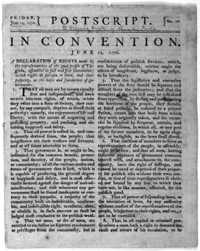
    1. George Mason’s (and others), “The Virginia Declaration of Rights” (12 June, 1776) in [HTML]
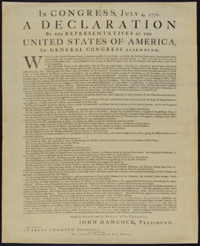
    2. the American Declaration of Independence (see below for details)
  2. the 250th anniversary of the publication of some significant books:
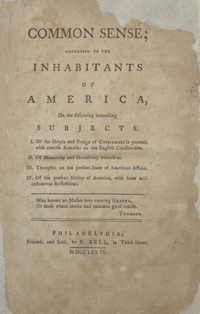
    1. Thomas Paine, Common Sense (1776) in [enhanced HTML] and [facs. PDF]
    2. Adam Smith, The Wealth of Nations (1776) in [enhanced HTML and facs. PDF vol1 and vol2]
    3. Condillac, Le Commerce et le Gouvernement (Commerce and Government) (1776) in [enhanced HTML and facs. PDF]
  3. the 200th anniversary of the publication of J.B. Say’s second major work on economics, Cours complet with an outline of the entire work in 1826 [HTML] followed by the first volume in 1828
  4. the 100th anniversary of
    1. the publication of Ludwig von Mises’ essay on “Interventionismus” (Interventionism) (1926) [HTML]
    2. the birth of Murray N. Rothbard (1926-1993): the Mises Institute is celebrating this with ":The Year of Rothbard" on its website <https://mises.org/>
  5. the 50th anniversary of
    1. the publication of the Glasgow edition of the Works and Correspondence of Adam Smith (OUP)
    2. the founding of the Sydney-based Center for Independent Studies by Greg Lindsay: see a video of the celebration [here]
    3. Note: the Cato Institute was founded in January 1977 in San Francisco

Since this year is the 250th anniversary of the American Declaration of Independence we are joining in the celebration of this momentous event in the history of liberty as you will see below. Here is our reinterpretation of Eugène Delacroix’s 1830 painting “Liberty leading the People on the Barricade” updated and relocated to the southern hemisphere:

“Libertas sub Cruce Australis”
(Liberty under the Light of the Southern Cross)

Additions to the Site in 2026 (L’an VII)

JanFebMarAprMayJunJulAug – Sep – Oct – Nov – Dec

AUGUST 2026
Papers I am working on:

  1. “1776 and All That: On the Causes of the Wealth and Liberty of Nations: Reflections on Adam Smith and Thomas Jefferson some 250 years on.” A lunchtime talk on the 250th anniversary of Smith’s Wealth of Nations and Jefferson’s “Declaration of Independence”.

Additions to the Library:

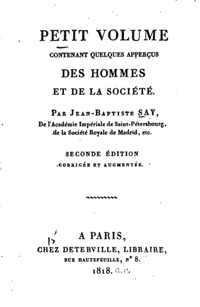
  • New: Another work by J.B. Say, Petit volume contenant quelques aperçus des hommes et de la société (A Small Volume which contains some insights into Men and Society) (2nd ed. 1818) in [facs. PDF] and [HTML]. Before there was Frédéric Bastiat who famously popularised economic ideas in the late 1840s with works like the Economic Sophisms (1846 and 1848) J.B. Say also tried to do much the same with this "Little Volume". He even used short dialogues and references to literary works which was Bastiat’s hallmark.
  • New: Another work by J.B. Say, De l’Angleterre et les Anglais (On England and the English) (1815) in [facs. PDF] and [HTML].
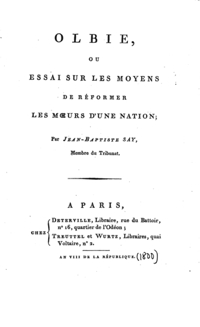
  • Updated: An early work by Jean-Baptiste Say (1767-1832), Olbie, ou Essai sur les moyens de réformer les mœurs d’une nation (1800). “Olibie” was an imaginary community which illustrated the reforms Say wanted to introduce in order to reform the morals of a nation (i.e. France). In [HTML] and [fac. PDF].
  • Updated: I have updated and slightly revised the anthology of 35 articles from Charles Comte’s and Charles Dunoyer’s journals Le Censeur (1814-185) and Le Censeur européen (1817-1819). The collection now has a new name, “Censoring the State”. The French language version is available in three parts: the complete collection of 35 articles in one volume in [HTML]; Part 1 which consists of 17 articles from Le Censeur (1814-1815) in [HTML]; and Part 2 which consists of 18 articles from Le Censeur européen (1817-1819) in [HTML]. I am still working on an English translation of these articles.
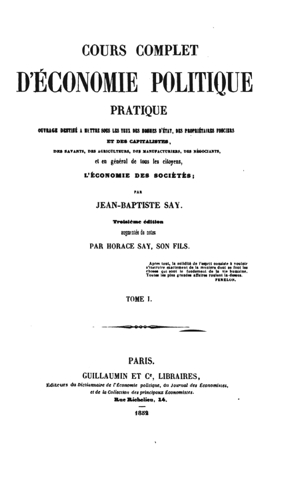
  • New: During the late 1810s and 1820s Jean-Baptiste Say (1767-1832) gave a series of lectures on political economy firstly at the private Athénée and then the Conservatoire des Arts et Métiers. These were published as his massive 2 volume 1,254 page Cours complet d’économie politique pratique (1828-29). His lecture notes were only published in 2003 by the publishing firm Economica edited by Gilles Jacoud and Philippe Steiner. I have edited and put online the 3rd edition edited by his son Horace Say for Guillaumin in 1852. In facs. PDF [vol1 and vol2] and enhanced HTML [vol1 and vol2]. The lectures given in 1819 are particularly intersting for his near anarchist analysis of the state and the possibilities for private provision of so-called “public goods”.

Authors this Month


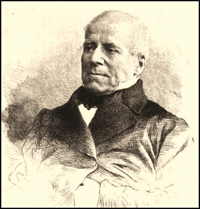
Jean-Baptiste Say (1767-1832)

JULY 2026


Papers I am working on:

  1. “The Political Economy of War and Peace: The Smithian and Saysian Traditions.” A paper written for a conference celebrating the 250th anniversary of the publication of Adam Smith’s Wealth of Nations (1776). [HTML]
  2. “Gustave de Molinari on War and Peace”. A paper written for a Symposium on “Overlooked Peace Thinkers”. [HTML]

Additions to the Library:

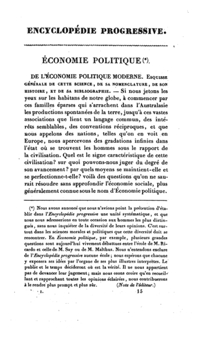
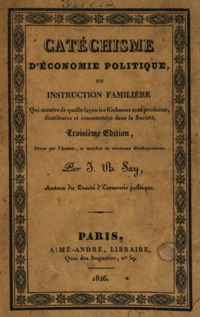
  • New: Jean-Baptiste Say (1767-1832) worked on his second major economic treatise during the 1820s which began as a series of lectures in 1821 at the Conservatoire National des Arts et Metiers, then a published summary in an encyclopedia in 1826, and then in full in a 6 volume work in 1828-29 the Cours complet (1828-29). We have added the essay “Économie politique”, Encyclopédie progressive (1826 which was edited by François Guizot. In [HTML] and [ facs. PDF].
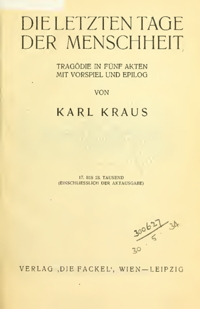
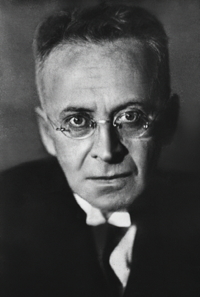
  • New: The Austrian satirist and journalist Karl Kraus (1874-1936) wrote a long “play” in the modernist style about the craziness of the First World War. We have put online the 1922 800 page version: Die Letzten Tage der Menschheit: Tragödie in Fünf Akten mit Vorspiel und Epilog (Wien: ‘Die Fackel’, 1922). See the [facs. PDF] and the [ HTML]. It was translated into English in 2015: Karl Kraus, The Last Days of Mankind. The Complete Text. Translated by Fred Bridgham and Edward Timms (Yale University Press, 2015).

Authors this Month


Karl Kraus (1874-1936)

Jean-Baptiste Say (1767-1832)


JUNE 2026

Papers I am working on:

  1. “The Political Economy of War and Peace: The Smithian and Saysian Traditions”
  2. “Gustave de Molinari on War and Peace”

Additions to the Library:

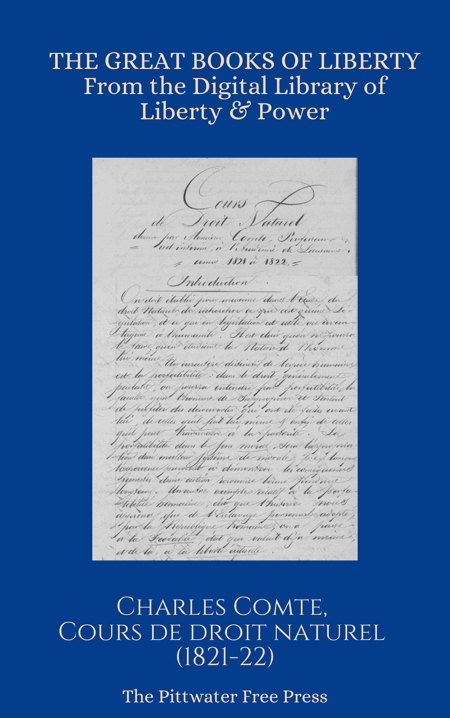
  • New: Charles Comte, Cours de droit naturel (A Course on Natural Law) (1820-21) (1821) in [facs. PDF] and [HTML]
  • New: Richard Cantillon, a translation of an Essai sur la Nature du Commerce en Général (An Essay on the Nature of Trade in General) (1755) in [HTML]. See the French original in [facs. PDF] and [HTML].
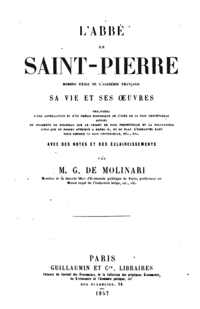
  • New: One of Molinari’s major interests was in war and peace, an interest which he pursued for over 50 years. He began with three entries in the Dictionnaire d’économie politique (1852-53) and summed up his life’s work on this topic in a lengthy book Grandeur et décadence de la guerre (The Rise and Fall of War) (1898). In the DEP he wrote entries on “Paix, Guerre (Peace and War)”, “Paix (Société et Congrès de la Paix) (Peace Society and Peace Congress)”, and “Saint-Pierre (abbé de)”. He followed the latter up with a book-length treatment on the peace advocate Abbé Saint-Pierre (1658-1743) in which he wrote a lengthy biography and very lengthy quotes from his writings interspersed with his comments and analysis which we have now put online: L’abbé de Saint-Pierre. Sa vie et ses Oeuvres (1857) in French [HTML] and [PDF. See also:
    • “Paix, Guerre (Peace and War)”, DEP (1852), T. 2, pp. 307-14; in French [HTML] and English [HTML
    • “Paix (Société et Congrès de la Paix) (Peace Society and Peace Congress)”, DEP (1852), T. 2, pp. 314-15; in French [HTML] and English [HTML
    • “Saint-Pierre (abbé de)”, DEP (1852), T. 2, pp. 565-66. in French [HTML] and English [HTML
    • Grandeur et décadence de la guerre (The Rise and Fall of War) (1898) in French [HTML] and English [HTML
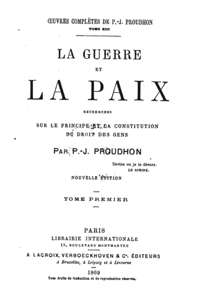
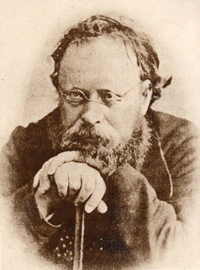
  • New: In addition to works in the classical liberal and libertarian traditions we have in the collection “Other Works” by authors who are either very hostile to CL ideas (such as socialists) or who are “fellow travellers”, in the sense that they share some views with CLs but not others. A good example of the former is the German arch-protectionist Friedrich List who wrote Das nationale System der Politischen Oekonomie (1841) [HTML]; a good example of the latter is the French left-anarchist Pierre-Joseph Proudhon (1809-1865). Proudhon was known to the economists in the Guillaumin group in Paris (the firm even published one of his books). We have online three of Proudhon’s works which deal with topics of interest to CLs: one on the right to property (which he rejected), one on federalism (which they agreed with), and now one on war and peace (which they would have found congenial – especially Bastiat and Molinari).
    • new: La Guerre et la Paix. Recherches sur le Principe et la Constitution du Droit des Gens ( 1st ed. 1861, 2nd ed. 1869) in facs. PDF – [vol1] and [vol2] and [HTML] (2-vols-in-1)
    • Qu’est-ce que la propriété ? ou Recherches sur le principe du droit et du gouvernement. Premier mémoire (1849) in [facs. PDF] and [HTML]
    • English translation by Benjamin Tucker: What is Property? First Memoir. An Inquiry into the Principle of Right and of Government (1876) in [facs. PDF] and [HTML]
    • Du Principe fédératif et de la nécessité de constituer le parti de la Révolution (1863) in [facs. PDF] and [HTML]

Authors this Month


Charles Comte (1782-1837)


Richard Cantillon (1680s-1734)


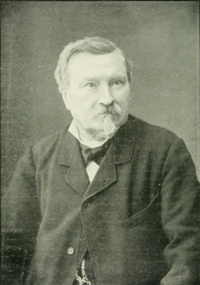
Gustave de Molinari (1819-1912)


Pierre-Joseph Proudhon (1809-1865)


MAY 2026

Papers I am working on:

  1. “The Political Economy of War and Peace: The Smithian and Saysian Traditions”
  2. “Gustave de Molinari on War and Peace”

Additions to the Library:

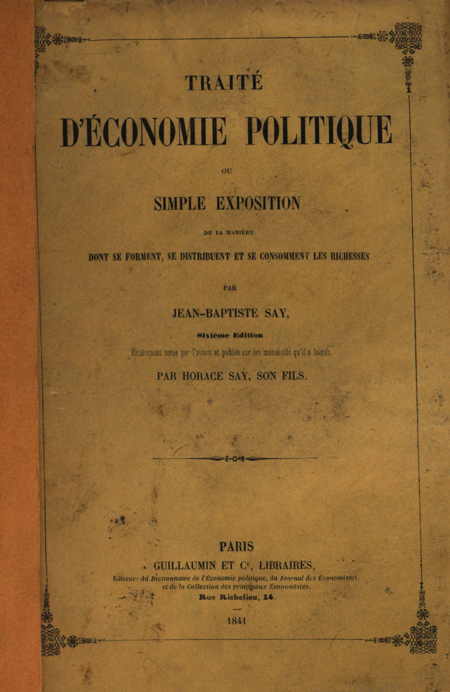
  • New: I have added another volume to the collection of texts in the Multi-Pane format which can be used to read complex texts which have many footnotes, glossaries, and indices. This one is the 6th edition of Jean-Baptiste Say, Traité d’économie politique (1841) which was edited by his son Horace 9 years after his father’s death [HTML]. It has a lengthy and very detailed “anaytical index” of the 600 page work, an “Epitome” or summary of his economic theory, and 527 footnotes. See also the full list of 9 texts in this collection which includes works by Smith, Bastiat, Mill, Molinari, and Pareto. [HTML].
  • New: I have translated the first part of a collection of essays by Charles Comte (1782-1837) and Charles Dunoyer (1786-1862) which they published in their journals Le Censeur (1814-1815) and Le Censeur européen (1817-1819) at the end of Napoléon’s rule and the beginning the restoration of the Bourbon monarchy. I have called it Censoring the State. The full collection of 35 essays is online in French (either as a list of the titles in a sortable table format with links in [HTML]; or as an anthology in one volume in [HTML]). Here are the 17 essays from their first journal Le Censeur (1814-1815) translated into English in one volume in [HTML]. I am working to finish the translation of the 18 essays from their second journal Le Censeur européen (1817-1819).
  • Updated: Ludwig von Mises, “Interventionismus,” Archiv für Sozialwissenschaft und Sozialpolitik (1926). [HTML]

A Note on Mises’ Theory of Interventionism

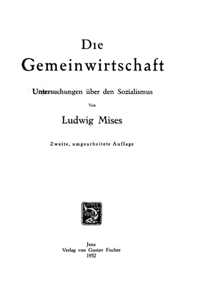
This essay follows on from his pathbreaking work predicting the failure of central planning introduced as a key platform of the Bolshevik Revolution in Russia. This critique began as an essay in 1920 which was followed by a book-length treatment in 1922 on “socialism” in general. This essay of 1926 broadened the critique to cover the general case of government “intervention” of all kinds in the economy, or what he later termned “Zwangswirtschaft” (an economy organised by compulsion or coercion in contrast to the market economy based on cooperation and voluntary exchange).

The centrally planned economy of the Bolsheviks was only the most extreme form of government intervention which also included the relatively more moderate intervention adopted by all western governments over the course of the twentieth century.

For example, the Bolsheviks learned from the experience of the German government during WW1 in organising the economy to better fight the war – the so-called “Kriegssozialismus” (war socialism); the increased intervention adopted by all countries during the Great Depression, and then of course the even greater intervention adopted by Nazi Germany and all other western countries during WW2. As Mises lived through these developments he chronicled them in ever increasing detail and theoreretical sophistication in several books which need to be carefully studied by scholars. In several shorter works written during and immediately after WW2 he explored some of the specific forms “interventionism” could take, such as:

  1. Interventionism: An Economic Analysis (1941)
  2. Omnipotent Government: The Rise of Total State and Total War (1944)
  3. Bureaucracy (1944)
  4. Planned Chaos (1947)

He summed up his thoughts in his treatise Human Action (1949) where he made the general distinction between three different types of economic organisation: “catallactics” or a market society based upon prices and voluntary exchange (Part Four of HA); “socialism” or an economic system without free market prices and markets in general (Part Five of HA); and the “hampered market economy” (Part Six of HA) which was somewhere between these two, and which could take a variety of forms.

Authors this Month


Jean-Baptiste Say (1767-1832)


Charles Comte (1782-1837)


Charles Dunoyer (1786-1862)


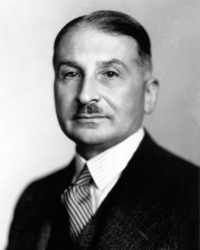
Ludwig Mises (1881-1973)


APRIL 2026

Papers I am working on:

  1. A talk on “The Declaration of Independence after 250 Years: Success or Failure?”. Lecture overheads [PDF] and [blog post]

Additions to the Library:

  • New: (to come)


MARCH 2026

Papers I am working on:

  1. (I was otherwise occupied this month.)

Additions to the Library:

  • New: No new material was added to the site this month as a redesign and rebuilding of the entire website was undertaken.


FEBRUARY 2026

Papers I am working on:

  1. “Pareto on the Ruling Class and Plunder” in [HTML]

Additions to the Library:

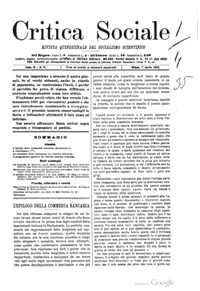
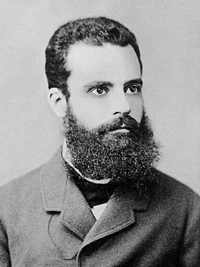
  • New: Vilfredo Pareto (1848-1923) often engaged socialists in debate. In this essay he agrees with the socialists in many of their complaints about the abuses of the modern Italian state, but asks them how they propose to prevent the much larger and interventionist socialist state they want to introduce from abusing its powers in the same way? See the Italian version and my English translation: “La risposta di Diogene sulle cause e sui rimedi degli scandali odierni” (Diogenes’ reply on the causes of and the remedies for today’s scandals), Critica Sociale (aprile 1893) in [HTML]


JANUARY 2026

Papers I am working on:

  1. [to come]

The 250th Anniversary of the American Declaration of Independence

2026 is the 250th anniversary of a number of important publications, such as the following:

  1. the publication of Thomas Paine, Common Sense; addressed to the inhabitants of America (10 January, 1776) in [enahanced HTML] and [facs. PDF]
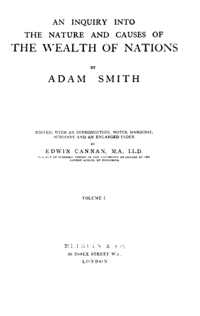
  2. the first edition of Adam Smith, The Wealth of Nations (9 March, 1776). We have this online in a “near replica” version of the first edition [enhanced HTML and facs. PDF vol1 and vol2] as well as Edwin Cannan’s edition of the 5th edition of 1789 (the last to appear in Smith’s lifetime) [enhanced HTML and multi-pane HTML; and facs. PDF vol1 and vol2].
  3. That same year Condillac published Le Commerce et le Gouvernement (Commerce and Government) (1776) which we have online in a near replica edition. [enhanced HTML and facs. PDF]
  4. George Mason’s (and others), “The Virginia Declaration of Rights” (May and 12 June, 1776). We have online Mason’s draft and the final official version. [enhanced HTML and facs. PDF and facs. PDF]
  5. Thomas Jefferson’s (and others), “The Declaration of Independence” (4 July, 1776). We have online the following versions of this important document (see below for the opening sentence of each version …):
    1. Jefferson’s draft and the final official version. [enhanced HTML and facs. PDF and facs. PDF]
    2. a German translation which was published in Philadelphia the next day. [enhanced HTML and JPG]
    3. the standard French translation done by La Rochefoucauld in 1783 in [enhanced HTML]
    4. a French version we have done in the style of Jefferson in [enhanced HTML]
    5. a Latin version we have done in the style of Cicero in [enhanced HTML]
    6. a Latin version done by an unnamed member of Harvard University in the 1820s in [enhanced HTML]
    7. a version “translated” into the American vernacular (1921) by H.L. Mencken in [enhanced HTML]
    8. a version we have “translated” into modern Australian English in [enhanced HTML]
    9. another version we have “translated” into more colloquial Australian English – the “backyard BBQ” version – in [enhanced HTML]
    10. my own updated version of a Bill of Rights written in time for this coming “Australia Day” (26 January, 2026) – “Libertas utrimque maris” (Liberty on both sides of the sea) in [enhanced HTML]

It seems only fair to allow King George III, whose government was so harshly criticised by Thomas Jefferson and his colleagues, the “right of reply”. So we have constructed a rebuttal which he might have made, concerning both the principles which lay behind the Declaration as well as the specific charges made against him. [HTML]

It is also worth noting that in 1975 (the 199th anniversary of the American Declaration) the Australian libertarian “Workers Paty” published its Party Platform which included a Bill of Rights which we have here.

  • see the sections “The Fundamental Principle”, “I.1. Individual Rights”, and “I.2. Rights, Justice and the Law” and the proposed Amendment of the Constitution concerning a “Bill of Rights” [enhanced HTML]

And to celebrate the 200th anniversary, since we don’t have one of our own, I have written my own “Declaration of Independence” and a “Bill of Rights” in time for “Australia Day” (26 January, 2026).

  1. “A Declaration of Independence from the State” (26 January, 2026) [enhanced HTML and PDF]
  2. “A New Bill of Rights and the Enumerated Powers of a Limited Government” (26 January, 2026) [enhanced HTML]

We should add these to the larger collection of 28 Declarations of Rights and Liberties which I put together in 2024:

  • On Limiting the Power of the State: A Collection of Petitions, Charters, Decrees, and Declarations of Rights and Liberties (1215-1848) (The Pittwater Free Press, 2024). In [enhanced HTML].

Additions to the Library:

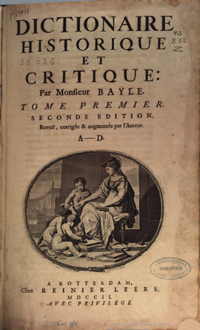
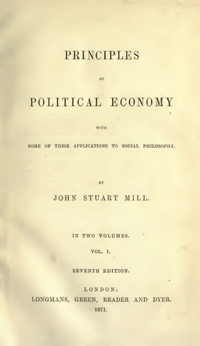
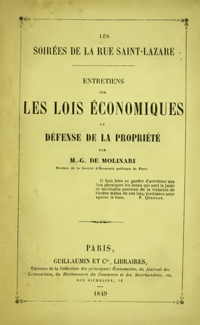
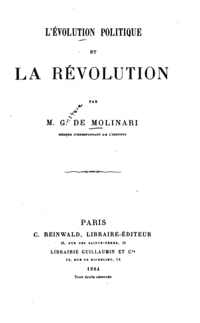
  • I have a new series of books online which use a new format to display text with complex and long footnotes, marginal notes, and glossaries which are placed side-by-side in order to make reading easier. This “Multi-Pane Reader” has been designed to make complex texts easier to navigate and read. Typically, these texts have glossaries, tables, indices, foot or end notes, and bibliographies which can only be consulted by interrupting the flow of reading and turning to the back of the book where they are usually located. In this Reader they are instead displayed in a 4th “pane” on the right-hand side while keeping the text visible in the larger central pane. In addition there is a “Contents” pane on the left which contains the table of contents, a “Main Text” pane where the body of the text (the chapters) is displayed in the widest pane, an “Endnotes” pane which contains the endnotes, and a “Resources” pane which contains other material. I have seven texts so far in this collection:
    1. an anthology of 47 entries from Pierre Bayle’s Dictionnaire historique et critique (1697, 1702, 1820) – selected because of its complex format of a main dictionary entry with long notes below it and marginal notes at the side; with the large notes having their own marginal notes off to the side [multi-pane HTML]
    2. my new translation of Les Soirées de la rue Saint-Lazare; entretiens sur les lois économiques et défense de la propriété (1849): Soirées on the rue Saint-Lazare: Discussions about Economic Laws and a Defence of Property. [multi-pane HTML]
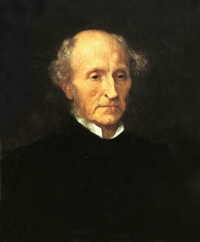
    3. John Stuart Mill, Principles of Political Economy with some of their Applications to Social Philosophy (1871) – the last edition published in Mill’s lifetime. [multi-pane HTML]
    4. my translation of Gustave de Molinari, L’évolution politique et la Révolution (Political Evolution and the Revolution) (1884) – selected because of its large number of very long footnotes. [multi-pane HTML]
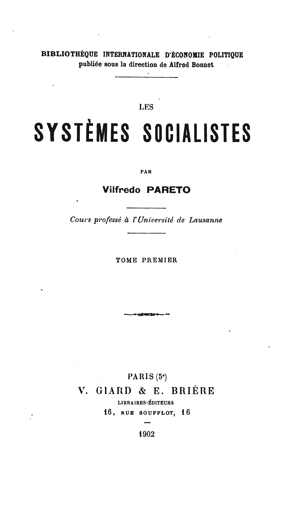
    5. Vilfredo Pareto, Les systèmes socialistes (1902-03) – selected because of its large number of footnotes, additions to the text, and extensive analytical tables and indices [multi-pane HTML]
    6. The Edwin Cannan edition (1904) of the 5th edition (1789) of Adam Smith, The Wealth of Nations – selected because of Cannan’s extensive notes, marginal summaries, and expanded index. [multi-pane HTML]
    7. Vilfredo Pareto, Traité de sociologie générale (1917-19) – selected because of its large number of footnotes, additions to the text, and extensive analytical tables and indices. [multi-pane HTML]

The opening sentence of the Declaration of Independence in various languages:

  • When in the course of human events it becomes necessary for a people to advance from that subordination in which they have hitherto remained, & to assume among the powers of the earth the equal & independant station to which the laws of nature & of nature’s god entitle them …
  • When in the Course of human events, it becomes necessary for one people to dissolve the political bands which have connected them with another, and to assume among the powers of the earth, the separate and equal station to which the Laws of Nature and of Nature’s God entitle them …
  • Wenn es im Lauf menschlicher Gegebenheiten für ein Volk nöthig wird die Politische Bande, wodurch es mit einem andern verknüpft gewesen, zu trennen, und unter den Mächten der Erden eine abgesonderte und gleiche Stelle einzunehmen, wozu selbiges die Gesetze der Natur und des Gottes der Natur berechtigen …
  • Lorsque, dans le cours des événements humains, il devient nécessaire à un peuple de dissoudre les liens politiques qui l’unissaient à un autre, et de prendre, parmi les puissances de la terre, le rang séparé et égal auquel les lois de la nature et du Dieu de la nature lui donnent droit …
  • Lorsque, dans le cours des événements humains, il devient nécessaire à un peuple de dissoudre les liens politiques qui l’unissaient à un autre, et d’assumer, parmi les puissances de la terre, le rang séparé et égal auquel les Lois de la Nature et du Dieu de la Nature lui donnent droit …
  • Cum in humanarum rerum cursu fiat interdum, ut populus alter ab altero dissolvat vincula, quibus inter se coniuncti sunt, atque inter nationes terrarum potestates sibi pares et separatas obtineat, ad quas Leges Naturae et Dei Naturae eum ius habere concedunt …
  • Quum in rerum humanarum cursu contingat, ut populus aliquis necessitate coactus vincula politica, quibus cum alio coniunctus fuit, dissolvat, atque inter terrarum potestates locum separatam et aequalem, ad quem eum naturae leges et naturae Deus vocant …
  • When things get so balled up that the people of a country have to cut loose from some other country, and go it on their own hook, without asking no permission from nobody, excepting maybe God Almighty, …
  • and in the cause of “Libertas utrimque maris” (Liberty on both sides of the sea), a couple of Australian versions for your edification and amusement:
    • When it becomes necessary for one people to break away from another, to cut the political ties that bind them, and to take up an equal and independent place in the world—as the laws of nature and the Creator entitle them to do …
    • Look, sometimes in life you’ve just gotta cut the cord. One lot of people decides they’ve had enough of being bossed around by another, so they break free and stand on their own two feet. When you do that, you’ve gotta give the world a heads-up why. …
    • WHEN, in the course of human events, it becomes necessary for every person to reclaim that sovereignty which nature vested in them from their first breath, and which no compact, no parchment, no vote of the many, nor decree of the few can justly alienate, …

Other Books this Month

Authors this Month


Pierre Bayle (1647-1706)


John Stuart Mill (1806-1873)


Gustave de Molinari (1819-1912)


Vilfredo Pareto (1848-1923)