| The Digital Library of Liberty & Power incorporating the Guillaumin Collection of the Great Books of Liberty |
Home | New | Authors | Works | Papers | Blog | About | Email | Search |
 |
|
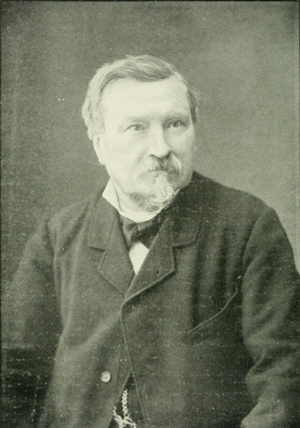
GUSTAVE DE MOLINARI,
A Sketch of the Political and Economic Organisation of the Society of the Future (1899)
|
 |
The Guillaumin Collection
 |
This title is part of “The Guillaumin Collection” within “The Digital Library of Liberty and Power”. It has been more richly coded and has some features which other titles in the library do not have, such as the original page numbers, formatting which makes it look as much like the original text as possible, and a citation tool which makes it possible for scholars to link to an individual paragraph which is of interest to them. These titles are also available in a variety of eBook formats for reading on portable devices. |
Source
, A Sketch of the Political and Economic Organisation of the Society of the Future. Edited and translated by Dr. David M. Hart (Pittwater Free Press, 2025).http://davidmhart.com/liberty/FrenchClassicalLiberals/Molinari/Books/1899-SocieteFuture/Molinari_Sketch1899.html
Gustave de Molinari, A Sketch of the Political and Economic Organisation of the Society of the Future. Edited and translated by Dr. David M. Hart (Pittwater Free Press, 2025).
See the long introduction I wrote for a Spanish translation of this book Online.
A translation of Gustave de Molinari, Esquisse de l'organisation politique et économique de la Société future (Paris: Guillaumin, 1899).
This title is also available in HTML and a facsimile PDF of the original French and various eBook formats - HTML, PDF, and ePub.
This book is part of a collection of works by Gustave de Molinari (1819-1912).
Table of Contents
- Introduction. Natural Laws , p. i
- I. The Driving Force of Human Activity
- II. The Natural Law of the Economy of Forces or of Least Effort.
- III. The Natural Law of the Competion to Live
- IV. The Natural Law of Value
- I. THE STATE OF WAR
- Chapter One. The Formation of Primitive Societies and the Necessary Conditions of their Existence., p. 3
- Chapter II. Competition among primitive societies and its effects., p. 9
- Chapter III. Competition among States on the path to civilization., p. 13
- Chapter IV. Decline of destructive competition., p. 17
- Chapter V. Why war persists after losing its reason for being., p. 24
- Chapter VI. Consequences of the persistence of the state of war., p. 34
- II. THE STATE OF PEACE
- Chapter One. The collective insurance of the security of nations., p. 47
- Chapter II. The free constitution of national groups., p. 57
- Chapter III. The free constitution of governments and their natural functions., p. 69
- Chapter IV. The free constitution of governments and their natural functions (continued), p. 76
- Chapter V. The Free Constitution of Governments and Their Natural Functions (continued), p. 87
- Chapter VI. Subjection and Individual Sovereignty, p. 94
- Chapter VII. Taxes and Contributions, p. 101
- Chapter VIII. The Production of Articles of Naturally Individual Consumption, p. 111
- Chapter IX. The Equilibrium of Production and Consumption, p. 118
- Chapter X. The Distribution of Products — The Share of Capital in the Results of Production, p. 133
- Chapter XI. The Distribution of Products — The Share of Labor in the Results of Production., p. 145
- Chapter XII. The Population Question., p. 156
- Chapter XIII. Consumption, p. 170
- Chapter XIV. The Expansion of Civilization, p. 181
- Chapter XV. Summary and Conclusion. p. 192
- III. APPENDIX
- Note A. — The Tsar and Disarmament , p. 209
- War Budgets
- Naval Budgets
- Note B. — Syndicates or “Trusts” Restricting Competition, p. 225
- Note C. — The Effects of Industrial Progress on the Market for Production, p. 228
- Note D. — What State Colonialism Costs and What It Yields, p. 230
- Note E. — The Economic Conception and the Socialist Conceptions of the Future Society, p. 235
- Note A. — The Tsar and Disarmament , p. 209
- Endnotes
[i]
Introduction. Natural Laws↩
“If there exists,” says Condorcet, “a science for foreseeing the progress of the human species, for directing it, for accelerating it, then the history of the progress it has made must be its primary foundation.” [1]
Only, one must go further. One must trace back to the causes of the progress that the human species has achieved since its appearance on earth, and of those it is still called upon to achieve. One must understand man, the laws that determine and govern his [ii] activity, the nature and the circumstances of the environment into which he has been cast to accomplish a task whose purpose eludes him.
I. The Driving Force of Human Activity
Man is an organism composed of matter and life sustaining forces—physical, intellectual, and moral forces. This matter and these forces that make up the individual and the species can only be preserved and developed on the condition of assimilating—or, to use the economic expression, consuming—materials and forces of the same nature; otherwise they waste away and their life eventually is extinguished. This wasting and this extinction of life cause pain and suffering. Under the pressure of this pain or suffering, man acts to acquire the materials necessary for the preservation and development of his life. These materials he finds in the [iii] surrounding environment, but apart from a small number that nature provides free of charge, he is obliged to discover them, to seize them, and to adapt them to his consumption—or, again using the economic expression, he is obliged to produce them.
Man faces another necessity inherent in the environment in which he lives: he must defend his life and the materials necessary for his life against numerous causes of destruction or plunder. The risks of destruction to which he is exposed from this source are for him another source of suffering or pain.
To meet this double necessity—feeding himself and defending his life—man resorts to labor: labor for producing the things necessary for his consumption, labor for destroying the causes or factors that threaten his security. Now, labor involves an expenditure of the forces that constitute one's life, hence pain and suffering. In [iv] return, the consumption of products that sustain life and of services that ensure it brings a satisfaction, a pleasure. But whether it concerns nourishment or security, this pleasure is bought at the price of pain. It is an exchange, and like any exchange, it can result in either a profit or a loss. It results in a profit when the amount of vitality gained or secured exceeds the amount of life sustaining forces expended in the labor, which constitute the costs of production of the product or service. It results in a loss when the expense exceeds the income. That being the case, man is only stimulated to undertake labor insofar as he estimates that the income will exceed the expense, that the pleasure will surpass the pain; and this stimulus is all the stronger the greater the difference, the higher the profit. The acquisition of this profit is, in the final analysis, the driving force of human activity as it is for all other [v] creatures, and this driving force has been given the name self-interest. [2]
[vi]
II. The Natural Law of the Economy of Forces or of Least Effort.
From this driving force, which has its root in human nature and in the conditions of human existence, there derives a first natural law: [3] the law of the economy of forces, or of least effort. Under the stimulus of the driving force of self-interest, man provides for his most intense needs first, those that demand satisfaction with the greatest urgency, or whose lack causes the greatest suffering; [vii] he then seeks to diminish his expenditure by choosing the industry that yields him the highest profit, by striving to discover methods and create tools that make his labor more productive—that is, that increase the surplus of acquired or secured materials over the sum of life sustaining forces expended, and ultimately always, the surplus of pleasure over pain.
This surplus of income over expense, this profit, the individual may consume immediately to obtain present satisfactions, or he may preserve it, accumulate it in order to increase his productive power, or simply to provide for future needs, thus sparing himself privations or preparing for risks that might destroy his life. Those who make the most useful use of it—that is, the use most suited to preserving and increasing their life sustaining forces—become the strongest, and they prevail when they find themselves in conflict with other individuals of the [viii] same species or of different species in the struggle for acquiring the materials necessary for life.
III. The Natural Law of the Competion to Live
1.) Animal competition.—This struggle for the acquisition of “the things necessary for life,” to which the name competition to live has been given, [4] begins as soon as these materials become insufficient to nourish both the weaker and the stronger. In primitive times, when man, still incapable of increasing his supply of food, [5] was limited to what nature offered him—when he lived by hunting and gathering the natural products of the soil—this shortfall could not long be delayed. Then, the strongest, those most capable of catching game and seizing edible plants, had to prevail and survive, while the weakest, the least capable, were condemned to perish. [ix] This was the initial form of competition, the one common to man and to the lower species, and which we have designated by the name animal competition.
2.) Destructive or bellicose competition. [6] — However, as food became scarcer, even the strongest were forced to increase their expenditure of labor, and hence their amount of pain, in order to acquire the same quantity of food. They were therefore stimulated to seek a way to reduce the growing amount of labor and pain caused by this growing scarcity. This way (of acquiring food) could consist only either in increasing the quantity of food or in decreasing the number of competitors for it. Now, the increase in the supply of food required knowledge that the more intelligent varieties of the species could only acquire over time—and that many tribes, still in a savage state, do not yet possess. The stronger could, [x] on the other hand, discover through a very simple calculation the advantage which was offered by the second method, and thus rid themselves, thanks to their physical superiority, of their weaker competitors. One may even conjecture that the invention of this elementary method was the first manifestation of man’s intellectual superiority over other species, which are incapable of making the calculation this invention implies.
To be sure, eliminating competitors for food required some expenditure of labor and entailed some risk. But between competitors of unequal strength—and this inequality is great among the various human varieties—victory required little expenditure and involved little risk. The strongest therefore found it profitable to eliminate the weakest, even when they did not feed on their flesh, rather than continue to share with them a limited stock of [xi] food. In other words, the amount of labor and pain it cost them to destroy the weaker was less than what the growing scarcity of food would have cost them had they let the weaker survive. The difference constituted the profit of the operation. In the case of cannibalism, the profit was doubled: the amount of food was increased and the number of competitors for food was diminished.
This second form of competition is none other than war: it appeared, by all appearances, first between men and animals competing for food, then among men themselves, and it has never ceased to exist. It brought about the creation of a set of tools for destruction which ensured the existence of the human species by giving it victory over rival species which were better equipped with natural weapons, and which indirectly, at least, led to the invention of the industries [xii] that enabled man to increase his means of subsistence instead of being reduced, like the animals, to just what nature provided. [7] Then, the stronger found it profitable to enslave the weaker instead of massacring and robbing or even devouring them. Political States [8] were founded, and competition in the form of war took place. [9] This war, was on the one hand, between the firms that owned the land and the enslaved population, [10] and the hordes that remained in a savage state and continued to live by hunting and pillaging. On the other hand, there was war between those very same firms who were seeking to increase their means of subsistence by extending their domains and by increasing the number of their slaves, serfs, or subjects. These are still, in our own day, the two principal objectives of war: the defense of States and their enlargment.
[xiii]
Under the direct or indirect impulse of this second form of competition, progress was made that gave rise to a third, namely productive or industrial competition. Let us briefly recall how this developed. [11] Continually threatened with destruction, or at the very least, with dispossession, the firms which founded and owned political States [12] had to devote themselves to improving the tools and increasing the material necessary for their power. These tools and materials were of two kinds. First, they consisted in an apparatus for destruction, [13] that is an army; and secondly, in an apparatus for production, both of which were capable of providing for the subsistence of the members of the firm which owned the State and of its subjects, [14] 13. and of furnishing the advances necessary to create and operate the apparatus of destruction. Under the pressure of bellicose competition—and all the more so as that [xiv] pressure became more intense—those firms which owned States were thus stimulated not only to improve the art and equipment of war, but also to increase the production of the industries that furnished them, along with the means of their subsistence, the resources necessary for the defense and enlargement of their establishments. Now, the progress that increases the productivity of any industry is dependent on two conditions: security and freedom. The producer must be assured of being able to enjoy, to some degree, the fruits of the progress he achieves, otherwise he will have no interest in bearing the pain implied by the discovery of techniques or the invention of tools and machines that make labor more productive. He must also be free to apply himself to the industry for which his faculties best suit him, and to dispose of the products of his labor in the way most conformable to his self-interest. The States [xv] in which the populations engaged in productive labor have acquired security and freedom to the fullest extent have seen their power grow to the highest degree. They have become the strongest, and by progressively extending the realm of security and freedom, they have brought about and developed the third form of competition: productive or industrial competition, destined to replace the second, just as the second replaced the first.
3.) Productive or industrial competition. — Like the previous one, productive competition gives victory to the strongest, to the most capable, to the advantage of the species. But these two forms of the struggle for life proceed in different ways, even though their objective is the same.
Destructive or bellicose competition proceeds by direct struggle. Two famished tribes enter into competition for possession of a source of edible plants [xvi] or a hunting ground. The stronger tribe drives out or exterminates the weaker and seizes the means of subsistence that are the object of the struggle. Later, once man had learned to increase the materials necessary for the maintenance of life, the “firms” of strong men who founded the exploitative enterprises known as political States [15] competed to seize a territory and to subjugate its population. But their objective was the same as that of the primitive tribes: they sought to obtain the means of subsistence by appropriating, through forced labor or taxation, all or part of the net product of the labor of their slaves, serfs, or subjects. This struggle then takes the name of political competition, but it differs in no way, in its methods, from that waged by hunting and warrior tribes. Both proceed by way of the direct destruction of the competitor, and both belong to the [xvii] category of destructive competition or war.
Productive competition has a different process, even while also resulting in the victory of the strongest or most capable. But if the strongest wins, it is not he who judges and decides the outcome; it is a third party—the consumer of the product or service offered by the competitors. After judging the offers presented to him, the consumer gives preference to the competitor who, in exchange for a given quantity of products or services, or for the equivalent amount of money, offers him the greatest quantity, or, at equal quantity, the best quality of the product or service he needs and is seeking; in other words, he gives preference to the lowest price. But which of the competitors can offer his products or services at the lowest price? It is the one whose productive power is superior [xviii] to that of the others—the strongest or most capable.
That being the case, what is the effect of competition in its productive form?
It is to stimulate competitors to increase their productive power or capacity, under penalty of being unable to obtain, in exchange for the products or services they create and offer, those which they need in order to subsist and which they are seeking.
The increase in productive power or capacity takes place through the extension of the division of labor, and the invention and implementation of methods, tools, and machines that allow an ever greater quantity of products and services to be created in exchange for the same amount of labor and pain.
Productive competition thus cooperates with the law of the economy of forces in determining the progress of production. It is a propeller. [16]
[xix]
But it also fulfills another function no less useful. It acts to balance production and consumption at the level of the costs necessary for the creation of products and services. It is a regulator.
This function it fulfills with the cooperation of another natural law: the law of value.
IV. The Natural Law of Value
What is value? It is a power that has its source in man himself. It resides in the whole of the vital, physical, and moral forces with which he is endowed, and which he applies either to destruction or to production. Applied to destruction, it constitutes military or bellicose value, and it was the most useful to the species—hence the most esteemed—as long as war was necessary for the establishment of security [xx] in the world. [17] But it is in its application to production that its role in the regulatory function of competition appears. How is production carried out? Through labor involving an expenditure of life sustaining forces, in other words, through pain. What stimulates man to make this expenditure? It is the prospect of obtaining a product that gives him pleasure or spares him pain greater than that caused by the expenditure; the difference constitutes a profit. It is in view of this profit that he works. But what becomes of the vital power he has thus spent? This power does not disappear—it externalizes itself; it reappears, increased by the profit, in the product, and it constitutes its value. This value, man [xxi] in isolation consumes himself after producing it. But it is otherwise under the regime of the division of labor and exchange. Under this now predominant regime, the producer offers the products into which he has invested value and asks in exchange for those he needs or the equivalent with which he obtains them: money. The aim he pursues in conducting this exchange is, in the final analysis, to obtain a vital power greater than that which he expended in creating his products—in economic terms, to cover his costs of production with the addition of a profit. But for him to reach this goal, what is needed? The product he offers must provide to the person who needs and demands it—the consumer—a life-giving or life-restoring power great enough to lead him to give, in return, a product or an equivalent sufficient to reconstitute the vital power expended in [xxii] production, plus a profit. As this profit grows with the value of the product, the producer strives to raise the value to the highest possible rate, while the consumer, on the contrary, strives to obtain it at the lowest rate. What determines this rate in the exchange? It is the comparative intensity of the needs of the two parties: the producer’s need to sell, and the consumer’s need to buy. And how does the intensity of need translate in the exchange? By the faster or slower increase in the quantities which are offered—the quantity of the product on one side, the quantity of money on the other. Several different cases may arise: 1.) Two traders only may face each other; 2.) a single producer facing more or less numerous consumers, or a single consumer facing several producers; 3.) enough producers on each side to create competition, some for selling, others for buying. In these [xxiii] various cases, it is always the comparative intensity of needs that determines the rate of exchange or the price, but it will suffice for us to consider the last case. In this case, if the holders of the product offered for exchange are numerous and the quantities of the product abundant, each of them will hasten his offer for fear of being preempted by his competitors, while consumers, assured of being supplied, will slow down theirs. Then, the price will fall in proportion to the inequality of the two movements. Conversely, it will rise if the quantities offered are insufficient, producers being certain of selling and consumers fearing they may not obtain the product. But—and this is an essential point—the upward or downward movements of the value of the products do not develop only in proportion to the quantities offered for exchange; they develop geometrically. For in the case where the quantities [xxiv] of the product are insufficient, the movement of supply slows while the movement of demand accelerates; conversely, when the quantities of the products are overabundant, the movement of supply accelerates while the movement of demand slows. What results from this? In the first case, the value of the product offered for exchange rises with an increasingly rapid impulse, such that it exceeds the costs of production and the necessary profit, while in the second case it falls by the same impulse to the point of not covering the costs of production and replacing profit with a growing loss. [19]
We now see how the regulatory action of competition operates: it does so by causing the rate of value in the exchange —in other words, the market price—to gravitate toward the amount of the costs of production plus the [xxv] necessary profit to stimulate the creation of the product or service, or, to use Adam Smith’s characteristic term, toward the natural price. Indeed, when the quantities produced and offered for exchange are overabundant, the market price falls; and as its fall develops with geometric acceleration, it soon drops below the natural price. Then, profit disappears and quickly gives way to loss; production diminishes, and the market price rises again to reach the natural price and even to exceed it. If it exceeds it, profit then rises above the necessary rate; this rise inevitably attracts capital and labor, and provokes an increase in production—and therefore in the quantities offered. It is therefore not necessary, as socialists claim, for the State or any other authority to take charge of regulating production. This useful regulation takes place on its own through the cooperation [xxvi] of the natural laws of competition and value. It is enough not to place obstacles in the way of their regulatory operation, or, if they encounter obstacles, to let them act so as to clear the way—in a word, it is enough to let them be. [20]
Such is the driving force and such are the laws that govern human activity—the driving force of self-interest, the law of the economy of forces or of least effort, the law of competition in its various forms, and the law of value. It is under the impulse of this driving force and these laws that man has made the progress that has lifted him above living like animals [22] and raised him to a state of civilization, passing through the state of war to arrive at the state of peace.
As long as the state of war imposed itself on man as a condition of existence and progress, this driving force and these laws acted to adapt the political and economic organization of societies to it. Since war has done its work in ensuring [xxvii] the security of civilization, and the state of peace now asserts itself in turn, this organization is beginning to change under the impulse of the same driving force and the same laws. At the point to which evolution has now advanced, one can already foresee what the political and economic organization of future society will be. As I have tried to demonstrate in my previous works, [23] which this one summarizes and completes, it will have nothing in common with the arbitrary conceptions of the socialists, for it will be founded not on laws made by the hand of man, but on laws emanating from the same source as those that govern the physical world, and of which one of the fathers of political economy, Quesnay, said: [24]
“One must be careful not to attribute to the physical laws the evils that are the just and inevitable punishment for the violation of the very order of those laws, instituted to produce good.”
I. THE STATE OF WAR
[3]
Chapter One. The Formation of Primitive Societies and the Necessary Conditions of their Existence.↩
The formation of primitive societies has been attributed to a particular feeling of sympathy that man supposedly has for his fellow beings, but more accurate observation shows us that this feeling is by no means preexistent in human nature. Either it was born from the need that men have for one another and the interest that this need arouses; or a man is the friend of another man only insofar as there is harmony of needs and interests between them; while the opposition of needs and interests immediately gives rise to a feeling of antipathy—and even that no [4] being arouses in man a hatred more violent and more implacable than his fellow man. If men associated with each other, it was because they needed one another; it was because, by associating, they could spare themselves suffering that would have been impossible to avoid and obtain enjoyment that would have been equally impossible to secure by remaining isolated. This is the case, moreover, with all living species: individuals who can survive without the help of their fellows and for whom association would be more harmful than helpful live in isolation; such is the case with most carnivores. It is the need for mutual assistance that leads the others to associate with each other, and such is the case for the human species. Association imposed itself on it as a vital need for preservation: first, in its struggle with animals for which man was both a competitor and a prey; then, in the struggles among men themselves. The individuals who were physically weaker but intelligent enough to associate with each other [5] and combine their forces were thus able to tip the balance in their favor and preserve themselves for the benefit of the species.
However, this progress required further developments. It was not enough for the weaker to combine their forces to resist the stronger; they had to find means to keep those forces united, as well as to arrange and coordinate them in a way that would produce the greatest possible amount of power for fighting. This twofold need led to the creation of an organisation or body [25] which we find even in the least progressive societies, and whose rudiments can even be seen in animal societies—that is, a government.
Even the most cursory examination of the conditions under which nascent societies could remain united and grow in strength explains the role of this body and its natural constitution. These conditions could be summed up in the establishment of external and internal security, which implies recognizing and separating acts that are useful to society from those that are harmful, and protecting the former against the latter. The body charged with providing security for the association—on which [6] the security of its members depended—thus had to be composed of the individuals most capable of discerning the useful or harmful nature of actions (that is, the most intelligent), and of the individuals most capable of repressing harmful actions (that is, the strongest). Such was the natural constitution of governments.
No doubt, the rules to which the name “laws” has been given, which a government establishes in order to separate what is useful from what is harmful, what is right from what is wrong—these rules, which observation and experience lead one to discover—are always more or less well adapted to their purpose. They are all the better suited, and all the more “just,” the more effectively they help ensure the preservation of society by increasing its power. In any case, at the outset, they more surely attained this necessary goal than did the individual rules they replaced.
Likewise, however imperfect or unjust the government of primitive societies may have been, it provided individuals with a level of security superior to what they could have produced [7] on their own. For it countered the risks which were threatening each individual with the organized forces of the entire association. Moreover, this superior security cost less. Whereas by remaining isolated, the individual would have had to devote the greatest part of his time and energy to defending his life and means of subsistence—while having only the weakest chances of ensuring their preservation—he could now devote the portion of time and energy made available by this progress either to satisfying less urgent needs, or to discovering materials and inventing tools or techniques capable of making his labor more productive, and thereby increasing the sum of his pleasure or reducing that of his pain.
It is a common interest—the interest in the security of their lives and means of subsistence—that unites the members of the same society. This interest gives rise to and develops in them a sui generis (unique) feeling of sympathy for their fellow members and for society itself. But this feeling does not extend beyond the boundaries of the association—whether herd, clan, or tribe. On the contrary, individuals who do not [8] belong to it, and the societies to which they belong, arouse a feeling of repulsion and hatred, due to the natural opposition of their interests to those of the association. For in this early age, when man had not yet learned to incrsease his supply of food and was obliged to rely on what nature offered him, a society could only increase its own supplies at the expense of its competitors.
[9]
Chapter II. Competition among primitive societies and its effects.↩
When their population came to exceed the means of subsistence—which they had not yet learned to increase—primitive societies were obliged either to eliminate the surplus population or to seize the hunting grounds or sources of edible plants belonging to some foreign tribe. The strongest prevailed and exterminated the weakest. Stimulated by the need for survival, and aided by the time and labor savings that association with others afforded them, the more intelligent among them sought to compensate for their inferiority in strength by inventing weapons and methods of destruction that tipped the balance in their favor and secured their victory—at least until such progress [10] was imitated by competing tribes. But the invention and improvement of the machinery of destruction [26] suited both to hunting and to war had another result: it caused game to become scarce by making it easier to capture. From this arose, in tribes too weak to increase their means of subsistence at the expense of their neighbors, the need to increase it by other means. The spirit of observation and the aptitude for invention responded to this need by achieving the decisive progress that was to elevate the human species above living like animals: in place of destructive industries, which it shared with animals and which limited its population to the food resources nature provided, it developed productive industries [27] that would indefinitely increase its means of subsistence and give it mastery over the globe.
The tribes of a few hundred individuals, for whom a vast territory provided only a precarious supply of food, were succeeded by numerous nations amply supplied with the materials for sustaining life. However, the very progress that multiplied their means of [11] subsistence also increased the risks of destruction posed by the competition of tribes that continued to live by hunting animals and men. On one hand, the wealth they accumulated aroused ever more intense desires in these tribes of hunters and plunderers, by making an invasion followed by a raid more and more profitable. On the other hand, the people who now sought their means of subsistence through agriculture and peaceful trades—brought into being by the increasing productivity of the food industry—these people on the path to civilization lost, through lack of use, the skills required for the destructive industries of hunting and war. They would inevitably have succumbed in this unequal struggle, and civilization would have diedd in its crib, if the same phenomenon that had led to the replacement of hunting by agriculture had not also brought about the replacement of massacre and pillage by subjugation and exploitation. Raids provided only resources that were quickly exhausted, and whose yield diminished as massacre [12] and pillage, carrying out their work of destruction, transformed into deserts regions once made fertile by the labor of a working population. Then, as the temporary profits of pillage declined and threatened to vanish, the more intelligent of the pillaging tribes invented and implemented an effective means not only of preserving but even of increasing those profits. They permanently occupied the regions they had previously been content to ravage during their incursions, and they enslaved the populations instead of massacring them. These populations the pillagers—now become conquerors—compelled to work for them and to provide them with all or part of the net product of their labor. Then, too, they became interested in protecting them. They founded (business) establishments whose purpose was the exploitation of conquered territories and enslaved populations, that is political States, in which they enforced security and which they defended against the invasions of barbarians who still lived by pillage. This was yet another decisive step forward, for it was to have the ultimate result of insuring civilization against the risk [28] of destruction and regressions into barbarism. [29]
[13]
Chapter III. Competition among States on the path to civilization.↩
From the moment they founded these enterprises for the exploitation of conquered territories and subjugated populations, which have been called political States or simply States, the conquering societies [30] had to struggle against two kinds of competitors: the tribes particularly skilled in warfare that continued to live by pillage, and the other firms which owned States and were interested in developing their own enterprises as much as possible.
Like all other founders and owners of enterprises, those of political States had as their objective the increase of profits from the industry on which they depended for their means of subsistence. This objective they could pursue in two different ways: 1.) by increasing the [14] net product they extracted from the exploitation of the subjugated populations; 2.) by conquering additional territory and new "subjects." But increasing the net product required progress that could only be achieved gradually: the owners of the State had to improve their system of government and their methods of exploitation in such a way as to stimulate the subjugated populations to produce more; they would haveto grant them more freedom, to the degree that they showed themsleves cabable of governing themelves, [31] and above all, they would have to leave them a larger share of the product of their labor. Now, the absolute power that conquest and appropriation had conferred upon the owners of the State over their subjects—sanctioned by the overwhelming superiority of their organized forces—allowed them to treat them as so many cattle, and their natural greed drove them to leave these human cattle only the bare minimum necessary for survival, often even less than that minimum. Only after a long and costly experience of the losses and damages caused to themselves by excessive taxation did the owners of States [15] begin to understand that the most effective and secure means of increasing the net product—whether collected in the form of forced labor, taxes in kind, or money—was to encourage producers to increase the gross product. Compared to this, the conquest of additional territory and subjects was easier, and it better suited the faculties and combative temperament of the members of conquering firms. Thus, it has always been the principal, if not the sole, objective of their policy.
But this competition for the acquisition of exploitable territories and subjects had results that the competitors did not foresee. It forced the firms which owned States to carry out, under pain of partial or even total dispossession, all the improvements that make them stronger, whether by improving their political and civil institutuions, their fiscal and economic regime, or by improving the methods, personnel, and equipment of the destructive industry.
Everywhere and at all times, political, military, civil, fiscal, and economic institutions have been improved under the impulse of this [16] form of competition; and everywhere and always, the most progressive societies—those that developed to the highest degree their destructive and productive power, in a word, those that became the strongest—prevailed over their rivals. We have examined the process of this development in our previous works; [32] we have seen how the advances in the industry of destruction, by successively expanding the markets for production, have driven its progress; and how, finally, both have definitively secured the security of civilization. [33]
[17]
Chapter IV. Decline of destructive competition.↩
Like all other branches of human activity, war is driven by the driving force of profit. Now, the combined progress of the arts of destruction and of production has had the result of continually lowering the rate of this profit for warlike and pillaging people who primarily sought their means of subsistence from raids carried out on the domains of civilized people. These enterprises have become less and less profitable as the art and equipment of war have come to require a moral strength, a knowledge, and an investment of capital that only civilization makes possible. This is why raiding for plunder, after long yielding rich returns to the barbarian hordes for whom it was therefore a favorite occupation, eventually [18] began to result in losses. Then, like all unprofitable enterprises, it was abandoned—or at least, it now occurs only as an exception on the most remote and least guarded frontiers of the civilized world. After having been continuously exposed to barbarian invasions, the civilized nations began, several centuries ago, the conquest of the parts of the globe still occupied by such tribes. Once this conquest is completed—and all indications suggest it will be within a century—the wars it has provoked will naturally come to an end.
But these wars today are of only secondary importance, and they employ only a nearly insignificant portion of the destructive power of civilized States. It is the wars between those States themselves that absorb the greater part of their forces. In most nations, this destructive industry requires more capital and employs more hands—if not more minds—than any productive industry, agriculture excepted. What has been, and what is today, its situation from the standpoint of profit?
[19]
Until the time when the security of civilization was definitively assured against barbarian invasions, this profit was of two kinds. It consisted, on one hand, in the material gain and the moral satisfactions reaped by the victor; on the other, in the increase in security that the progress of the art of destruction brought to the civilized world—progress that could only be achieved through war.
The material and moral profits brought by war to the victorious State have, at all times, been concentrated almost exclusively in the hands of the firm which owns and governs the State. These profits were highest when the conquest of a territory resulted in the division of the land and of the subjugated population among the victors, providing them in addition with a glory and prestige all the greater because victory spared them the treatment they inflicted upon the vanquished. That same victory protected the population of slaves, serfs, and subjects from the harms of invasion and subjugation of new masters, who were often cruder and greedier than the previous ones; furthermore, [20] any war that led to progress, however slight, in the art of destruction contributed to the eventual securing of civilization. But these various profits steadily declined as conquest ceased to result in the massacre or enslavement of the vanquished, and as it no longer subjected conquered people to anything more than a rule scarcely different from what they had known before; finally, once the security of civilization was fully ensured, war no longer brought any profit from that source.
What, then, is the current profit of a war, and who receives it?
What remains of it is concentrated in the ruling class [34] of States and is divided between the military and civil elements. For the hierarchy of professional soldiers, it consists in increased pay and opportunities for promotion, in extraordinary rewards granted to military commanders, and in the glory associated with their names—though this glory has diminished along with the dangers and hardships from which victory once protected the nation and the benefits it [21] could once provide. For the politicians who govern the State, the profit of a successful war takes the form of increased power and influence, although their rule remains as precarious as ever. For civil servants of all ranks, the benefit of war—at least when it results in territorial annexation—lies in the extension of career opportunities; however, this benefit is only temporary, for annexed territories also produce civil servants who eventually compete with those of the annexing nation. If, instead of territorial expansion, victory brings only a war indemnity, that indemnity is mostly absorbed by the rebuilding and expansion of the apparatus of war.
By contrast, the losses and damages that every war inflicts on the large number of people devoted to productive industries—among neutrals as well as belligerents—have steadily increased since the transformation of the machinery of destruction and production has made war more costly and has extended and intensified the harms inherent in it. These [22] losses and damages are of two kinds: direct and indirect.
The direct losses consist in the destruction of men and capital that every war entails, and they have naturally increased with the power that rising population, wealth, and credit—especially in the past century—have conferred upon most States in the civilized world. The loss of men is no less serious than that of capital, since it removes the flower of the able-bodied population and weakens the race.
To these direct losses are added indirect damages, which increase as interests become more internationalized: markets shrink, the volume of trade decreases, the demand for capital and labor comes to a halt, and while expenditures increase, the resources needed to meet them grow more slowly—all without these losses and damages now being offset by any general increase in security.
Finally, the persistence of war obliges all nations to maintain, on a permanent basis, [23] the armaments it demands, and the very advances in destructive power impose ever-growing burdens on them in this regard—for every time one State improves its war equipment, the others are compelled to follow suit. This is why, even in peacetime, war and the debts it has caused absorb an ever larger share of the revenues of modern States, while also diverting from productive industries an ever greater number of individuals, whom it consigns to idleness and demoralization, until it employs them in the work of destruction.
In sum, war, after having accomplished its original task of producing security, has ceased to be useful and has become harmful. As we shall see, it is doomed to disappear and give way to a superior form of competition: productive or industrial competition.
[24]
Chapter V. Why war persists after losing its reason for being.↩
Now that war no longer produces security, the large number of people who draw their means of subsistence from industry bears its costs and damages without any compensation, but it does not possess the power necessary to bring it to an end. That power belongs to governments. Yet, while the interest of governments may ultimately align with that of the governed, it is immediately opposed to it. What, in fact, are governments? They are enterprises that produce various services, beginning with internal and external security. Those who direct them—civilian and military leaders—naturally have an interest in expanding them, because of the material and moral benefits that such expansion [25] provides. Their tendency, therefore, is to increase their powers domestically, by encroaching on the domain of other enterprises, and to extend their domination externally through territorial annexations. They need not concern themselves with the cost of their services or their conquests, for it is the nations who bear the expense.
In contrast, the nation, which stands before its government as a consumer before a producer, has an interest in demanding only those services that the government can provide better and at lower cost than other enterprises, and in paying for them as little as possible. The same applies to territorial annexations: the additional markets they provide must cover the cost of acquisition and yield a profit at least equivalent to what the nation could obtain from any other use of its capital and labor. But between the government as a producer and the nation as a consumer, the situation is not equal: the government imposes its services, and the nation is obliged to accept them. It is true that in countries called constitutional [26] the nation has obtained the right to consent to those services and to debate their price, but despite the many reforms and revolutions that have taken place over the last century, this right has remained powerless to establish equality between the producer and the consumer of public services. Moreover, modern governments are less interested than their predecessors were in refraining from abusing the strength and resources of the nation, and the nation itself is less interested and perhaps also less capable of preventing such abuse.
Under the old regime, the political establishment—the State—was the permanent property of the association of strong men who had founded or conquered it, and the members of this association, beginning with the chief, succeeded one another from generation to generation in the part of the common domain allotted to them and in the functions attached to it. They were therefore bound by the strongest sentiments of the human soul—love of family and of property—to bequeath to their descendants a domain improved and enlarged. But this could happen only if the State increased its power and resources, [27] or at least preserved them intact. There was also, in the taxes they levied on their subjects, a fiscal limit that they could not exceed without harm and danger to themselves. When they abused their sovereign power of ownership to exhaust the contributive capacity of the subjugated population, when they squandered the proceeds of excessive taxes, the State grew poorer and weaker. Then, its owners became less able to resist competitors who were always alert and ready to seize a favorable opportunity to enrich themselves with their spoils. The perpetuity of State ownership and the pressure of competition in the form of war served as safeguards against abuse of the sovereign power that rulers held over the ruled.
However, as the threat of invasions diminished, and as the progressive transformation of war matériel required ever greater capital outlays, the pressure of competition ceased to be continuous and consequently became less effective. The owners of the State [35] nonetheless continued [28] to impose on their subjects burdens and obligations no longer justified by the same dangers, and they provoked in the classes whose increasing industrial and commercial development had strengthened their power a growing discontent that ultimately led to the overthrow of the old regime.
The characteristic feature of the new regime, that which distinguishes it—at least in theory—from the old, is the transfer of the political establishment, the State, and consequently the sovereign power inherent in the right of ownership over the domain and the subjects of the State, to the nation. This power, whose exercise was conferred upon the head of government—most often hereditary—of the political establishment, and which placed at his disposal the lives and property of the subjects, had its reason for being in the state of war. It was necessary that the leader, responsible for the preservation of the State, be invested with unlimited power to requisition individual forces and resources and to use them in all circumstances where he judged it necessary, whether to defend the State or to increase its power through territorial expansion. The attribution of ownership of the political establishment [29] to the nation did not eliminate this necessity. So long as the state of war continued, it remained necessary to vest the government, responsible for the nation’s security, with the same unlimited right of requisition over the lives and property of individuals that the rulers of the old regime possessed. Only, the experience of the past having shown that holders of sovereign power never failed to abuse it, it became indispensable to guard against this abuse. How did the theorists of the new regime proceed? Experience having also shown that the nation could not itself fulfill the function of a government, they granted it only the right to appoint delegates charged with exercising its sovereignty. [36] But since these delegates might be unfaithful—or, over time, simply cease to represent the true will of the nation—the duration of their mandate was limited, more or less strictly. Finally, since experience showed that the delegates could no more than those who gave their mandate to them fulfill the functions of a government—organizing and implementing the machinery necessary for the production of external and [30] internal security, and for other services attributed rightly or wrongly to the government—“constitutions” granted them only the legislative power, along with the right to delegate executive power to ministers responsible to them and required, under penalty of dismissal, to conform to the will of the majority in the assemblies of delegates. This mode of apportioning and exercising sovereignty has, to be sure, its variants. In constitutional monarchies, the head of government has remained hereditary, but he has been declared not be "responsible", and his sole function is to appoint the ministry which is responsible and which was designated for him by the majority of the nation’s delegates. These delegates are chosen, nominally, by the nation or by that part of the nation endowed with political rights—but in fact by associations or parties, which compete for control of the State, because of the material and moral benefits that such control provides. These political associations are, in reality, nothing more than armies organized for the conquest of power. Their immediate interest is to increase the number of their adherents andto obtain a majority [31] in the elections. To this end, their leaders promise influential voters a share in the spoils—positions or privileges; but they can only fulfill these promises by increasing the powers of the State and multiplying the number of its enterprises, whether peaceful or bellicose. That these undertakings may increase the burdens on the nation and weaken its vitality matters little to them. The conquest and retention of a power that is continuously contested obliges them to consider only their party interest, without concern for whether that egotistical and immediate interest aligns with the general and permanent interest of the nation. Thus, by replacing perpetual possession with temporary possession of sovereign power, the theorists of the new regime have only intensified the conflict of interests they claimed to reconcile; they have weakened or even eliminated the only driving force that might have effectively prevented governments—as producers of public services—from abusing their sovereign power to the detriment of the consumers of those services.
Yet constitutions have provided [32] guarantees against this abuse; they have notably proclaimed the right to criticize the actions of the government through the press. But this right has too often been in vain. The press has found it more profitable to serve class or party interests than the general interest, to echo the passions of the moment rather than to give voice to reason. Nowhere has it acted to curb the government’s tendency to increase public spending. At the same time, economic factors—the progress of industry and the development of credit—have favored the same tendency. The progress of industry, by increasing the wealth of civilized nations to an extraordinary degree over the past century, has made bearable burdens that would once have been crushing. The development of public credit has given governments the means to shift an ever-larger portion of their expenditures—particularly war expenditures—onto future generations. Better still, it has interested the present generation, or at least a large and influential portion of it, [33] in expenditures covered by borrowing; for it reaps all the profits of the economic activity these expenditures generate, while bearing only a small share of the costs required to repay them.
This explains how the sovereign power in which governments continue to be invested has been used, even more than under the old regime, to increase the burdens on nations—whether by the uneconomical expansion of State functions or by the continuation of destructive conflicts that no longer yield any compensatory increase in the security of civilization.
[34]
Chapter VI. Consequences of the persistence of the state of war.↩
So long as war was the necessary requirement for the production of security—without which human societies were continually brought back to a condition bordering on living like animals—the sacrifices it demanded and the damages it caused were amply compensated by its contribution to the safeguarding of civilization. But since the progress in destructive and productive power, achieved under its impulse, has given a decisive superiority to civilized people, that compensation has ceased to exist. Moreover, the very progress of which war has been the vehicle has made it increasingly costly, both in the expenditure of men and capital it requires and in the [35] direct and indirect damages it causes. Even if it is not possible to draw up a full account of this expense and these damages, [37] one can at least provide a rough outline.
Let us simply recall that the various European States have accumulated a debt of 130 billion francs, of which approximately 110 billion was incurred in the past century, and that this colossal debt arises almost exclusively from war expenditures; that they maintain in peacetime more than 4 million men under arms, and can increase this number to 12 million in wartime; that two-thirds of their budgets are absorbed by debt service and the maintenance of land and sea armies. If one examines the increase in public charges over the course of the century, one finds that the amount of monetary taxation has risen in a ratio of one to four, or even five, and that the blood tax [38] in the continental countries has followed the same trajectory. To cite only France: since the Restoration, the State budget has risen from 1 billion francs to 4, and the army's annual conscription from 40,000 men to 100,000. The increase has been roughly the same in the [36] other States, and it has everywhere accelerated notably in the second half of the century.
It is true that Europe's population has doubled since the end of the last century, and its productive capacity has increased to an even greater degree, thanks to the extraordinary advances that have transformed most branches of industry. Although statistics provide us only imperfectly with such information, we may accept that productive capacity has developed in step with the rise in the leveying of tax upon its fruits. But clear signs indicate that industrial productivity is now tending to slow down, whereas the burdens weighing upon it continue to grow. Population growth is less rapid, and the same is true of commercial activity and tax revenues, all of which visibly testify to a slower growth in wealth. Now, the causes sustaining the increase in public charges have lost none of their force. There is no reason to believe that the continuation of the state of war will not provoke, in the 20th century, an increase in expenditures and [37] debts at least equal to that which occurred in the 19th. [39] Will the taxes currently used to finance these expenditures and debts be productive enough to meet them? In France, for example, will their yield grow sufficiently to sustain a budget of 8 billion francs and a debt of 60? And if not, will it not be necessary to raise the rates of existing taxes or to create new ones? But there is a natural limit to both the increase and the multiplication of taxes: the fiscal rate. When this rate, determined by the productive capacity of the taxed population, is exceeded, tax revenues decrease instead of increasing. A time will therefore come when the ruling class itself will be affected in its means of subsistence by the rising costs resulting from the prolongation of the state of war.
Yet the prolongation of war at a time when it has ceased to be useful has another result no less harmful: it continues to necessitate granting governments sovereign power over the lives and [38] property of individuals. Since there are no limits to the sacrifices that war may require, it is necessary that governments possess equally unlimited power to impose them. This power, which under the old regime was concentrated in the hands of the hereditary leader of the oligarchy that owned the political establishment, [40] has theoretically passed to the nation and, in practice, to the managers of the party that holds it on a precarious basis. As we have seen above, this transfer of sovereign power, instead of restricting abuse, has on the contrary extended and worsened it. We have also seen that all the guarantees made in favor of the individual to protect against such abuse have proven illusory. Whether they wish it or not, the holders of sovereign power are compelled to put this formidable tool at the service of the interests on which their own position depends. Under the old regime, they had only to contend with an oligarchy that held a monopoly on the highest military and civil functions, but that could not, without dishonor, descend to take up lower offices or, even less, take part in the servile occupations of industry and [39] commerce. The appetites of the ruling classes were indeed demanding, but they operated within a naturally narrow circle. It sufficed for the sovereign to satisfy the ambition and greed of a few families who provided the senior personnel of the State through hereditary right. Things changed when governments had to reckon with appetites which were ever more numerous and no less ravenous. It was no longer enough to reward influential families of an oligarchy with commands and sinecures; they now had to provide tens and even hundreds of thousands of politically influential families with all sorts of functions and to grant their interests special protection at the expense of the rest of the nation. Militarism was then joined by Statism and protectionism, further increasing the burdens upon large numbers of people. These burdens, which provide the share of the State and its protégés out of what is produced, are sometimes added to the shares of the factors of production, namely capital and labor, and sometimes deducted from them. They are added when producers can raise the price of their products by the full amount of the [40] tax, which happens when they are protected from competition by countries where production is less burdened. In such cases, the tax burden is borne by consumers, diminishing the purchasing power of their incomes, whether these come from capital or labor. However, the protected industrial entrepreneurs and their backers generally find in protection profits that more than compensate them for their lost purchasing power as consumers, so that the large number of people living on the unprotected product of their labor bear both the burden of taxation and of protection. In the case where foreign competition prevents producers from raising prices by the full amount of the tax—an exceptional case, since the burden of taxation is increasing at nearly the same rate in all civilized countries—the State’s share is deducted from those of the factors of production. But capital, by its very nature, escapes this deduction. Although it is born from production, it does not exist exclusively for that purpose. It is constituted [41] to provide for life’s possible future needs, and it can subsist indefinitely while remaining inactive. It is offered to production only insofar as the compensation it receives covers the sacrifice of its availability and the risks of its employment, with the addition of a profit. If this sacrifice, these risks, and this profit are not covered, it does not present itself, or it withdraws. The burdens governments place on production may reduce the number of opportunities open to capital, but they cannot reduce its rate of return. It is otherwise with labor. Labor is compelled to offer itself to production in order to meet the immediate needs of life. Unless it escapes through emigration—always difficult and costly—to less burdened countries, it is at labor’s expense that the State and its protégés extract their share.
This growing seizure by the State of labor’s share in the results of production has been blamed by socialists on capital. If labor’s compensation has not increased in proportion to the enormous rise in industrial productivity, it is, according to their theorists, because [42] capital has abused its power to rob labor of the greater part, if not the entirety, of what it should have received. They have therefore incited labor against capital and provoked a struggle between these two essential factors of production—a struggle that can only worsen the very harms they claim to remedy.
No doubt, the harm that afflicts workers do not stem solely from the inadequacy of their compensation; they also arise from the poor use made of it by those among them who are incapable of managing their lives wisely. To the harms of government by the community are added the harms of government by the individual. [41] But, as we shall see, if the former do not generate the latter, they do stand in the way of their remedy.
In the final analysis, it is the sovereign power of governments over the lives and property of individuals that is the source from which militarism, statism, and protectionism flow. Now, this power continues to derive its justification from the persistence of the state of war. The most urgent progress to be achieved, in the present situation of [43] civilized societies, is therefore to bring the state of war to an end. This progress will, in truth, inevitably be realized on its own by the growing difficulty of sustaining a form of competition incompatible with the new conditions of social existence. But it can be accelerated, and thereby hasten the realization of the advances that the state of peace will make possible. [42]
II. THE STATE OF PEACE
[47]
Chapter One. The collective insurance of the security of nations.↩
The solution to the problem of establishing a permanent state of peace among civilized nations lies in replacing the outdated system of individual national insurance with collective national insurance of their external security. [43] If one considers the enormous and ever-growing burden with which this outmoded regime oppresses them—while also recognizing its inadequacy in protecting the weak against the abuse of power by the strong—one will be convinced that the moment cannot be far off when the necessity of this progress will impose itself on the civilized world. It is the same necessity that led to the formation of primitive firms for the collective insurance of individual security: herds, clans, or tribes. Whereas the isolated individual was forced to devote the greater part [48] of his time and energy to defending his life and means of subsistence—and thus paid the highest possible price for his security—joining an association allowed him to cover the risks of destruction to which he was constantly exposed at a lower cost. However considerable the premium required by collective insurance, it was still lower than the amount of time and energy needed for the individual defense of his life and means of subsiustence, and it provided an incomparably more complete security.
But this collective insurance firm could only fulfill its function on one condition: that its members surrender to it the right to judge in their own cause whenever their interest or passion came into conflict with that of another, and renounce the use of force to carry out their verdicts; that individual judgment be replaced by the judgment of the firm or of a power emanating from it and backed by a force sufficient to overcome all resistance. This collective justice, which replaced individual justice, required the creation of a code defining the rights of each and establishing a scale of penalties for violations thereof, [49] a scale proportionate to the gravity of the harm caused by such violations.
However imperfect collective justice may have been—and still remains—it has always and everywhere been superior to individual justice. Experience testifies to how incapable the individual is of judging equitably in his own cause. Self-interest or passion paralyzes in him the sense of justice and pushes him to assert, at any cost, even the most excessive claims. The verdict he pronounces under the blind impulse of his instincts or appetites he then proceeds to execute himself. If he is the stronger, he imposes it on the opposing party, which is forced to submit to it, even if, in the clearest terms, the right was on its side. In individual judgment, self-interest or passion usually prevails over justice; and in the execution of that judgment, force always prevails over right.
It is the same in conflicts between nations. Each claims to be in the right, and if it happens that men with a strong sense of justice side with the opposing party, the masses, blinded by passion, and [50] politicians hungry for popularity never fail to accuse them of betraying the fatherland. When the conflict ends in war, even those who condemned as unjust the verdict rendered under the influence of self-interest or passion are compelled to help execute it—unless, in rare cases, they have the courage to sever their ties with the nation rather than bear a share of responsibility in the commission of an injustice. Finally, in war between two nations, as in a struggle between two individuals, victory goes to the stronger, no matter how excessive their verdict might be. Force prevails over right.
The question, then, is whether nations have an interest in continuing to judge without appeal in their own cause and to execute their own verdicts. First, it must be noted that this autonomous justice is becoming increasingly expensive. On the one hand, as the means of communication have improved and the area of security has expanded, relations of interest between nations have multiplied—along with opportunities for conflict. On the other hand, as [51] the productivity of their industries has increased thanks to improvements in production methods and machinery, nations have been able to deploy ever greater destructive power. Exposed to ever more frequent conflicts with increasingly powerful adversaries, obliged to resort to force each time they believed—rightly or wrongly—that right was on their side, were they not forced to continually increase the power of the apparatus for executing their judgments? It is true that those classes within the nation for whom the army and navy offer lucrative careers have selfishly promoted their expansion; but could the large number of people, who bore the growing weight of such expenditures, refuse to fund what seemed necessary to protect its rights? Could it resign itself, in the event of conflict, to suffer without resistance the most unjust and harmful aggressions—or to risk certain defeat by entering a fight, with outdated and insufficient armaments, against a superior force? Was its honor not tied to the defense of its rights, and should that interest not [52] prevail over all others? It is thus that the civilized nations were led to increase their destructive power in proportion to the development of their productive power—and even beyond—and that in Europe, where proximity has especially multiplied conflicts, they are today crushed under the burden of an armed peace.
Have the nations at least preserved intact this sovereign right to judge in their own cause and to execute their own verdicts, despite the ever-increasing cost? No! That right now fully belongs—if it still does—to only the most powerful nations, the strongest States. Although the small States of Europe do not, proportionally, devote significantly smaller sums to their armaments than the great powers do, they have in fact ceased to possess the right—not to judge in their own cause, perhaps—but certainly to execute their own judgments. These judgments they may still pronounce, but the great powers that form what is called the European Concert have taken it upon themselves to prevent or to halt their execution, and [53] ultimately, to modify or even overturn their terms.
By what right has this association of the great powers been constituted? On what foundation does the right of intervention rest, which it has claimed in order to prevent independent and sovereign States from enforcing by force their own verdicts? This right of intervention can obviously rest only upon a right superior to that of individual States—that is, upon the right of the civilized community to prohibit acts that are harmful to it.
Here we are faced with a new fact: the growing solidarity that the development of productive industries and the expansion of trade have created among nations. So long as international economic and financial relations were of little importance, this solidarity remained embryonic. A war caused only local damage, the effects of which neutrals hardly felt. But this is no longer the case, now that the many bonds of exchange have begun to create a solidariuty of interests of all the people of the [54] world. Every war today brings about a crisis that harms the interests of neutrals as well as those of the belligerents. From this now inevitable harm has arisen the right of intervention on the part of neutrals, to prevent States between which a dispute or conflict arises from resorting to war to settle it. This right has been exercised by the strongest States against the weaker—that is, against those from whom they had nothing to fear in the way of resistance. By doing so, they have annulled, or at least diminished, the right that every independent and sovereign State once had to judge in its own cause and to enforce its judgment by force. From the standpoint of international law, they have thereby placed small States in an inferior position to the great ones. This inferior status the small States will, sooner or later, come to feel as an indignity. But how can they escape it? Shall they demand the restitution of their right to wage war? But this right, they can no longer exercise without causing damage to neutrals, who have the right to defend themselves against such harm and, in any case, to demand indemnities. On the other hand, if the exercise of the individual right [55] of sovereignty in this matter has become impossible, then they are justified in claiming a share in the collective right claimed by the great States, and in demanding admission—proportionally to their importance—into the European Concert.
Let us suppose that this progress is eventually achieved—and it will be, once the impossibility of maintaining the state of war and its ruinous armaments becomes undeniable—then the result is easy to foresee.
An association including all the States of Europe, and later enlarged through alliances or annexations to include the other regions of the globe, would naturally possess a power superior to that of even the most powerful of those States; it could therefore compel any one of them to submit its disputes to an arbitration or other tribunal and to accept the verdicts of that tribunal, enforced by a power against which it would be impossible to resist. Given that, disarmament would become as necessary for nations as it once did for feudal lords when the collective forces of the nation were concentrated in the hands of a single leader—a king [56] or emperor—invested with the exercise of sovereignty. Then, the apparatus of war could be reduced in each State to the contingent needed to ensure common security against those people who remained outside civilization. Now, thanks to the preponderance that civilized nations have acquired, this contingent could be reduced at least in the same proportions as the apparatus of internal security has been reduced in States since the right to take justice into one's own hands was withdrawn from individuals and transferred to a power emanating from the nation as a whole.
In outlining the burdens with which the persistence of the state of war weighs upon civilized people—the direct and indirect damages it causes—we have hinted at the enormous savings that the advent of a state of peace would bring them. But this saving in blood and money will be only the least of the benefits they stand to gain. It will make possible a whole series of advances that will open a new and better phase in the life of humanity. [44]
[57]
Chapter II. The free constitution of national groups.↩
The first, and by no means the least, of the advances that the establishment of a state of peace will make possible will consist in the free constitution of national groups.
As all of history attests—and it is not useless to summarize here what we have previously said—political States have been founded by force, not by the free agreement of the parties. The strongest varieties of the species—usually hordes living by hunting and pillaging—seized the territories occupied by weaker varieties; they divided these territories among themselves and, whether they enslaved the population of the conquered lands or left them to provide for their own subsistence under a regime of serfdom or simple subjection, they compelled them [58] to work for their benefit. A political State was originally nothing but an agricultural and industrial enterprise. The profits of this enterprise depended on the governing ability of its owners, the activity and productive capacity of the subjugated population, the fertility of the soil, etc. These profits, collected through forced labor and taxes in kind or in money, constituted the revenue of the owners, and had no other limit than the net product of the industries carried out by the slaves, serfs, or subjects. Part of this revenue was used to maintain the owners—we would say today the "shareholders"—of the enterprise, and another part used for the defense and enlargement of their collective domain. Like every business associaition exploiting a given branch of industry, the firm that owned a State had to constitute a government, tasked with managing its various services. Like any other enterprise, its only objective was its own self-interest, which consisted in preserving and increasing its profits. These could increase in only two ways: by raising the product [59] of the forced labor and other taxes, or by enlarging the domain. It was to this second method that the firms which owned political establishments preferred to resort, since the first required good governance skills they usually lacked. But the domain of one society could only grow at the expense of another’s. Under these conditions, war was inevitable: those societies most adept at it pushed back the borders of their territory and increased the number of their subjects—therefore their profits. They gave no consideration to the race, language, or customs of the populations occupying the conquered land, any more than industrialists and merchants concern themselves with the characteristics of their clientele. Driven exclusively by the driving force of self-interest, they sought to acquire the territories whose conquest and retention seemed easiest and most profitable. Populations entirely different in race, language, and customs thus entered—willingly or not—into the domain of the conquering society and exited it only [60] to be appropriated by others, according to the fortunes of war or family arrangements when the property of a political establishment came to be concentrated in a sovereign House. [45]
This method of forming nations, nationalities, or "fatherlands" now strikes us as barbaric, but given the diversity and inequality of human races and the original conditions of their existence, it was not only the only possible method, but the only useful one—the only one that could protect the weaker varieties of the species from destruction. If the stronger groups had not found it more profitable to subjugate the weaker and to live permanently off the exploitation of their productive faculties, rather than continuing to massacre and pillage them—as the Turkomans and Bedouins did not so long ago—if they had not had an interest in protecting races unable to protect themselves, civilization would not have been possible. But from the moment the stronger groups found that exploiting the labor of the weaker yielded greater profits than the destructive industry of pillage and raids, [61] productive industries were able to survive and grow. However high—even excessive—the price that producers paid for their security to the firms of strong men [46] who had appropriated them as slaves, serfs, or subjects, they nonetheless found it to their advantage to participate in this forced exchange of services.
This appropriation of the weaker by the stronger was complete, and it was useful that it be so, in order to interest the owners as strongly as possible in their defense. The property right of the owners of the State over the populations they had subjugated naturally included the right to cede or exchange them with others, regardless of the people’s aversion to changing masters. In truth, a change of rulers seldom altered their condition: whether out of indifference or a desire to win over their new subjects, conquerors would often respect their local institutions and allow them free use of their language; they were content—since this was essential—to collect the taxes in kind or in money that had been supplied to their predecessors, usually without increasing them; sometimes, they even [62] reduced them, at least temporarily.
In all these respects, modern conquerors have proven less liberal than their predecessors, and curiously, this regression in the treatment of conquered populations has been provoked by the very progress that extended to subjects the rights of their former rulers. Under the new theory of sovereignty, the ownership and management of the State—which had until then been concentrated in the hands of the oligarchy formed by conquest and administered by a "House"—was attributed to the nation. However, that same theory declared the nation to be "one and indivisible," and the subjects, who have now become sovereigns, are no more free to separate from it than they were before. Conversely, the nation itself can no longer separate from them; it is forbidden to exchange or sell them, and can only cede them under compulsion—while retaining the duty to reconquer them at the first favorable opportunity.
From this theory of sovereignty, two consequences have been drawn—completely contradictory ones. The first is that a population [63] which has ceased to be the subject (of another state), which "possesses" itself, cannot be separated from a nation and annexed to another without its consent. Thus, the Belgians were consulted when their territory was conquered by the armies of the Republic, and the Savoyards and the Niçois when they were ceded to France as a reward for its cooperation in Italian unification. But the second consequence, drawn from the indivisibility of the nation, has been to deny them the right to separate [47] —and this denial has been sanctioned by harsh penalties, as if the freedom to enter a nationa group did not imply the freedom to leave it. The United States interpreted and applied the modern theory of sovereignty in the same way: the English colonies had freely entered the Union, but when the Southern states wanted to leave it, the Northern states forced them manu militari to remain. In practice, then, the freedom of populations voluntarily united or annexed is reduced to the right to change the nature of their subjection: they were once subjects of an oligarchy represented by a more or less absolute monarch; they have become subjects of a nation represented by a constitutional or republican government. The [64] individuals who compose them have acquired, in exchange, a share in the sovereignty of the nation—one thirty-eight millionth in France—but one will agree that this compensation is rather meagre.
Has this infinitesimal participation in sovereignty been a sufficient protection for the rights of individuals, or even of local communities? That is doubtful. In France, for example, it has not prevented the government—more or less correctly delegated to exercise sovereignty—from imposing a uniform regime on all the regions of the national domain, without regard for the diversity of populations—under the pretext of strengthening nationality by unifying it, but in reality, to ensure and facilitate the exercise of its sovereign power.
States such as Russia and Germany, in which the old theory of sovereignty still survives, at least in its essential features, do not recognize for the populations they annex even the limited right of self-determination [48] granted by the new theory. The Russian government did not consult the Poles when it annexed [65] Poland, and the German government likewise did not ask the Alsatians and Lorrainers whether they wished to abandon the French fatherland to join the German one. On the contrary, these governments of the old regime have found it advantageous to borrow from those of the new regime their practices of unification and assimilation. Instead of allowing the annexed populations to keep their laws, their tax systems, and their languages, they have undertaken to assimilate them by imposing institutions they abhorred and a language they did not know—without asking whether such despotic and brutal methods might not, in fact, only intensify the resistance to assimilation and unification.
Nonetheless, this method of enlarging States and extending natiol groups, however offensive it may be to the feelings of the populations—who are commanded, under the harshest penalties, to transfer their love and loyalty from one fatherland to another—this method of enlargement, we say, still has its reason in the necessities of the state of war.
So long as the state of war endures, [66] it imposes on all nations the obligation to increase their destructive and productive power to the utmost, under pain of succumbing in struggles that remain always possible. As we have observed, the increase of their power can come only from two sources: 1.) an internal increase in population and wealth; 2.) territorial expansion—on the condition, of course, that the costs of acquisition and maintenance do not exceed the additional resources yielded to the conquering State. It is understandable, then, that even the interest of mere self-preservation should lead a State to expand its territorial domain by conquest, and even more so should lead it to prevent a secession which would not only deprive it of a body of armed force, but could also, in many cases, turn those forces against it. Suppose Poland were to separate from Russia—might it not, in the event of a German–Russian war, join its forces to those of Germany? Likewise, would not an independent Ireland become a military base in the service of England’s enemies? There is, as [67] one sees, a obvious incompatibility between the state of war and the exercise of the right to enter or to refuse to enter into a national group, and to leave it. Hence France, after solemnly proclaiming the principle of both these rights, has granted the practice of the first to the Belgians, the Savoyards, and the Niçois only with precautions sufficient to guarantee the desired outcome, and has taken care not to extend it to the Arabs, the Cochin-Chinese, and the Malagasy. As for the practice of the second, it has been denied to both its old subjects and its new ones.
Now, this servitude imposed by the state of war—which appeared particularly intolerable at the time of the annexation of Alsace-Lorraine to Germany—would have no more justification under a regime of the collective insurance of the peace. Civilized States, whether large or small, being henceforth guaranteed against any aggression by a power superior to that of even the most powerful individual State, each constituent part of a national group could manage itself according to its affinities or interests, without the nation it seceded from being able to oppose it by using the argument that it could not exercise the right of [68] secession because of the need to preserve the other parts of the antion. The ruling class might perhaps resist the exercise of a right that would threaten to reduce the number of its clientele and to prevent it from favoring the most numerous ethnic part of a population composed of different races or varieties at the expense of the less numerous; but this resistance, no longer based on any higher interest in the preservation of the State, would lose its force as it lost its justification, and public opinion would not fail to pass judgment on it.
Then the internal conflicts caused by differences of race, customs, and language would disappear. Freely constituted according to their natural affinities, composed of homogeneous or sympathetic elements and placed under a regime appropriate to all their parts, nationalities would acquire their full capacity for material and moral development. In place of the divisions and hatreds provoked by privileges granted to one element of the population at the expense of others—within a nation held together by force alone—would arise a unity founded on the agreement of wills and the common love of a freely chosen fatherland.
[69]
Chapter III. The free constitution of governments and their natural functions.↩
As we have seen, political sovereignty comes from the right of property. The bellicose society that had founded a political establishment by seizing a territory and subjugating its population was the owner of both men and things and could dispose of them at will. The necessities of preserving the State, under the pressure of political and bellicose competition, led to the concentration of the exercise of sovereignty in the hands of a hereditary chief, who could say, like Louis XIV: L’État, c’est moi. If he granted his subjects certain rights, such as the right to work, to trade, to bequeath property, and certain guarantees of property and liberty, this was from his own good will, and he remained free to revoke them. In any case, he reserved an unlimited right of [70] requisition over their lives, property, and freedom, using it as he judged necessary for the salvation—or even the mere well-being—of the State. This unlimited right, inherent in sovereignty, has passed in modern States to the nation, which delegates it to its government. It had its justification in the unlimited risk of destruction or dispossession to which political and bellicose competition exposed the firm which owned a State —and that justification, though considerably weakened now that conquest implies only a change in the nature of their jubjection and more moral than material damage, still persists and will continue to do so as long as nations are obliged to resort to force either to protect themselves from aggression or to assert what they believe to be their rights in disputes.
But suppose their security and their rights are no longer threatened; suppose collective insurance comes to replace, for nations, the individual national insurance which has already replaced that for actual individuals [49] —then the situation is transformed at once: the unlimited risk implied by war disappears, and with it [71] the necessity of conferring upon the government responsible for the nation’s security an unlimited right of requisition over individual life, property, and liberty. In this new condition of affairs, the burdens and obligations that national security service imposes on the individual are no longer uncertain or unpredictable; they can be assessed and fixed, for this service reduces to:
1.) Participation in the insurance of the civilized community against the aggressions of barbarian hordes or of States belonging to a lower civilization and remaining outside the collective national insurance arrangement6. But the preponderance that civilized nations have acquired—thanks to the extraordinary increase in their destructive and productive power—is such that the risks they may run on this account have become negligible, and a hundred thousand men would suffice to protect the frontiers of the civilized world from all encroachment;
2.) Maintaining, in the service of the group of nations, a body of armed force sufficient to enforce the judgments of international justice, in the event that the State against which a verdict has been rendered refuses to comply and [72] resorts to force to assert what it believes to be its right. But an association whose object is the collective security of nations would require each of them to renounce the right to judge in its own cause and to execute its verdicts by force. This renunciation is already imposed on all members of a nation as a sine qua non condition of the guarantee of their security. The great majority submit to it; only criminals and duelists evade it—the former because they blindly follow their greed or passions that can only be satisfied at the expense of others, the latter because they believe that collective justice does not provide an appropriate reparation for certain offenses. Without recognizing in them a right which would negate its own, the authority responsible for public security generally tolerates the duel. As for criminals, it engages in their constant pursuit and—though imperfectly—insures the ife and property of individuals by means of a relatively small police force. Civilized States could not be compared to criminals, but perhaps [73] warlike instincts or a false notion of national honor might lead them to behave like duelists. In that case, it would be necessary to employ collective force to remind them of their renunciation of the right to take justice into their own hands and to compel them to preserve the peace. However, as the power of the collective whole exceeds that of even its most powerful members, such recourse would soon cease to be necessary. Each of the associated States could then disband the body of armed force previously maintained to enforce international judgments, and the moral authority of public opinion would suffice. The guarantee of external security and internal peace for the civilized community would then require only a minimal and ever-decreasing contribution, levied on the members of the associated States.
Now, from the moment that the supreme interest of national preservation no longer dictates the granting to government of an unlimited right over individual life, property, and liberty, it becomes possible to establish a clear and inviolable boundary between the rights of the government and those of the individual. This boundary would be determined [74] and defined, as we shall now see, by the nature and necessary conditions of the production of public services.
What are these services? How do they differ from those which the individual demands from private industry?
The services that constitute the natural functions of governments are of two kinds: general and local. The former fall under the jurisdiction of the central government properly speaking, the latter under provincial and communal administrations. [50] The principal service incumbent upon government consists in the assurance of external and internal security for the nation and the individual. What characterizes this service and distinguishes it from those of private industry is that it is naturally collective. [51] A military apparatus insures the entire population of a country against the peril of foreign invasion, and a police station guarantees the security of all the inhabitants of a neighborhood, just as a dike protects all the local residents from flooding. That being so, it is just and necessary that consumers of these naturally collective services pay [75] for them collectively as well, in proportion to the value of the goods protected. If one of them refused to pay his share of these costs, it would be at the expense of the other insured parties, whose contribution would have to be increased accordingly. But it need hardly be said that this character of collectivity belongs only to a small number of items. While a police station provides security for all the inhabitants of a neighborhood, it is not enough to establish one bakery [52] to satisfy their hunger. That is because bread—like other food, clothing, etc.—is a naturally individual item of consumption, whereas security is a naturally collective one.
Assuming, then, that the external security of civilized nations is assured by their combined forces rather than by their individual forces, the natural and essential functions of their governments will be reduced to:
1.) Participating in the common defense of the association and in maintaining peace among its members;
2.) Providing for the assurance of internal security and other naturally collective services.
[76]
Chapter IV. The free constitution of governments and their natural functions (continued)↩
How and under what conditions will governments be able to maintain international peace and the production of internal security? This is what we must now examine.
Once nations are freed from the servitude still imposed by the state of war, and once their constituent parts are allowed to separate to form new groupings or to constitute autonomous States, the risks of revolution and civil war that arise from the forced union of heterogeneous and incompatible elements will disappear, along with the motives or pretexts for foreign intervention. The association of States will then only need to concern itself with the disagreements and disputes that may arise among [77] its members, to submit these to tribunals instituted ad hoc, [53] which will apply the same principles of law used to resolve disputes between individuals, and finally to enforce, if necessary, the rulings of international justice by force. In this way, the external security of the associated nations will be ensured with maximum efficiency and minimal cost.
The production of internal security involves analogous conditions that derive from the nature of this service.
We have summarized them as follows in one of our earlier publications: [54]
“To be in a position to guarantee consumers full security for their persons and properties, and, in case of loss, to compensate them proportionately, it is necessary:
1.) That the producer establish certain penalties against those who attack persons and steal property, and that consumers agree to submit to these penalties if they themselves [78] commit offenses against persons and property;
2.) That he impose on consumers certain constraints designed to facilitate the detection of the perpetrators of crimes;
3.) That he regularly collect, to cover his costs of production as well as the natural profit of his enterprise, a premium, variable according to the consumers' situation, the specific occupations in which they are engaged, and the extent, value, and nature of their properties.” [55]
To this one must add the prohibition against judging in one’s own cause and taking justice into one’s own hands.
The production of internal security therefore requires a body of laws, a “code” specifying and defining violations against persons and property, along with the penalties needed to repress them, and other laws establishing the servitudes and obligations equally necessary to make such repression possible.
The enforcement of these laws and conditions for the [79] production of a service indispensable to the preservation of any society also requires:
1.) The institution of a judiciary whose primary mission is to order investigations into presumed offenders and crimes committed against persons and property, to determine whether the accused are guilty or innocent, and in case of guilt, to apply the penalties set out in the code; secondly, to judge disputes and lawsuits;
2.) The institution of a police force charged with discovering and pursuing the perpetrators of crimes and offenses, and then with executing the repressive penalties.
These are the various components of a body for the production of internal security and the conditions for its operation. This essential body already exists even among societies closest to living like animals, but we know how imperfect it has remained—even in the most advanced in civilization. The cause of its imperfection is not hard to find: it lies in the state of war and the conditions of existence it has imposed on governments, the producers of security.
[80] 111.Invested with the sovereign power of a firm which owned a conquered territory and its inhabitants, the government owed no security service—or any other—to that appropriated population, any more than an owner ofcattle owes services to his oxen or sheep. [56] But there was a difference between a population appropriated through conquest or the transfer of territory by inheritance, purchase, or exchange, and a herd of oxen or sheep: one could fear that the population might revolt against its masters, whereas there was no reason to fear a revolt from livestock. The government of the firm which owned the State could also fear that conspiracies might form within that society to deprive it of power. The concern for its own safety [57] —which it did not distinguish from the safety of the State itself—thus commanded it to provide above all for this double peril. It did so first by placing both the judiciary and police apparatus under its control and assigning them the primary function of suppressing attacks on its authority, uncovering the plots of its rivals, and monitoring [81] the actions and even the speech of the discontented; and second, by prohibiting the formation, without its authorization, of any grouping of forces that might become a center of resistance or revolt, by controlling the associations it did authorize, limiting their duration, and always reserving the right to dissolve them. However, though its own security was its first and most constant concern, it also had an interest in guaranteeing individual life and property to some degree, for the absence of such guarantees hindered the development of the industries from which the State drew its revenue. But this was—especially for governments whose existence was precarious—a secondary concern. What would attest to this, if necessary, is the fact that the penalties established to ensure the security of holders and agents of sovereign power were far more severe than those aimed simply at protecting the lives and property of its subjects.
When nations ceased to be owned by a firm or a sovereign house, one might have believed that this state of affairs would be completely transformed. Now that the nation was in possession of itself [82] and had created or had accepted this government for which it paid taxes and accepted other necessary burdens, (one might have thought that) the government should work to improve theses services and to reduce their costs. But as the state of war continued to exist, the security of the nation continued to take precedence over that of the individual, and instead of becoming less expensive, it became ever more costly as the productive and destructive power of the nations—between whom conflicts could erupt at any time—increased. On the other hand, under the new regime even more than under the old, the now precarious possession of power has become the object of fierce and unscrupulous competition over the means by which it is acquired and kept. The government must therefore look to protect itself before concerning itself with the protection of the governed. Finally, the parties that limit themselves to using legal means to seize or retain power are compelled to constantly increase what one might call the fund of political salaries—that is, the number of public jobs and, consequently, the functions of the State. Constantly preoccupied with ensuring the security of the [83] nation, even more concerned with protecting themselves, and charged besides with multiple and disparate functions, modern governments are less and less able to fulfill their task. Thus we may understand the gross inadequacies in the service which is, in reality, today the most important of all: the protection of individual life and property.
But let us suppose that the state of peace follows the state of war, that the external security of nations is ensured through their collective association, and that they are thus free to organize themselves; that governments are reduced to their natural functions: under the impetus of competition, one will witness the realization, in the production of this essential service, of progress that would today seem fanciful.
In this new state of affairs, a first question will arise—whether it is more advantageous for a nation to undertake the production of the security it needs on its own, or to entrust it to a “House” or a company possessing the technical means and capacity required for this kind of industry. [84] Since experience has amply demonstrated the economic inferiority of what is called regie (government and administrative activity), we may foresee that the nation will prefer to contract, through delegates or otherwise, with the House or company that offers the most advantageous terms and the most reliable guarantees for supplying this article of naturally collective consumption.
These terms will differ, in theory at least, from those of the current regime of the production of security in only one point—but in an essential point—namely: the obligation imposed upon the insurer to pay the insured, when they are victims of violations of life or property, indemnities proportional to the damage caused, with additional payments from the perpetrators of such acts. Yet even this condition would not be entirely new. Under the current state of legislation, the right to indemnity is recognized for victims of pillage. The governments of civilized States demand, on the same principle, an indemnity in the case of an assassination or even a lesser offense committed against one of their subjects in a country belonging to an “inferior” race [58] or one deemed as such—even while refraining from [85] granting such indemnities within their own borders. The full importance of this condition will be appreciated when one considers that nothing will interest governments more in improving their apparatus for the investigation and repression of offenses against individual life and property.
As for the conditions relating to the price of security and the obligations it requires, these will differ from one country to another depending on the degree of morality and civilization of the population, and on the greater or lesser difficulty of repression. Concerning the judgment of offenses and crimes, both the insurer and the collective body which is insured will be equally interested in seeing that it comes from justice that is enlightened and impartial. As Adam Smith observed, competition has already solved this problem. [59] There is no doubt that fully independent and competitive judicial companies [60] will likewise solve it in the future.
[87]
Chapter V. The Free Constitution of Governments and Their Natural Functions (continued)↩
In possession of unlimited power over the persons and property of their subjects, the governments of the old regime were naturally tempted to abuse this power. They abused it to serve their immediate self-interest and that of the political and bellicose society for which they were the agents. But if these two interests drove them to increase the burdens and obligations of the subjugated multitude, they did not incline them to seize control of the industries from which that multitude derived its livelihood—and from which the ruling class also drew its own. This was primarily because the oligarchy that owned the State typically limited its sphere of activity to governing functions, both military and civil. It therefore had no interest in seizing control of industries [88] deemed inferior—and which indeed were, during that period in the life of humanity. It merely pressured the government to enlarge its proper sphere by conquering new territories and subjects. The governments of the old regime thus rarely encroached upon the domain of private activity. When they reserved the production of certain items—such as currency, salt, tobacco—it was purely for fiscal purposes; and even then, these monopolies were not operated by the State itself but farmed out, like most other taxes, since experience had shown that tax farming was more productive than direct State operation.
This situation has changed completely since the extension of security and the consequent advances in industry and commerce have brought about the rise of a large and powerful middle class, [61] which now participates in government and has even become the dominant political force in the most advanced nations. It is primarily from within this class that the parties vying for control of [89] the government are recruited. Moreover, it is an observable fact that even in countries where the old oligarchy that once owned the State has retained its preeminence and still supplies the majority of political, military, and administrative personnel, its interests have shifted and drawn closer to those of the middle class. The advances that have made wars more costly and less profitable—hence less frequent—have reduced the returns the oligarchy once drew from them; it has thus been compelled to seek compensation for this loss through increased land rents, investment in industrial enterprises, and the pursuit of functions it once disdained. The political parties recruited from these two classes have only been able to seize or maintain power on the condition of serving their own interests—or what they believe to be their interests. To landowners and industrialists they have granted protections and subsidies in exchange for votes; to all the sons of wealthy families lacking the energy to make their own way in life, they have offered public positions, civil or military. Hence the enormous and ever-growing [90] weight of militarism, statism, and protectionism that crushes the large number of people forced to bear the cost.
Let us attempt to give some idea of what it costs the large number of people—those who live from the daily product of their own labor—for governments to abuse the unlimited power they possess over individual life and property, a power they wield in the service of the classes upon which they depend. If one considers the two largest sections of the budgets of the majority ofcivilized States—those of war and debt—one finds, not without surprise, that they absorb two-thirds of public revenue. No doubt, under the current regime of individual national security, each nation must protect itself against the risk of war. But is it not obvious that the premium paid for this protection far exceeds the risk? If millions of men are subjected in Europe to military servitude, is it not largely because the army offers a convenient career path to professionals, who are mostly recruited from the influential families of the aristocracy and bourgeoisie? And have most of the wars that have needlessly ravaged the world over the past century been undertaken to satisfy the demands of the working masses [91] who, whether they wish it or not, must provide the blood and money to sustain them? Finally, if we calculate the cost of the increased prices of products and services that governments have removed from the domain of private activity—postal services, railways, telegraphs, telephones, etc.—and the cost of protecting the rents of landowners, the profits or dividends of industrial entrepreneurs and their backers, we find that the total direct and indirect expenses of government consume at least half the income of the large number of people who live by the product of their daily labor. Under the regime of serfdom, they worked three days a week for the lord; today they work just as much for the government and its privileged supporters—although the services they receive in return are barely worth half a day's work!
Nevertheless, as international competition continues to grow and exert more pressure across all parts of the market in which exchanges take place, the need to put an end to this system of artificial price inflation will become more pressing. Under pain of succumbing in the struggle and disappearing, [92] competing nations will be forced to reduce the functions of the State instead of expanding them—and ultimately to restrict the government to producing only those services that are naturally collective: internal and external security.
To these services, which fall under the purview of the national government, must be added those that belong to the sub-governments [62] of the provinces and the municipalities (communes). Like the national government, and under the pressure of the same influences, these sub-governments continually expand their functions at the expense of private activity, and the burden of their local budgets is added to that of the national budget. It is true that they do not possess unlimited power over individual liberty and property, but the boundaries of their power are not clearly marked, and its expansion is checked only to some degree by the veto of the national government, which maintains a more or less tight control over them. However, this veto is typically applied only when the local authority encroaches on the central government's domain; what is referred to as “municipal liberties” is in fact nothing more than the latitude granted to the sub-governments [93] to regulate individual liberty and to tax private property. In reality, the domain of local governments is quite narrow: it extends only to a small number of naturally collective services, such as the construction and maintenance of roads, paving, lighting, waste removal, etc. (and even the police should not be included here, as it more properly falls under the purview of the national government). And these various local services, like the general services of internal and external security, can be carried out more effectively and economically by specialized enterprises than by provincial or municipal governments themselves. [63]
[94]
Chapter VI. Subjection and Individual Sovereignty↩
As we have seen, the appropriation of the weaker by the stronger was a necessity inherent in the state of war. The stronger had to be given an interest in protecting the weaker rather than robbing or massacring them—and that interest could only be found in appropriation. Thanks to a series of material and moral advances, and through a sequence of transitions, the appropriated person—slave or serf—became his own owner. [64] But although he was freed from the domination of a master, he remained subject, as a member of a society or a nation, to the power granted by that society or nation with protecting it from the risk of destruction or subjugation implied by the state of war, and invested for that reason [95] with unlimited power over the lives, liberties, and properties of its members. This unlimited servitude effectively annulled individual sovereignty. For however much the individual might be declared the sovereign master of his own life and property, he remained at the mercy of a power endowed with a right that superseded his own. That is why individuals liberated from this personal servitude and constituting nations reputed to be free early sought ways to protect themselves against the abuse of this right. They first appointed delegates to supervise its exercise; later, they went so far as to strip the oligarchy that owned the State of this right and grant it to themselves, delegating its exercise to their own agents. But these precautions remained ineffective. The abuse persisted—just as much in countries where the unlimited right over individual life and property belongs to the nation and is exercised by its agents under a regime of universal suffrage as in those where it remains concentrated in the hands of the hereditary head of the oligarchy that owns the State.
The only remedy for this abuse would be to limit the servitude weighing on individual sovereignty [96] and nullifying it. But that remedy is incompatible with the state of war. As long as the unlimited risk implied by war persists, it will be necessary for the power responsible for the nation's security to retain unlimited rights over the lives and the goods of its members.
But if the state of peace were to follow on from the state of war, if the security of civilized nations were guaranteed by a collective power emanating from them, the situation would at once be transformed. This power, possessing a sufficient preponderance—if not to eliminate war altogether, then at least to reduce its risks to such a degree that a small premium would suffice to cover the costs of collective security—would render the unlimited servitude to which the individual had been subjected obsolete. It would be replaced by a limited servitude: the obligation to contribute a small share of the insurance premium, a share that would continuously diminish until the extension of civilization rendered it unnecessary.
Individual sovereignty—this, then, is ultimately the foundation of the political institutions of the future society. Sovereignty no longer belongs to a firm which owns a [97] territory and a population of slaves or subjects, nor to an idealized entity that inherits the political establishment of its predecessor and is endowed, like it, with unlimited rights over life, liberty, and property. It belongs to the individual himself. He is no longer a subject, but his own master, his own sovereign, free to work, to exchange the products of his labor, to lend, to give, to bequeath, etc., as he pleases. He may employ the forces and resources at his disposal to satisfy his physical, intellectual, and moral needs. Yet some of these needs, by their nature, cannot be satisfied in isolation—for instance, the need for security. What do individuals who consume security do? They associate with othersand form a collective group large enough to provide this service in an economical and efficient way. They appoint agents to negotiate, through competition, with an enterprise—whether a firm or a company—possessing the necessary skill and capital to produce this insurance service. Like any other insurance, [98] the insurance of life, liberty, and property involves two kinds of conditions: price conditions (payment of a premium covering the cost of the production of security plus a profit), and technical conditions (imposing on the insured those obligations necessary for the production of this service). These conditions are freely negotiated between the representatives of the consumers as a group and the entrepreneurs who provide this kind of insurance. Once agreement is reached, the terms of the deal are formalized in a contract, concluded for a term mutually agreed upon. It is the same for other naturally collective needs, such as local needs for roads, sanitation, etc. A group that experiences these needs either contracts directly, if small enough, or appoints delegates who contract in its name with an enterprise capable of producing the required service. In all these cases, the individual exercises his sovereignty collectively—either through representatives or directly—whereas for the majority of his other needs, he exercises it individually.
[99]
The task of the representatives is limited to the conclusion of contracts; once this task is fulfilled, their mandate ends. However, it may be necessary to monitor the execution of the contracts and to amend their terms when experience reveals flaws or omissions—or when new facts change the society’s situation. A permanent delegation of the consumers of collective services may thus be justified. But it’s also possible that press scrutiny or associations freely formed for this purpose might sufficiently guarantee adherence to the clauses of the contract, rendering formal representation unnecessary and allowing the national group to dispense with it altogether.
If, as seems likely, the production of each naturally collective service were undertaken by a firm, it would be organized and operate like any other industrial firm. It would have a board of directors, an executive in charge of carrying out the decisions of the board, and general meetings, [100] to which it would publicly report on its activities.
Thus would the problem of organizing and operating government services be resolved economically under a regime of the collective insurance of the peace.
[101]
Chapter VII. Taxes and Contributions↩
To understand how a contribution differs from a tax, one must recall the original formation of political States. The associations of strong men who had founded them were obliged to defend them and interested in enlarging them. Consequently, they had to place at the disposal of their government a body of armed force and resources necessary to ensure the security and, as far as possible, the expansion of the State. This body consisted of men fit for combat, war materials, and provisions. It was furnished by the majority of the membership of the firm which owned the State and was proportionate to the share of territory and population each had received in the division of the spoils of conquest, which was itself [102] proportionate to the value of the services rendered by each participant in the enterprise. This was the "contribution", and it was characterized by a reciprocal obligation or contract [65] between the firm, represented by its government, and each of its members: the firm provided contributors with security services and so forth, while the contributors in return supplied it with the means to produce those services. But where was the contribution drawn from? For the most part, from the tax. In addition to the personal services that the co-participants of the common domain owed in times of war, they also furnished a body of men and resources drawn from the subject population of their individual domains. They taxed this population as they pleased, owing it nothing in exchange for the products and services they demanded. If they provided food and maintenance for their slaves, or protected and aided their serfs or subjects, it was—as we have remarked—under the same impulse of self-interest that made them provide for the food and security [103] of their livestock. But there was no relationship or proportion between the tax they levied—whether in the form of labor dues or, in a more economically developed state, as payments in produce or money—and the services they rendered.
Thus, the forces and resources used to fund State expenditures consisted, on the one hand, of the personal services of the co-owners of the common domain, and on the other, of the labor, goods, or monetary dues they levied from their slaves, serfs, or subjects. From these dues, which constituted their revenues, they used part for their own maintenance and the governance of their particular domains, and another part for their contribution to the State.
But, over time and under the pressure of political and bellicose competition, the slaves, serfs, or subjects of seigneurial domains were emancipated; they became owners of their own persons and of the movable and immovable capital that a more or less considerable number had managed to acquire through [104] work and saving. In this new state of affairs, the tax their lords had levied on them—without owing them any service in return, a discretionary tax whose rate was moderated only by the enlightened self-interest of the lord and the capacity for resistance of the appropriated individual, and limited only by the amount of net product—should have given way, on the one hand, to rent associated with land and buildings still owned by the lord; and on the other, to a contribution having the same character as that provided by members of the firm which owned the State to their government, based likewise on an exchange of services and proportionate, again, to each person’s share in the sum of goods protected by the social power which was vested in the government. But things turned out differently. Instead of contribution replacing a tax, it was a tax that absorbed a contribution. When the rights attached to sovereignty became concentrated in the hands of the hereditary head of the firm which owned the State— a king or an emperor—the taxes that the lords had established on their subjects passed, for the most part, into his hands. Such were [105] the duties on the sale of real estate, tolls for entering and passing through their domains, monopolies over coinage, salt, etc. At the same time, moreover, as he deprived them of a portion of their revenues, the head of State also relieved them of the obligations and burdens that had formerly constituted their contributions to the preservation and enlargement of the common domain. Nonetheless, it was a regression, in that the contribution, which implied an exchange of services, disappeared and only the tax remained—established by the king's authority, just as it had been formerly by the lord’s. To be sure, subjects had already obtained in some countries—notably in England—the right to consent to taxation. But it was otherwise in France and in the other continental monarchies, where the former companions of the head of the now-sovereign "House" were reduced to the status of subjects, and as such, taxable at his discretion. Only they were exempted from some of the taxes they used to collect—namely, direct taxes levied on persons—but they paid the indirect taxes levied on things.
[106]
The French Revolution began, as is well known, with the abolition of that regime: the Declaration of the Rights of Man states that “every tax must be established for the common good; it must be assessed among the taxpayers in proportion to their abilities.” This was a return to a contribution, now extended to all classes of the nation, and a repudiation of a tax. But for that repudiation to pass from theory into practice, the taxes of the old regime—taxes to which no corresponding services were rendered—would have had to be abolished and replaced by a system of contributions, each tied to a specific service. The revolutionaries accomplished, without difficulty, the first part of this reform; but they remained powerless to achieve the second. They contented themselves with turning to paper money and the confiscation of the property of the nobility and the clergy to supply the resources needed to meet public expenditures, which had been increased by war. When these temporary resources were exhausted, it became necessary to secure permanent ones. But as the state of war persisted—and with it the need to cover [107] expenses even higher than those under the old regime, and in their nature unlimited—or rather, limited only by fiscal capacity—a system of contributions paid directly by each member of the nation, linked to specific services, and whose burden and utility each could individually measure, became inapplicable. It was thus necessary to re-establish, if not entirely from scratch, at least with only minor modifications—some of which were not even improvements—the old taxes. If these taxes were more easily borne than previously, it was not due to a lightening of the tax burden (which in fact increased due to the steady growth of war expenditures and the extension of protectionism, which added to the taxes collected for the State others collected for the benefit of the politically most influential classes of the nation), but thanks to the extraordinary growth in the productivity of most industries, whose machinery and methods were revolutionized by progress. One could even argue that taxes have continued to move away from a system of just contributions [66] rather than toward it. For under the [108] influence of the continual increase in war expenses, it has become necessary everywhere to raise the proportion of invisible indirect taxes relative to visible direct taxes. And even then, expenditure has grown faster than revenue, and in most civilized States, deficits must be filled through recourse to credit. But loans, generally used for war or military preparation, do not have the virtue of increasing the productive power of nations, while they necessitate an expansion of the revenue budget. In France, for instance, the debt service section now absorbs nearly one-third of the budget. And so public burdens grow heavier, even as the strength needed to bear them weakens.
In vain have taxpayers obtained—at least in countries considered constitutional—the right to consent, through their representatives, to public expenditures and the taxes required to meet them: this right has placed no check on the steady growth of expenditures and taxation. What [109] proves this indisputably is that this growth has been no less rapid, and sometimes even more so, in countries where such a right exists than in those where it does not. And it will remain so as long as governments entrusted with national security retain an unlimited right of requisition over the individual’s life, liberty, and property.
But if the state of war comes to an end among civilized people, if the security of nations is guaranteed by a collective insurance, if the cost of that insurance becomes for each individual almost infinitesimally small, if the premium needed to cover that risk ceases to be uncertain and can be fixed like that of any other insurance—then this unlimited right, founded on unlimited risk, will lose its reason for being.
Then, in place of taxes born from that right—first held by the master over his slaves, then by the lord over his subjects, finally by the nation over its members and now exercised by parties with a direct self-interest in the steady increase of State expenditure—taxes unrelated [110] to the services they pay for and limited only by the ability of the taxed to pay—will come contributions tied to each naturally collective service. These contributions will be set by contracts concluded between the collective body and the trading Houses or firms that produce such services, and competition will reduce them to the lowest rate. Whereas taxes today absorb an ever-growing share of the individual’s income, contributions will require only a minimal share—one that will shrink as security expands and as it can be provided more economically.
[111]
Chapter VIII. The Production of Articles of Naturally Individual Consumption↩
In this new order of things, the freely constituted national group contracts with a House or a firm for the insurance of its external and internal security; provincial and communal groups make similar contracts for local services that are naturally collective. The specific contributions stipulated in these contracts are collected directly from the members of these various groups, upon whom no burdens or restrictions are imposed other than those necessary for the production of these services.
On the other hand, the individual remains entirely free to produce directly for himself or to obtain by means of exchange those products and services—by far the most numerous—whose consumption [112] is naturally individual. Is it necessary to recall that direct production disappears as progress renders divided and specialized production more economical in comparison; that this form of production is naturally organised by business enterprises; that enterprises multiply and develop according to the extent of their market; that they compete with one another, and that, when no natural or artificial obstacle hinders them, this competition exerts pressure on each of them and compels them to continuously reduce their costs of production? Under a system in which taxation is replaced by a contribution, the artificial obstacles involved in the collection of taxes—whether collected for the benefit of the State, the provinces, and the communes, or for that of privileged individuals (such as protective tariffs)—these obstacles, no less harmful than the taxes themselves, will disappear. As for natural obstacles, the extension of security and the multiplication and improvement of all forms of communication have begun to eliminate them. Of all the revolutions that took place in the nineteenth century, the most important and the most fruitful in terms of results was the one that expanded [113] markets where exchanges could take place and thus extended the sphere of competition. Assuming that nothing halts this progress, that in all branches of human activity competition can develop unhindered and reach its maximum useful intensity and pressure, enterprises will be compelled, under pain of ruin, to reduce their costs of production to a minimum, and consequently to be established and to operate in the manner most in conformity with the law of the economy of forces. Not only will they have to employ the most advanced machinery and the most capable personnel, but also to be constituted in the most economical form and most suited to their purpose.
In the current state of affairs, they encounter, in all these respects, obstacles that block or delay their progress, to the detriment of the consumers of their products or services.
In markets which are naturally limited by the absence or inadequacy of systems of communication and the insufficient extension of security, business enterprises have, from the outset, been limited in both their number and development. The forces and resources of a [114] family, sometimes even of a single individual, were enough to constitute and operate an enterprise. This enterprise—or this House, as it was called when it had acquired some importance—was managed by an entrepreneur possessing the necessary capital, either because he owned it or had borrowed it in exchange for a share in the profits or a fixed interest, and hiring auxiliary workers, commonly remunerated by a fixed, advanced, and guaranteed portion called a wage. The enterprise succeeded or failed, the House survived or disappeared depending on whether it was constituted and managed in a manner more or less in accordance with the law of the economy of forces, and in this respect, it differed in no way from political enterprises or Houses. This mode of industrial organization has remained predominant until today. But the expansion of markets, and the progress in machinery that followed, have rendered it insufficient in the most advanced industries, and it is destined, if not to disappear, at least to occupy only a very secondary and increasingly diminished place in the great organisation of production. “Houses” have already begun [115] to give way to “Firms” or “Companies,” and we shall later see for what reason this new form of enterprise is bound to replace the former.
It would have prevailed sooner if the constitution of large aggregations of forces and resources had not been, rightly or wrongly, regarded as dangerous to the security of political establishments under the regime of war. It was a maxim of government that one could not allow a State within the State to be formed. This maxim has ended up falling into disuse, but government intervention in matters of business associations has continued to exist. Nowhere is the right of individuals to form associations and to organize them as they see fit fully exercised. Everywhere, “laws on associations” regulate and limit individual freedom in this regard. Moreover, other laws, with both protectionist and fiscal character, protect individual enterprises, the “Houses,” against “firms,” by taxing income received in the form of dividends, while leaving untouched that which is received in the form of profits.
[116]
This regulatory and protectionist intervention of governments in matters of business associations first had the effect of obstructing the formation of companies for enterprises that exceeded the forces and resources of an individual or even a House. In the absence of these companies, which they prevented from being formed by the restrictions and burdensome conditions they imposed, governments—both national and municipal—did not hesitate to lay hands on services beyond their natural functions, to the double detriment of producers and consumers. Secondly, this same intervention had the effect of delaying, if not preventing, the transformation of Houses into firms, both by the protective tax favoring the former and by the obstacle that the regulation of the statues regarding the legal constitutionof the latter placed in the path of progress in their organization. As we have remarked elsewhere, this organization has remained highly imperfect, and its imperfection sometimes outweighs the advantages that the firm offers over the House. If the constitution of firms were as free as that of individual enterprises, competition could have [117] acted to improve it, and the economic superiority of this form of enterprise would already have become evident.
But when, on the one hand, markets cease to be limited by the artificial obstacle of tariffs—added to the natural obstacle of distance in order to offset its reduction—and when, on the other hand, the constitution and organization of enterprises are rendered fully free, the firm will become the predominant form and, one may add, the necessary form of enterprises in the majority of the branches of production.
It will be the predominant form because it can, by its very nature, gather the capital indispensable for production at lower cost than the House. It will be the necessary form because it will make possible, in a now-unlimited market, the solution to the problem of equilibrium between production and consumption. [67]
[118]
Chapter IX. The Equilibrium of Production and Consumption↩
Articles of naturally individual consumption can be produced directly by the individual who feels the need for them, or indirectly, when the individual produces an article that he exchanges for the one he needs. It is this latter mode of production that tends, more and more each day, to become general under the impulse of the law of the economy of forces. Each article of consumption is the object of one or several particular industries, and these industries are divided among a more or less considerable number of enterprises that offer their products or services in competition with those who feel the need for them, who demand them, offering in exchange, if not the products or services of the enterprises [119] in which they cooperate through their capital or their labor, at least an equivalent: money, which is exchangeable for the majority of products and services.
As the progress made possible by the replacement of direct productionby indirect production reduces the amount of effort and time needed to create a product, people can satisfy a greater number of their needs, and in a more complete manner. After having provided for the basic needs he shares with the lower animals, he can then provide for those that separate him from them. But while indirect production has thus allowed man to rise to a state of civilization, it has posed a dual problem, whose solution is vital to his well-being and even to his very existence: the adaptation of production to consumption, and the distribution of the products among those whocooperate in its production.
The first part of this problem also arises under the regime of direct production, but the solution is relatively easy. Why does man produce? He produces in order to satisfy a set of needs of various kinds: needs [120] for food, clothing, shelter, and intellectual and moral needs. These needs compete for satisfaction. As in any competition, the strongest—those that provide the most intense pleasure or that spare the most acute pain—prevail. It is to their satisfaction that the individual addresses first, and if that has not required all the productive effort and time at his disposal, he next addresses the others, in the order of their intensity, as manifested by the strength of their demand. However, if he is intelligent and forward-thinking, he does not passively yield to the impulse of his needs. He governs them and apportions to each the share he judges useful; he regulates his consumption and adapts his production to it. No doubt, he may err in both of these operations. He may, if he blindly obeys his immediate needs without regard for his future ones, expose himself to future sufferings which are more acute than his present enjoyments. He may also make errors in planning his production, or he may simply be unable to predict the quantity of products he will obtain in exchange for a given amount [121] of labor and time. If this quantity is greater or less than he anticipated and calculated, the surplus or deficit modifies the relationship between the product and the need it is meant to satisfy. In the first case, the power to satisfy decreases in proportion to the progressive decline of the intensity of the need and its final disappearance, whereas in the second case, the intensity of the need increases in proportion to the insufficiency of the product to satisfy it. This decrease or increase in the power to satisfy—or, to use the economic term, in the utility of the product—is not merely proportional to the quantities produced and offered to the need; it is progressive—the demand slows down while the supply accelerates, or vice versa—and it determines, in the first case, a reduction in production; in the second, its increase, until equilibrium is reestablished between the supply of the product and the demand of the need.
But under the regime of direct production, the individual knows his needs; he also knows the quantities he deems necessary to satisfy them, and so he can easily regulate his production [122] accordingly. This useful regulation may at first seem impossible under the regime of indirect production. It occurs, however, with marvelous precision through the regulatory action of competition, when it is not hindered by natural or artificial obstacles. How does it work?
Under this regime, the individual no longer undertakes to provide for the satisfaction of all his needs himself. He devotes himself, either alone or in cooperation with others, to the production of an article that meets a particular need. This article is demanded by those who experience that need and who can offer in exchange either another product or its equivalent which can be exchanged against the majority of products, that is money.
Each producer therefore brings his products to a market where he encounters those who need them and who are prepared to offer him money in exchange—in other words, who demand them. What is his interest? It is to obtain, in exchange for a given quantity of his products, the largest possible amount of money, and to achieve this result by offering quantities that are less than the quantities [123] demanded, therefore insufficient to fully satisfy the need. The exchange value of the products increasing all the more as the difference between the quantities offered and the quantities demanded grows larger, the producer thus obtains an amount of money that exceeds the cost of production—a profit that rises higher and higher.
But here competition intervenes by reducing the profit to the rate necessary to stimulate the creation of the product.
As soon as an industry obtains, beyond its costs of production and its necessary profit (which is usually included in the costs of production), a surplus, a “rent,” competition enters the field; capital and labor are irresistibly drawn to it, the quantities produced increase, and their exchange value as expressed by price declines. It does not decline merely due to the increased quantities, but also due to the decreased ability of the product to satisfy the need. However, there is a point below which it cannot fall—except in an accidental and temporary way—and that is the level of the costs of production, including the [124] necessary profit. When it drops below that level, the productive forces engaged in the industry seek another, more remunerative use, and if they cannot be fully restored, they are destroyed, the quantities produced decline, and the price rises again. If it comes to exceed the level of the costs of production, the opposite movement occurs under the pressure of competition. It is an economic form of gravitation that continually brings the price of all products and services back to the level of their costs of production, and it does so by a force whose power increases the further it deviates from that level.
What results from this regulatory operation of competition?
First, that the benefit of all progress achieved in production is reaped by the consumer. And this is just, for these advances are not merely the result of efforts made in the present moment and in a particular industry, but also of those of the most distant generations and of the majority of industries. Secondly, that competition establishes in indirect production the same order that occurs in [125] direct production. When the producer works for himself and not for others, he regulates the quantities he produces according to the demand of his needs, and if he governs those needs rather than being governed by them, according to the demand he deems useful. If the quantities he obtains exceed the demand or fall short, he reduces production in the first case and increases it in the second, in order to proportion the sum of pleasure or pain spared by consumption to the sum of effort and pain that production costs him. Competition establishes the same useful order in indirect production. It acts to match the quantities produced to the quantities demanded, at a level marked by the amount of effort and pain that production required.
But competition can only perform this regulatory function on the condition that it is not hindered by natural or artificial obstacles, and—what is no less necessary—that it is enlightened.
If we consult the economic history of civilized people, we find that competition developed as labor was freed from [126] servitude and as the obstacles that limited the markets of the majority of industries were leveled. When the populations engaged in productive labor were appropriated by the firms of strong men, who were interested, as owners, in providing them with the security they were incapable of producing for themselves, the products belonged to the master or the lord just as the producers themselves did. But when the master or the lord found it advantageous to relieve himself of the burden of maintaining his slaves or serfs, by granting them the right to work for their own account and to exchange the products of their industry, provided they gave him a portion in the form of a fee, this concession had the effect of granting to those who obtained it the exclusive right to practice the granted trade and to exchange its products. Thus invested with the monopoly of each trade within the seigneurial domain, they had an interest in associating with easch other; they formed guilds: first, to protect themselves against the excessive demands of the lord, the arbitrary increase of their fees, and the granting of new masterships in exchange for payments; secondly, to defend [127] the seigneurial market, which they alone had the right to exploit, against outside competition; and finally, to regulate their production and fix the prices of their products so as to secure the highest possible profit. But then custom or law intervened to protect the consumer by setting a limit above which it was forbidden to raise the price—a maximum. We have explained why custom or law could be effective in trades and industries where production could be regulated, and why it could not be in others. [68]
Following this regime came the freedom of industry and, to some extent, that of commerce. Most industries and professions have been freely opened up, without any limitation on the number of practitioners, to those possessing the necessary skills and resources to practice them; markets have likewise been opened up to all products, except for the prohibitions or restrictions that still apply to those coming from abroad. [128] On these markets which have now become free, prices are henceforth set by unlimited competition—or, more accurately, by competition freed from the constraints once imposed on it, on one hand, by the limitation of the number of competitors and by guild regulations on production, and on the other hand, by customary or legal price ceilings.
Such is the current state of affairs, but many forces are at work to prevent competition from fully deploying its power and to disrupt its regulatory operation.
If the progress of security and the means of communication have extended the markets for the majority of products, customs barriers have not ceased to fragment the vast market of the world. Under the influence of this fragmentation of the arena in which it operates, competition has lost not only part of its power as a "propeller" (or driver) of progress but even more so its effectiveness and precision as a "regulator" of production. [69] Syndicates modelled after the example of the guilds of the old regime have been able, thanks to the protection of customs tariffs, to restrict production at will and thereby raise prices above [129] the level where competition would have fixed them. [70] Moreover, the volatility of tariffs, the continual and abrupt changes made to them, also continually disturb the operation of this regulator. At times, an increase in duties suddenly reduces the quantities that foreign industry and commerce had been importing into a market and raises prices above the costs of production by granting a "rent" to protected manufacturers until the lure of that rent has overstimulated domestic production and caused an often excessive increase in the quantities produced; at other times, a lowering of the tariff causes an immediate and excessive influx of foreign products until the resulting collapse in prices acts to reduce that influx. Thus, the regulatory operation of competition, which should bring market prices toward the level of the costs of production, is constantly disrupted.
It is further disrupted by another cause, in those sectors where man has not yet succeeded in regulating production, such as [130] agricultural industries, which are subject to the influences of temperature variations and to the ravages of epidemics. The inequality of harvests that results could no doubt be corrected if this branch of commerce known as speculation were more developed, if the surplus of one year, instead of being brought to market and increasing supply, could be reserved in anticipation of a possible shortfall in one of the following years. But the flaws in preservation methods and, even more, the insufficiency and relatively high cost of capital—made scarce by the unproductive expenditures of governments—and the prejudices widespread against speculation hinder this development of commerce across time, just as customs barriers hinder it across space.
Finally, to these natural and artificial obstacles must be added the insufficient knowledge of the market. When markets were small in scale, most often not extending beyond the boundaries of a seigneurial domain, a district, or a province, it was easy to know the extent of demand—which hardly varied—and to regulate production accordingly. The difficulty of understanding [131] markets has naturally increased as they have become more extensive. To be sure, means of information have been created and multiplied to meet this need: the size of harvests, available stocks of wheat, cotton, wool, sugar, etc., are already the subject of reports that electricity instantaneously transmits to all parts of the world market. But even if this were the case for all products, such reports, however accurate one may suppose them to be, would still be insufficient to signal to the holders of the means of production which industries’ products do not fully meet the needs of consumption, and likewise, which suffer from overproduction. The necessary indicator is the average rate of profit in each branch of industry, and knowledge of this rate can only be obtained through the constitution of enterprises as impersonal companies, obliged by their very nature to regularly publish the results of their operations.
Until the series of advances we have just sketched is realized, the operation of competition as a regulator [132] will remain uncertain, and, as we shall see further on, this will result in disruptions—harmful especially to the majority—in the production, distribution, and even the consumption of wealth.
Nonetheless, it is foreseeable that these causes of disruption will be gradually eliminated under a regime of full freedom of industry and commerce, and that under this regime, production will eventually come into regular equilibrium with consumption, at a level determined by the costs required for the creation of products and their delivery to consumers.
[133]
Chapter X. The Distribution of Products — The Share of Capital in the Results of Production↩
We have just seen that competition works to reduce the prices of all the items necessary to satisfy human needs to the level of the costs of production; so that, assuming competition met with no obstacles, consumers would pay only the exact amount required to renew the factors and materials of production and keep them continuously at the service of consumption. Let us now examine how products are shared between the two necessary factors of production which have been designated by the names capital and labor. It is well known that the socialists accuse capital of claiming the lion’s share. A brief analysis of production and [134] of the conditions under which it takes place will provide an overview of the causes of the relative increase of the share of capital compared to that of labor, and of the progress being made under the impulse of competition to reduce this share.
Every enterprise requires the combination of a more or less considerable quantity of factors of production: on the one hand, land, buildings, tools, machines, raw materials, advances of food; on the other hand, a staff for directing and carrying out the operations of production. The former are included under the general designation of capital, the latter under that of labor.
Capital can be brought to an enterprise either in the form of a sum of money with which the entrepreneur acquires the materials of production by way of exchange, or in the form of these materials themselves. But in the current state of industrial development, the products of the enterprise are generally realized in the form of money, and it is in this form that they are divided between capital and labor.
How is capital created? It is created [135] by means of saving. Instead of applying all of his income to the satisfaction of his present needs, the prudent and economical man reserves and accumulates part of it either to satisfy future needs, to provide for the education of his children, for his old-age support, or for the various contingencies of human life; or to increase his income through direct or indirect participation in various enterprises. He can preserve it inactive and available in anticipation of future needs, or commit it to his own industry to increase output by the addition of the factors of production, or he can invest it in another enterprise in return for a potential reward, or finally lend it to those who need it for any purpose whatsoever, in return for a fixed remuneration, namely interest.
On what condition will he agree to part with it in the latter two cases? On the condition of receiving a remuneration which covers, first, the loss he may suffer from the deprivation of his capital should one of the contingencies for which he saved it arise; [136] second, the risks of the investment, along with a surplus—however small—that persuades him to part with it rather than keep it inactive. These are the components of the necessary remuneration of capital. It is toward this level of remuneration that competition brings the prevailing price of the direct use of capital by the saver himself or of indirect use through participation or simple lending. When the prevailing price falls below this necessary remuneration or price, capital is withdrawn or offered in smaller quantity, either because the deprivation is not sufficiently compensated or the risk is not entirely covered; when the prevailing price rises above the necessary price, capital is drawn in instead, its supply increases, and these two movements accelerate the more as the discrepancy grows, until they eliminate it.
It follows that the share of capital in the results of production can only be reduced by progress that permanently lowers the necessary price by diminishing deprivation and risk.
This general decline in the rate of interest, especially noticeable over the past [137] half-century, has been attributed to the increase in the supply of capital due to the progressive development of saving. But although the supply of capital has increased, the demand has also grown at an equally rapid pace. The real cause of this decline in capital’s remuneration lies in the progress that, by making an increasingly large portion of invested capital mobile, has eliminated the harm of deprivation, and therefore the required compensation for that harm. Thanks to the possibility of immediately realizing so-called transferable wealth, [71] the deprivation that resulted, in a less developed industrial system, from the immobilization and unavailability of invested capital, has disappeared. To be sure, the capitalist who has parted with his funds to invest in transferable securities runs the risk of a loss in value if he needs to access them urgently, but he also has the chance of realizing a capital gain, and that chance offsets the risk. It is also true that not all capital is [138] invested in transferable securities, but the proportion of such investments has not ceased to grow, and under a regime of competition, the prevailing price of all products and services tends to settle at the lowest necessary price. A median rate thus establishes itself between mobile and immobile capital, and this rate declines as the proportion of the former increases within the mass of investments. It will fall to the point determined by the suppression of the deprivation component, once the entire mass has become mobile.
But while this component of the necessary rate of return on capital is on the way to disappearing, it is not so for the risk premium. This has undergone no appreciable reduction—one might even argue that it is currently on the rise. Let us examine, then, whence the risks of capital investment arise and what they consist in.
These risks may be divided into two categories: particular risks and general risks.
[139]
The first kind of risks depend on the more or less uncertain character of the industry and on the natural or artificial causes that determine fluctuations in the prices of products. In this respect, there are considerable inequalities between different branches of industry. Most mining industries, beginning with gold mining, are particularly uncertain; and the same is true of agricultural industries, whose output is affected by changes in weather. But since the rate of profits is naturally proportioned to the risk of loss, the profits of all industries tend continually toward equilibrium—at least when they are freely accessible to capital and labor. Competition, always flowing toward the more attractive industries, acts to lower the total profits of each to a common level.
To these particular risks are added general risks that affect, to varying degrees, all the industries of a given country and, by repercussion, those of others: these are the risks caused by wars, by changes in the basis and rate of taxes, particularly customs duties, etc., etc. [140] These risks continue to expand as the interests of nations become more connected and interdependent through the multiplication and extension of trade. Finally, all industries are subject to risks arising from a flawed constitution and the unintelligent or unsound management of enterprises.
These particular and general risks fall directly on that portion of capital engaged in enterprises which bears the responsibility and receives its remuneration in the form of profits or dividends. They affect only indirectly—and only when the enterprise fails—the portion of capital that receives its remuneration in the form of interest, and labor that receives its share in the form of wages. It is the responsible capital, called entrepreneurial capital, that bears the risks of loss and provides insurance against these risks for auxiliary capital and wage labor. But an insurance is only as good as its insurer. It can and does happen that an enterprise suffers such losses that it cannot pay the interest on borrowed capital, or even that this capital is partially or entirely wiped out.
In turn, borrowed capital may be [141] divided, according to its use, into two categories: that which is invested in private enterprises—some of it more or less illiquid, the rest liquid [72] —and that which is lent to governments and is entirely liquid. Like the capital borrowed by private enterprises, the latter is insured by the borrowers. It is materially guaranteed by that portion of national income captured by taxation and which, in theory, could reach the total net product of annual production (assuming the nation consents to bear such a crushing burden), and morally guaranteed by the honesty of governments and their reliability in honoring commitments. The security of this kind of investment can be considered nearly complete in England, for example; the interest rate on public debt there has fallen to the current minimum return on capital, in that it contains, so to speak, no insurance premium. In other countries, it rises more or less with this premium.
If deprivation, which constitutes the first element in the necessary remuneration of capital, is in the process [142] of disappearing thanks to the progressive extension of the liquidity of capitalized values, it is otherwise, as we have just seen, with risk and the insurance premium it requires. This premium, which includes the necessary profit of the insurer, will eventually constitute the sole cost of the service of capital. These costs of production will continue to decline as progress, driven and accelerated by competition, reduces the particular and general risks of industry. It is not utopian to envision a state of affairs in which these risks are reduced to the point that the costs of production of capital services are virtually eliminated, or at least reduced to the minimal interest required to induce the capitalist to part with his funds rather than keep them idle—which, moreover, obliges him to bear the costs of conservation.
But the costs of production are only an ideal point around which the real and current price of a product or service fluctuates under the impulse of competition. For the current price to coincide with the costs of production—in other words, with the [143] natural or necessary price—competition must be able to act freely; capital must be able to flow, without encountering natural or artificial obstacles, to those parts of the vast world market where it is most in demand and least in supply; and finally, knowledge of this market must be as complete and as accurate as possible. In all these respects, considerable progress has been made over the past century, and this progress will accelerate further with the transformation of enterprises into companies with transferable capital. Stock market prices today inform capital holders about the rates of return for the majority of securities. If the listing of foreign securities is still hindered by regulations inspired by monopolistic intent, these obstacles will inevitably disappear or lose their effectiveness as intermediaries for the placement of funds—banks [73] —multiply and gain greater freedom and power. The day is not far off when the global capital market will be fully transparent (éclairé à giorno), and when the obstacles that still hinder the circulation of capital—such as the difficulty of communication and protectionist regulations—will be lifted. [144] Then the equilibrium between capital supply and demand will be able to occur in all parts of the market at the level of the necessary price of capital services, and the remuneration of this factor of production will fall to its lowest possible minimum—that is, very close to zero.
[145]
Chapter XI. The Distribution of Products — The Share of Labor in the Results of Production.↩
Like capital, labor has a necessary remuneration toward which, under the impulse of competition, the market price of its services tends to gravitate. What are the elements of this remuneration? First, the sum of the costs incurred in producing this facor of production — training, professional education, etc. — which must be recovered for labor from successive generations to be continuously placed at the service of production. These preparatory costs are added to the maintenance costs of the worker, and both rise or fall according to the nature of the work. Second, the necessary incentive to induce the individual in possession of a stock of productive forces to place that [146] capital at the service of production. However, while this interest may be indispensable in the case of individuals who possess suffucient resources to live without working, it is not necessary for the large number of people who can live only on the product of their own labour. It is only when the individual possesses an independent means of subsistence, or at least enough to allow him to wait for demand, that he can require a premium over and above his necessary costs of production.
Here now is a phenomenon whose importance has not yet been sufficiently highlighted: the same progress that reduces the necessary remuneration of capital acts, on the contrary, to increase that of labor.
This effect of the progressive transformation of industry can be observed in the two broad categories into which labor applied to production enterprises naturally falls: the labor of management — the hierarchy of officials and employees of all ranks — and the labor of execution by workers.
As the expansion of markets and the improvement in machinery have led [147] to the increase in the size of enterprises, the functions of both the management and execution of labour have required greater involvement of intellectual and moral faculties, while the demand on physical faculties or strength has decreased.
Managing a large enterprise requires qualities of intelligence and character which are superior to those sufficient for a small one; responsibility is more extensive at all levels of the management hierarchy, and mistakes and errors result in greater losses. It is the same with manual labor: the lapse in attention of a locomotive driver or a signalman can cause a loss of lives and materials far more disastrous than that resulting from the clumsiness of a stagecoach driver. In the textile industries, the worker who monitors the operation of one or more mechanical looms expends less physical effort than his predecessor — the hand spinner or weaver — but must apply greater attention; his faculties must remain constantly focused on the operation [148] of the loom he supervises and manages, and this focus is proportional to the speed of the mechanical movement. The more capable the worker is of sustained attention, the faster the movement can be; hence a difference in the cost of production. Finally, any lapse in supervision results in a loss that is all the greater as the machine or loom is more powerful. [74]
Now, the higher the quality of labor, the more its costs of production increase. The rise in the standard of life [75] is usually credited with the rise in wages; this is to mistake the effect for the cause. Wages rise in countries where the machinery of production, undergoing improvement, demands the cooperation of labor of a higher quality than that sufficient for the earlier set of tools. Hence the gradual increase in the necessary rate of remuneration and of the worker's standard of life. When industrial evolution is accomplished as far as it can be, when the machinery in different branches [149] of production has reached its maximum of power and economy, the standard of life will have reached its highest point. Then too the difference which separates, in this respect, the labor of management and the labor of execution will be diminished; the inequalities which exist in the necessary remuneration of labor — caused by the predominance of intellectual and moral work in management functions compared to purely physical labor in the earlier state of industry — these inequalities will become increasingly small, and wages will tend, at least to some extent, to equalize.
But the costs of production, including the necessary incentive or profit, are only an ideal point toward which, under the impulse of competition, the actual and current price of labor, like that of any other commodity, tends to gravitate. However, there is a circumstance that commonly distorts the operation of competition in regulating the price of labor and is not present — or, rather, occurs less frequently — in the pricing of other goods: that is the inequality of situation and resources between [150] the employer and the worker, between the buyer and the seller of labor. Except in exceptional cases, when the worker became owner of his labor, he possessed to a lesser degree than the entrepreneur the capacity to control space and time. He could not wait for wages as long as the entrepreneur could wait for labor; furthermore, lacking resources and information — not to mention other obstacles to his relocation — he was limited to seeking wages in a more restricted market than that in which the employer could offer them. This inequality of situation was maintained and reinforced by laws that forbade workers from forming associations in order to correct it. Entrepreneurs could thus, far too often at their own discretion, increase working hours and lower wages below even the necessary rate. If this state of things had continued, it would have resulted in the steady weakening of workers’ productive faculties and ultimately in their extinction — and hence the ruin of the entrepreneurs themselves. But progress has since occurred that now acts to eliminate this inequality in the control of space and time, [151] and to make possible the alignment of the current wage with the necessary wage.
How did workers proceed in order to establish equality in the bargaining over wages? They associated together and formed a common fund of resistance [76] which gave them the means to wait—that is to say, to gain time. It is easy to understand the effectiveness of this practice, despite the abuses to which it has been subject. What is the effect of the unequal availability of time between the employer and the worker? It is to compress the worker’s supply into a shorter span of time than the employer’s demand, thereby increasing the quantity of labor offered in relation to the quantity demanded, by the full difference between those two time intervals. By associating and establishing funds for resistance, workers reduce this difference and may even, when their funds are sufficiently full, eliminate it altogether. Then, the inequality in time availability ceases to influence the wage rate to the worker’s disadvantage. In this situation, the market price of labor depends only on the actual quantities present: number of workers on the one hand, number [152] of jobs on the other. If the workers are more numerous than the jobs, wages fall, whatever efforts may be made to prevent it; in the contrary case, they rise, and the rise or fall persists alongside the inequality of quantities. But immediately the regulatory operation of competition steps in to eliminate this inequality. When the available jobs outnumber workers, the market price of labor rises, and under the impulse of the law of value, this rise occurs in geometric proportion; it consequently attracts competition; conversely, it repels it when the number of workers exceeds the number of available jobs. Only, these movements which act to constantly bring the market wage back to the necessary wage require a free space in which to operate. Yet in the current state of affairs, the obstacles to the regulatory operation of competition in matters of labor are even more numerous than those that hinder the useful setting of the prices of products and capital: natural obstacles of distance and racial hostility; artificial obstacles of protectionist measures and prohibitions inspired by the spirit of monopoly; finally, the insufficiency of [153] market knowledge. [77] But competition itself acts to smooth out these obstacles by stimulating progress that places at labor’s disposal, like capital’s, the advantages of space and time, thus securing for it its rightful share in the results of production.
By considering the propelling and regulatory operation of competition in the production and distribution of wealth, we may already form an idea of the economic organization of the future society under a regime of peace and liberty, when, on the one hand, the association of civilized people will have permanently secured their safety; when, on the other hand, the vast system of transportation routes currently under construction will have extended its ever-tightening mesh over the entire surface of the globe; and when finally the removal of all barriers to the freedom of labor, of association, and of exchange in every branch of human activity will have made possible the economic organization of [154] production without imposing upon it any burdens or servitudes other than those necessary for the guarantee of individual liberty and property, and without placing obstacles in the way of the creation and development of the organisations necessary for the useful distribution of products and their allocation among the factors of production. Then general markets will replace the restricted markets of products, capital, and labor :
General market for products,
— for capital,
— for labor.
On these three markets, governed by competition, production will henceforth be able to balance with consumption, supply with demand, at the level of the necessary price.
As we have remarked, the progress of machinery and industrial processes has the effect of lowering the necessary price of products and capital, and raising that of labor. In return, it reduces in each industry the proportion of labor in comparison with that of capital, and, however much the [155] necessary remuneration of the worker may rise, the result is an overall saving in the costs of production.
Nevertheless, an essential question remains to be resolved: if it is possible to conceive that the production and supply of products and capital may be regulated so as not to exceed or fall short of the needs of consumption, is it the same for the supply of labor? In other words, will it ever be possible to adapt the production of workers to the needs of the labor market? A brief overview of the population question will shed light on this point.
[156]
Chapter XII. The Population Question.↩
That population is limited by its means of subsistence is a truth confirmed by observation that may be regarded as a mere truism. But what are the means of subsistence? They consist, in the first place, in the number of jobs that provide, under one form or another—wages, profits, interest, rents, salaries—the income of all members of the population; and in the second place, in the annual sum that can be employed in the maintenance or supplementary maintenance of those members who have no income, or whose income is insufficient for survival, and who are, in whole or in part, dependent on private or public charity.
[157]
When population comes to exceed the means of subsistence drawn from these two sources—employment and charity—the surplus is inevitably condemned to perish, and, as Malthus observed, nature does not delay in executing this sentence. But such is the strength of the sexual appetite that, if left unchecked and unregulated, it would inevitably act to produce this surplus. It is therefore necessary that the large number of individuals composing a population regulate their reproduction according to the means of subsistence at its disposal.
In ancient societies, and almost until our own time, this necessary regulation of reproduction was carried out by authority, at least for the great majority of the population. In societies still in a savage state or belonging to a lower type of humanity, it operated by the barbaric method of infanticide, as well as the killing of the elderly once they became incapable of providing for their own subsistence. In more advanced societies, where the bulk of the population was placed under a regime of slavery or serfdom, the reproduction of slaves or serfs was [158] regulated by their masters and proportioned to the available jobs. Corporate or communal regulations had the same aim in industrial and commercial centers where the middle and lower classes had been emancipated from servitude and governed themselves more or less completely. Within the sovereign oligarchies or the so-called free classes that owned the government of the State, the fear of social decline, joined with the shame attached to unequal marriages—not to mention prostitution, widespread moreover in all ranks—contributed to the same result. These restraints and markets operated with such effectiveness that the reproduction of the upper class was not always sufficient to fill the openings available to it, and the deficit had to be filled by an addition from the lower classes or from abroad.
This regime of authoritarian regulation of the mass of the population has gradually disappeared from civilized societies. Reproduction has become free, and in all classes of society the individual has been called upon to regulate it himself. What has resulted? It is that the lower [159] classes, hastily emancipated and incapable of restraining their appetites, being also faced with an unstable market—now expanding under the influence of industrial progress, now contracting due to the imposition of artificial barriers of taxation and protection—it is that the lower classes, we say, have multiplied under the impulse of their sexual appetite, and, as Malthus observed, population has pressed upon the supply of food. The reckless expansion of public charity, particularly in England, further contributed to this unregulated reproduction of the most numerous class. Hence an abnormal increase in the supply of labor, which left workers at the mercy of employers, wage degradation, extended hours of labor, and, as consequences, excessive infant mortality and shortened lifespans in the lowest strata of the population. The broken balance between population and means of subsistence thus tended to be restored through the operation of the obstacles that Malthus aptly designated as "repressive." In the middle [160] and upper classes, on the contrary, the preventive obstacle of foresight—pushed even to excess—and the outlet of prostitution continued to act with such efficacy that their population would almost everywhere have died out over time had it not been constantly renewed and revitalized by additions from the lower strata.
But if these brutal and coarse methods had the ultimate result of maintaining, without too extreme deviations, the balance between the number of people and their means of subsistence, it was not without weakening the quality of the population.
In the lower classes, the lowering in quality was caused by the excessive lengthening of the workday, the degradation of wages, the premature employment of children made necessary by the insufficiency of their parents’ resources, the lack of care, poor hygiene, and finally by the unhealthy use of income—especially the abuse of alcoholic drinks. Among the upper classes, the weakening of quality was caused primarily, if not exclusively, by marriages in which physical and moral sympathies were subordinated to considerations of position and wealth; and in [161] both classes, by the spread of prostitution and the diseases to which it gives rise.
Now, of all the elements that make up a society’s strength, the foremost are those that reside in man himself. More than the fertility of the soil or the improvement of their set of tools, the physical and moral vigor of the individuals who form a nation makes them capable of holding their own in the struggles of competition. Under the regime of war, when the existence of the firm in which owns the State depended principally on the bellicose qualities of its members, institutions and customs aligned to ensure the preservation of those qualities by forbidding unions that would dilute the purity of blood and weaken the aptitudes for domination and combat; those aptitudes were also the specific object of an education adapted to the conditions of warfare. Under the regime of peace which is gradually replacing that of war, and as economic competition becomes more intense among the nations sharing and disputing control over the exploitation of the globe, it is the total set of physical and moral qualities of the entire population [162] that must be developed. And if competition, in this new form, employs methods less brutal and violent than its predecessor, it will nevertheless lead—just as war did—to the decline and eventual elimination of the societies that prove incapable of sustaining it. Therefore, as the obstacles hindering the natural and irresistible expansion of international competition are removed, it will become increasingly necessary to devise ways to avoid the waste of strength caused either by an insufficient or an excessive population, or by the weakening of its quality. The adjustment of population to its means of subsistence, and the physical and moral improvement of man, will then appear even more important—more essential to the preservation and progress of a nation—than the increase in the power of its set of tools.
How, in the society of the future, the problem of balancing the production of man with the markets open to his capital and his labor will be resolved, along with that other no less essential problem of the physical and moral improvement of the species—this is what we have studied [163] and what we have endeavored to bring to light, insofar as the current state of science permits, in our work on Viriculture. [78]
We shall confine ourselves, to conclude this chapter, to examining a question that has been frequently debated but to which ignorance of economic laws has led to the strangest solutions: the question of the future population of our globe.
Population is limited by its means of subsistence, and these, in turn, depend—and will increasingly depend—on the number of jobs available in the vast workshop of production, for it is employment that furnishes, in societies advancing in civilization, the incomes with which the materials of life are acquired. If one wishes to resolve—so far as it can be—the problem of the future population of our globe, one must therefore know to what extent the number of productive employments can rise.
The answer to this question ultimately depends on industrial progress. Now, industrial progress has two opposite effects. In [164] each branch of production, it acts to replace the physical strength of man with mechanical force and thus to increase the proportion of capital goods while decreasing that of labor. It reduces the quantity of labor necessary to create a given quantity of products or services, while at the same time increasing its quality. A thousand railway employees—engineers, mechanics, locomotive drivers, etc.—can provide the transport of a quantity of goods that would require a million porters. Likewise, a thousand mechanical spinners and weavers produce a quantity of cloth that would require the labor of an incomparably greater number of manual spinners and weavers. And one can foresee that, when progress has transformed agriculture to the same extent as industry proper, the production of a given quantity of wheat, which today employs a million laborers, reapers, etc., will require no more than a hundred thousand, or even fewer. Assuming that the market for each branch of production receives no increase, that the same quantities of [165] all types of products continue to be demanded, the number of available jobs would diminish each time a new machine or process reduces man’s share in the work, and this would continue until the progressive transformation of industry was complete—if ever it is completed. In that case, the globe’s population would undergo, as industrial progress multiplied, a continuous and indefinite downward movement.
But at the same time that progress acts to reduce the quantity of labor needed to create any given product, it lowers the value of that product [79] and, by making it accessible to a greater number of consumers, increases its market. This increase results from the increase in consumption capacity, which itself derives from: 1) the rise in the quality of labor in an advancing industry, a rise that causes an increase in the remuneration of the workforce and thus an increase in their capacity to consume all kinds of goods and services; 2) the fall in the necessary price resulting in a fall in the market price, which similarly increases [166] the consumption capacity of all other categories of consumers, whether they apply the resulting savings to the purchase of the article whose price has fallen or to that of other goods. Every advance that increases the productivity of an industry thus results in the creation of a surplus of products in exchange for the same amount of the costs of production, and this surplus goes partly to the workforce, whose remuneration increases, and, through the effect of the price reduction, to the majority of consumers. The increase in remuneration of the workforce in the progressing industry and in general consumption capacity naturally increases the market for production and, consequently, the number of jobs open to labor. Thus, on the one hand, progress acts to reduce the number of jobs in proportion to the reduction in the human effort required for production, and, on the other hand, it acts to increase that number in proportion to the rise in consumption capacity. [80] These are the two [167] factors—the one tending to restrict, the other tending to increase population—that remain to be compared. What will be, in the future, the economy of human effort that progress will allow us to realize, and what will be the increase in the quantity of that same effort required by the growth in consumption capacity brought about by progress? This we are unable to know. We can only make conjectures. We know, to be sure, that in certain industries the economy of labor—even taking into account the labor required to produce the machinery which replaced human effort—is very high, tenfold or more. We also know that the consumption capacity of the immense majority of those who cooperate in production is extremely low; it does not exceed the satisfaction of the most basic needs of life—and even that is quite incomplete; we know that the rise in wages and the fall in prices, resulting from increased industrial productivity, can raise that consumption capacity tenfold or more; we know that between the miserable [168] coolie of India or the fellah of Egypt and the consumption level made possible by progress, the margin is enormous; that the consumption of a middle-class individual in England, for example, requires ten times, twenty times more labor than that of a coolie or a fellah; and that if all the members of human society were to satisfy their needs to the extent required for the repair of the physical and moral energies engaged in industry, once industry has reached its maximum development, consumption would also reach its maximum. But in this upward movement, will the increase in human labor required by the growth of consumption capacity exceed the saving of labor made possible by the increase in productive capacity? That we cannot foresee. All we can conjecture is that the two phenomena will balance out, and that the future population of our globe will not exceed the present population—if it does not fall below it; but what we can affirm is that its productive and consumptive capacity will rise in step with its [169] capacity for progress, and, in short, that future humanity will be as superior to present humanity as the latter may be to its prehistoric predecessors.
[170]
Chapter XIII. Consumption↩
In describing the operation of the natural laws that govern the production and distribution of the materials of life, we have arrived at the following conclusions:
That competition, in cooperation with the law of the economy of forces, acts first as a "propeller" of progress; that it compels all producers to constantly increase their productive power by reducing their expenditure of forces, or—what amounts to the same thing—by creating a greater quantity of products in exchange for the same outlay, under penalty of being defeated in the struggle for life and deprived of their means of subsistence;
That competition acts, secondly, with the [171] cooperation of the law of value, as a "regulator" of the production and distribution of the materials of life, by determining through an impulse identical to that of physical gravitation, on the one hand, the balancing of production and consumption at the level of the necessary price required to elicit the creation of products; on the other hand, the distribution of products between the factors of production, capital and labor, at a rate that ensures their renewal and their continued cooperation in production.
But the production and distribution of products culminate in consumption. Products are created and shared in order to be consumed—that is to say, to be used for the restoration and enhancement of the physical and moral materials and forces that constitute the human being. It is between these materials and these forces that products and services are distributed. This distribution can be useful or harmful; it can contribute to the preservation and increase of life or to its deterioration. It must, therefore, be governed.
Let us note first that there are two kinds of [172] consumption: collective consumption and individual consumption. The former is, by its very nature, obligatory, while the latter is voluntary or free.
Collective consumption includes the general services of external and internal security that fall under the purview of the government, and local services of roads, lighting, paving, etc., which belong to the sub-governments of the provinces or communes. To these services, whose consumption is obligatory due to their collective character, governments and sub-governments have added a certain number of others whose consumption is individual and free. But both kinds are remunerated, in whole or in part, by obligatory taxes, by taxes. Under the old regime, as we have seen, taxes were established by virtue of the property right of the master over his slaves, the lord over his serfs, the king over his subjects, and of the discretionary power that this right conferred upon him. He set their number and rate as he pleased, except insofar as he had to reckon with the resistance of the taxed, and he owed no service in return. Under the [173] new regime, tax is, on the contrary, in both law and fact, the remuneration for a service. But governments, having retained the unlimited right to tax consumers of security, by reason of the unlimited risk implied by the state of war—and with constitutional and parliamentary mechanisms offering only an illusory check on the abuse of this right, when they do not actually encourage it—the portion of individual incomes absorbed by all forms of taxation, levied both for the benefit of the State and of its protégés, equals, if it does not exceed, that which was taken arbitrarily under the old regime.
Under the regime of assured peace and the liberty of government of the future society, [81] this share of obligatory consumption could certainly be reduced by nine-tenths or more; but however large the portion of income that remains available for free consumption, the latter must still be regulated. [82]
Under the old regime, the consumption of the subjugated classes was regulated by authority. The rules imposed by the master, the lord, or the head of State in his own self-interest had as their aim [174] the preservation and useful increase of his herd of slaves, serfs, or subjects, and they were sanctioned by penalties, some material, others spiritual, the latter enacted by religious authority associated with secular authority. These rules, being for the most part useful to the individual himself, he continued to observe them once he was no longer forced to do so. However, if we examine how he has governed his consumption since he became the master of it, and since the religious restraint to which he once submitted has loosened, we perceive that this government by the individual has generally deteriorated rather than improved, and that it is scarcely less defective than government by the community as a whole. What particularly characterizes it among the masses—perhaps too hastily emancipated from servitude—is the predominance the individual has allowed to the unthinking satisfaction of his present needs to the detriment of his future needs and the necessary assurance against the risks of human existence; it is also the extent to which he has yielded to disordered or debased appetites, for lack of a sufficiently developed governing capacity to restrain them.
[175]
We need not highlight the harmful consequences of this inadequacy and these defects in the self-government of consumption. [83] These consequences affect not only the individual himself but also the society of which he is a member and, by extension, all those that are in relation with it. The man who devotes the entirety of his income to the satisfaction of his present needs without concern for his future needs, who sets aside none of his daily earnings for periods of unemployment or the accidents to which he is exposed, and especially for the inevitable accident of old age; who, moreover, weakens his productive faculties through debauchery and alcoholism, condemns himself and the beings for whom he is responsible to a life of suffering and misery. In vain does his wage rise: the increase in his income serves only to provide more fuel to the vices that weaken and degrade him.
These harmful effects of the incapacity for individual self-government affect the society to which the individual belongs by reducing the productive capacity of those invloveedd in production, and they [176] rebound upon society as a whole by diminishing the general capacity for consumption.
It is worth noting, however, that the self-government of consumption is currently in the process of improving, even among the lower strata of society. The proof lies in the rapid growth of savings bank deposits and, particularly in England and the United States, the extraordinary development of workers’ insurance. Nevertheless, even in the most industrially advanced countries, there remains an excessively large number of individuals who fail to provide entirely for their own cost of living and who survive partly or even entirely at the expense of those who do succeed—and the majority not without effort—in solving this vital problem.
For it became necessary to take measures to relieve the suffering caused by the incapacity and vices of government by the individual as well as those of government by the community as a whole. To private charity, which no longer sufficed for this task since the disappearance of the obligatory tutelage of servitude, public charity was added. [84] Various forms [177] of poor tax and public assistance budgets were instituted; charitable offices were established, hospitals and hospices multiplied, and so on. But while this has alleviated the effects of poverty, it has also aggravated its most active cause: improvidence. Although the aid provided by private or public charity is always insufficient, it inevitably discourages foresight by suggesting to its clients the idea that they do not need to rely solely on themselves to solve the problem of existence; that they may turn to others to fill the deficits too often dug by their laziness and their vices. Hence, ultimately, the further idea—made an article of faith by socialism—that society owes them assistance, that it is obligated to provide for their needs when they are incapable of providing for them themselves.
This idea, propagated by socialists—that society is responsible for the misery and suffering of the individual—has led to the establishment of so-called social legislation, which began with protective laws and continued with insurance laws. After having limited the working hours [178] of children and women employed in factories—and even of grown men—governments undertook to insure workers against accidents, illness, and old age, imposing the larger share of the cost of this insurance on industrial enterprises and on taxpayers. The application of State tutlelage (guardianship) to beings incapable of protecting themselves, and whose natural guardians, forgetful of their duties, hastily exploit their budding strength, can doubtless be justified, despite its arbitrary character and doubtful effectiveness. But this is not the case for the insurance laws. These laws suffer the inevitable defect of being imposed on an entire social category, without exception for individuals capable of insuring themselves and choosing a form of insurance better suited to their particular situation than the one made obligatory for them; they burden industry with a load that, by increasing its costs of production and thereby shrinking its market, ultimately falls back on the insured themselves; finally, if—as socialists claim—society is obliged to guarantee the life and well-being of the individual, must not the government which [179] represents it be invested with sovereign power over him? Under penalty of promptly reducing society itself to misery, must it not be authorized to regulate the consumption and reproduction of its insured members, as the master once regulated those of his herd of slaves? This would not be a progress, but a return to the original and barbaric form of servitude.
Yet one cannot affirm that there will not be, in the future society, a category more or less numerous of individuals incapable of usefully governing their lives and regulating their consumption without harming themselves and others—who, in short, may require a guardianship meant to supplement the inadequacy of their governing faculties and assist their growth through an appropriate cultivation. [85] But we believe we have demonstrated that this guardianship would in no way be incompatible with the regime of liberty toward which humanity is moving. [86] Parental guardianship over minor children has always been recognized, with only the age of majority being fixed [180] in an egalitarian and more or less arbitrary manner. But there are minors at every age. Why should one refuse them a right possessed by parents over their children and by society over those of its members it deems incapable of governing themsleves? If they recognize themselves as incapable of bearing in full the responsibility that comes with liberty, why should they be forbidden to place themselves under a regime adapted to the state of insufficiency of their governing faculties? Who better than they can assess the degree of responsibility—and hence of liberty—of which they are capable?
We have seen elsewhere how the voluntary guardianship [87] of individuals incapable, to varying degrees, of governing themselves may be organized. [88] But progress will nonetheless consist in extending the sphere of individual self-government and generalizing the freedom of consumption just as that of production.
[181]
Chapter XIV. The Expansion of Civilization↩
The expansionist movement of the people belonging to our civilization began during the course of the fifteenth century, and it continues today more actively than ever. The white race has subjected to its domination the greater part of the globe; it occupies the two Americas and Australia; it is in the process of dividing Africa and already holds under its control the greater part of Asia. Nowhere do the nations into which it is divided encounter resistance that they cannot overcome without much effort, thanks to the overwhelming superiority of their instruments of destruction and the abundance of their capital. They have become the masters of the world.
[182]
But their methods of conquest and domination do not differ significantly from those used by the Barbarians in their invasions of the civilized world.
The Barbarians proceeded by massacre and pillage, which they followed—when pillage ceased to be profitable—by the permanent occupation of the conquered territories and the regular exploitation of the subjugated populations. The civilized people, once they became the strongest, have employed the same methods when, in their turn, they invaded the parts of the globe occupied by Barbarians and backward people. The Spaniards and the Portuguese set an example in this regard that their successors and rivals—the Dutch, the English, and the French—have imitated. With a few differences, the colonial system arising from the overseas discoveries and conquests was established and organized for the exploitation of the conquered lands, to the exclusive benefit of the political and bellicose oligarchy that governed the mother country, and of the industrial and commercial corporations to whom it sold, for a price, the privilege of supplying the colonies and of [183] importing their products. The Spanish conquistadores were particularly infamous for their insatiable greed and bloodthirsty disposition. They began with an orgy of massacre and pillage, and only when they had scooped up the gold, silver, and other movable riches of the Antilles, Mexico, and Peru did they proceed to the partition and exploitation of the immovable riches—namely the land and its human livestock. [89] The vast territories subjected to Spanish rule provided a vast and lucrative market for the members of the ruling class—military and civil officials, or concessionaires of estates worked by Indians reduced to servitude, and, when those succumbed under the burden, by slaves imported from Africa. But apart from a small number of privileged industrialists and merchants, to whom the monopoly of the colonial market brought quick fortunes, the rest of the nation derived no profit from the colonies that could compensate for the enormous costs of their maintenance. Objects of the covetousness of the ruling oligarchies of rival nations, the colonies required a costly defensive apparatus and [184] provoked continual wars. These wars necessitated tax increases that discouraged industry, multiplied the number of the unemployed, and reduced large numbers of people to idleness and misery. While they temporarily enriched a small number of influential families—temporarily, we say, for they did not fail later to be swept up in the general impoverishment—the colonial system contributed more than any other cause to the fall of Spain. This system of conquest and exploitation produced no better results elsewhere, at least when considered from the point of view of the general interest of the nations. If it benefited the ruling oligarchies, aristocratic or bourgeois, in France, Holland, and England, it was a burden to the masses, who had to cover the costs of the wars provoked by colonial possessions and to endure the artificial rise in prices of colonial goods protected on the metropolitan market. Finally, the day came when the colonies undertook to throw off the yoke that weighed on them. In the Spanish colonies, the war for emancipation was led by aspirants to military and civil offices [185] who wished to expel the metropolitan functionaries and take their place; in the English colonies, it was the colonists—landowners, merchants, or artisans—who claimed the right, enjoyed by their fellow citizens in the mother country, not to be taxed without their consent. To the costs of the wars undertaken for the conquest and defense of the colonies were added the costs of the wars provoked by their revolt. The American War of Independence, to cite only that one, doubled England’s national debt and created a deficit in France’s finances that triggered the premature outbreak of the Revolution. If one were to draw up the balance sheet of colonial enterprises [90] from the end of the fifteenth century to the beginning of the nineteenth, one would surely find that the liabilities far exceed the assets. No doubt, the expansion of markets opened to the industry and commerce of the colonizing people has been an active cause of progress—but could these markets not have been acquired by less costly and less barbaric means?
After a period of slowing, the expansionist movement of the civilized people resumed with [186] renewed vigor, but the methods they use to extend their domination have not changed; indeed, they have become more burdensome for the conquering nations without being any less destructive for the conquered people. Whereas, under the old regime, governments left a share—sometimes a large one—to private enterprises in the work of conquest and exploitation of the lands still outside the domain of civilization, by delegating their sovereign rights to semi-political, semi-commercial companies, today they generally reserve for themselves, with rare exceptions, the work of conquest and administration of the territories they annex to their colonial domains. The goal they claim to have in view is the general interest of industry and commerce; but in reality, it is the particular interest of the politically influential class, [91] on which their existence depends, that they serve. This class, which forms the active element of the mass of the electorate, is eager for public positions, and it is within this class that the personnel living off the budget is principally recruited—civil and military officials. To this class is added that of industrial entrepreneurs [187] and their financiers, in search of markets shielded from foreign competition. Now that wars between civilized people have become too costly to occur frequently, and rarely result in territorial expansion, the ruling classes have been forced to seek, outside the domain of civilization, reserved markets for the overflow of their officials and for industrialists in search of protection. But the profits of the beneficiaries of this system are little compared to the burdens it imposes on nations. The French colonies, for example, cost the mother country a sum nearly equal to the value of the products it exports there, so that it is no exaggeration to say that, of all the undertakings of the State, colonization is the most expensive and the least remunerative.
Although the English colonies cost less to the mother country and yield more in return, one may still doubt whether the accounts of British expansion balances with a profit. While the budget of the Colonial Office requires only a relatively [188] small sum, it is otherwise with the budgets of war and the navy, whose maintenance for the protection of British possessions and the endless quarrels provoked by expansionist policy demand continual increases. If the State confined its ambition to ensuring the security of the United Kingdom, it could substantially reduce the colossal apparatus of destruction whose burden the nation is obliged to bear. And it should not be forgotten that the taxes required to cover these expenses do not merely reduce private incomes by the amount they add to the public revenue, plus the costs of collection; they also raise the costs of production of the majority of industries, making them less capable of withstanding the pressure of foreign competition. As this competition continues to develop, the ever-growing military and naval expenses required by colonial expansion will increasingly appear as a cause of weakness and decline for British industry. [92]
[189]
Finally, iIf one examines this policy from the point of view of the interests of the populations whom the governments of civilized nations subject to their domination, it will seem even more harmful. Nowhere have conquest and exploitation of lands occupied by barbarous people or people of a lower civilization raised their condition, morally or materially. The characteristic feature of these conquests is destruction: destruction of the populations, more by the vices and diseases of the conquerors than by their weapons; destruction of natural resources through greedy and short-sighted exploitation that fells the tree to obtain its fruit.
Now let us suppose that the state of peace follows that of the state of war, that the large number of people devoted to the labors of production acquires decisive preponderance in the civilized and pacified world and refuses to contribute its blood and its money to conquests profitable only to a minority of civil and military officials and privileged industrialists, and that it is, moreover, compelled by the necessity of reducing its costs of production to a minimum [190] under the pressure of universalized competition—that the acquisition and exploitation of the lands still outside the domain of civilized people become exclusively the business of free colonization companies [93] —then the expansion of civilization, while no less rapid, will be more economical and more secure. Under the current system of conquest and exploitation, directed by the State and funded by taxpayers, the aim of the enterprise is the self-interest of the ruling class in the mother country; the interest of the conquered and subjected population is completely subordinate and, on every occasion, sacrificed to that of its conquerors and masters. It will be otherwise when companies established without limitation of duration and without restrictions as to the recruitment of their personnel or the conduct of their enterprise undertake, at their own risk and peril, to develop the natural wealth of lands inhabited by backward or declining populations. These populations will be of interest to them as potential producers, and it will be in their interest to develop their productive capacities, and thus to raise their material and moral condition, and to extend, [191] without recourse to the costly and barbaric methods of conquest, the domain of civilization. [94]
[192]
Chapter XV. Summary and Conclusion.↩
Man is endowed with more numerous aptitudes than any other species that populates our globe; he possesses faculties of which they are entirely deprived or which they possess to a lesser degree, and organs adapted to their application. It is thanks to this natural superiority of his faculties and his body that he has been able to move away from living like an animal and rise to a state of civilization. We do not need to investigate whether this superior being was created all at once and fully formed by a superhuman power, or whether he was the slowly developed product of an intelligent force embodied in matter. It is enough for us to know the conditions of existence in which he has been placed and to understand the driving force of his activity.
First, the conditions of existence. Man is [193] a compound of matter and forces that require nourishment; otherwise, their vitality withers and eventually is extinguished. This is the need for nourishment or consumption, which implies the necessity of production. Man is also subject to risks of destruction arising from the environment in which he lives. This is the need for security, implying the necessity of insurance. These two kinds of needs are manifested by the suffering caused by any depletion of vitality. Man experiences suffering when he feels these needs, and enjoyment when he satisfies them. In order to satisfy them, he is obliged to engage in two kinds of work: work to produce the materials that restore his vitality, and work to destroy the beings and things that threaten it. Now, all work, whether productive or destructive, requires a prior expenditure of life sustaining forces, and thus suffering. That being the case, man is only stimulated to work when the result of his labor provides or ensures a sum of vitality greater than that which he expends—in other words, a pleasure or a saving of pain greater than his suffering. Such is the driving force of self-interest, which determines the activity of man as of all [194] other creatures. Under the impulse of this driving force, man is further stimulated to satisfy his needs—whether of nourishment or of security—at the lowest cost, or, what amounts to the same thing, to obtain in exchange for the same expenditure the greatest possible satisfaction of his needs. However, would this impulse to reduce his expenditure or increase its result be sufficient to induce him to improve his means of production or destruction? No, because every improvement requires effort, an additional expenditure of life sustaining force, and thus suffering; for man to make this effort and consent to this additional expenditure, he must be stimulated by a surplus of pain or suffering. This added impulse, which is the necessary condition of all progress, is produced by the operation of the competition to live. As soon as men multiplied in a proportion that exceeded that of the materials neccessary for life offered to them by nature, struggle arose between them and the rival varieties or species. The physically stronger competitors prevailed and survived, while the weaker perished. The latter were then [195] stimulated to the utmost to make the additional effort required to invent tools, weapons, or methods capable of compensating for their lack of physical strength. It is thus competition that was the driving force of progress by making it necessary under penalty of a total loss of life, entailing a maximum of suffering.
We have seen how it acted in the first phase of humanity’s existence, how, in the struggle of men against stronger and better-armed species, it stimulated them to associate and combine their forces, to compensate by artificial weaponry for the deficiencies of their natural armament, to resort to the destruction of weaker competitors to prevent the scarcity of the available food supply, and finally to replace destruction and plunder with the enslavement and regular exploitation of their productive faculties—thereby opening a new and fertile period of progress through the creationof political States.
It is between the firms which owned such enterprises and those that continued to live by hunting and plundering, and later between those firms [196] themselves, that the struggle for life continued during this period. Subsisting on the net product of the labor of the subjected populations—net product that they collected in whole or in part as corvées (forced labour), taxes, or dues—these firms which owned States were interested in enlarging their domains to increase their means of subsistence, and they could only enlarge them at each other’s expense. The struggle for the acquisition of the materials of life thus continued in its destructive form, and in this period, as in the previous one, victory was given to the firms possessing the greatest sum of forces, the greatest power applicable to destruction. But a State’s power consists of several elements: a government capable of preserving and increasing the society’s forces, of concentrating and applying them; an army capable of developing the highest destructive power; and finally, a population which was industrious and thrifty enough to provide the advances necessary for the creation and use of the apparatus of destruction—advances which are ever more considerable [197] as that apparatus becomes more improved and the power of competing States increases in all these respects.
The States in which these constituent elements of power have developed to the highest degree have prevailed in the struggles of competition in its destructive form of war. They have ended up acquiring decisive preponderance over the barbarous and pillaging hordes whose invasions they no longer feared, and they have become the masters of the world. But this result has implied another, not intended by the competitors: the establishment of security for civilization. Now, from the moment that war ceased to be productive of security, it lost its reason for being; having once been useful, it has become harmful.
However, for the state of war to come to an end, it is not enough that war ceases to be useful—that is, in accord with the general and permanent interest of the species—it must also cease to be profitable to the nations that continue to wage it; instead of yielding a profit for the victor, it must yield a loss. Is this now the case?
This question presents two opposing solutions, [198] depending on whether one considers the self-interest of the class in possession of the government of nations or that of the large number of people who are governed—in other words, the producers or the consumers of public services. The ruling class is immediately interested in multiplying the services that constitute its source of revenue, even if they are useless or even harmful, and in having them paid for at the highest possible price, while the large number of people who are governed, on the contrary, is interested in receiving only those that are necessary and paying for them as little as possible. Now, the state of war and the unlimited power it implies over the lives and property of the majority of the members of the nation allows the ruling class to indefinitely extend the functions of the State for its own benefit and thus enlarge its market. And in all civilized countries, the apparatus of destruction, the services it requires, and whose number increases as the power of the competing States grows, form a considerable part of that market. In times of peace, this apparatus of destruction provides particularly honorable, secure, and sometimes even lucrative employment to members of the professional military hierarchy; in times [199] of war, it offers them—regardless of the outcome—additional pay and opportunities for promotion that more than compensate for the risks inherent in their profession. The state of war, therefore, has not ceased to be profitable to the ruling class and to the personnel managing the industry of destruction. It has even become more so than ever since the transformation of industry, by extraordinarily increasing the wealth of nations, has enabled taxation and credit to yield the ever-growing sums required for the struggles among ever more powerful States.
But while the state of war has become more profitable for the class of the producers of public services, it has become more burdensome and harmful for the multitude of consumers of those services. In peacetime, this multitude bears the burden of armed peace along with the abuse of the unlimited power to tax in its own name and for the benefit of its supporters that the state of war confers on the authority charged with national defense; in wartime, and whatever the outcome of the conflict, it now suffers—without the compensation of a [200] reduction in the risk of destruction of the civilized world by the barbarian world—the direct harm of increased expenditures, necessarily accompanied by increased debt and followed by increased taxes, along with the indirect harm of a crisis that worsens as exchanges increase in space and time.
The balance sheet of the state of war thus shows a profit for the ruling class and a loss for the large number of people who are governed. That the loss of the latter outweighs the profit of the former is clear enough with a simple glance at the budgets of civilized States, and in particular at the section dealing with debt. But it would be wrong to conclude from this that the state of war is soon to end. At present, the ruling class continues to concentrate in its hands a power far greater than that dispersed in amorphous form among the large number of people who are governed. It is true that the latter has repeatedly risen up against governments that made them pay excessive prices for their services and crushed them with [201] intolerable burdens, but even when victorious, the result was merely the replacement of one ruling class by another, usually more numerous but of inferior quality, and this revolution resulted only in an increase in public burdens and a resurgence of the state of war. [95]
Nonetheless, the state of war will eventually come to an inevitable end. By increasing the burdens of the large number of people who are governed through a continuous and one might say automatic progression, it will eventually dry up the source from which the revenues of the ruling class are drawn. Then the very influences that artificially prolong the state of war, even after it has lost its rationale, will begin to act in favor of its termination, and a new and better period—a period of peace and liberty—will begin in humanity's history. After the political and economic organization adapted to the state of war will follow that which we have tried to outline here, founded on the observation of the driving force and natural laws that govern human activity, [202] —in contrast with the socialist conceptions founded, rather, on ignorance or denial of those laws. [96]
What remains is to inquire what part has been played in this great work of civilization by natural laws and what part by human liberty; and finally, what is the purpose toward which this work—raising the human species above living like the animals ofh which it was originally a part—has been carried out.
That the part played by natural laws has been predominant, in that they have dictated the progress whose totality is summed up in the word civilization, by imposing them under penalty of decline and death upon the different societies into which humanity has been divided; that the pressure of the competition to live in its successive forms has provoked the invention and application of mechanisms and methods of government, destruction, and production that are ever more effective and powerful—that is, ever more conforming to the law of the economy of forces—this cannot be [203] disputed. But it does not follow that no share has been left to human liberty in the work of civilization. In this regard, the economic laws are like the physical laws. Man is free to conform or not to the physical law of gravity in the construction of his dwellings, but if he violates this natural law, they will soon collapse. Likewise, he is free to observe or not observe the economic laws; but societies that evade the pressure of competition, and within which men use their liberty—in their government by the community as a whole as well as in government by the individual —to squander their forces rather than preserve and increase them, these societies fall into decline and are replaced by those who have better obeyed the economic laws. So it has been in the past; so it will be in the future. Only, in the upward march of humanity, the share of individual liberty in the destiny of the society to which one belongs, and of the species as a whole, has continuously grown. In ancient societies, only the intelligence and will of a ruling minority were at work; the multitude [204] obeyed passively the impulses received from above and followed rules that were imposed without using their liberty to evaluate them. This is still too often the case in present societies; but once the servitude necessitated by the state of war has disappeared, once government by the community as a whole is reduced to its natural limits, once the individual has acquired full freedom of action, the share of each one’s free will in the destiny of society and of humanity will increase; only the obligation to understand the laws whose observance is necessary for society’s existence, and to conform to them, will be more rigorous than ever.
But for what end has the edifice of civilization arisen, under the impulse of natural laws? These laws, which man did not make, have imposed on him the progress that has successively increased his power over nature. For what purpose? Is it for his happiness? But if these advances have reduced the sum of sufferings and increased the enjoyments of the human species, considered as a whole and over time, one cannot say that they have increased the [205] happiness of those who were their very artisans—and they have most often caused a present harm in order to procure a future benefit. The reduction of sufferings and the increase of enjoyments may be a consequence of progress. They are not its goal. That goal is the increase of the power of the human species, in view of a destiny that is unknown to us.
III. APPENDIX
[209]
Note A. — The Tsar and Disarmament↩
That sovereigns themselves are beginning to worry about the disastrous consequences of the artificial prolongation of the state of war is evidenced by the Tsar’s initiative in favor of disarmament. On August 12/24, 1898, Count Muraviev, Minister of Foreign Affairs of Russia, delivered by order of the Emperor to all the foreign representatives accredited in Saint Petersburg the following note:
“The maintenance of general peace and a possible reduction in the excessive armaments that burden all nations appear, in the present condition of the entire world, as the ideal toward which the efforts of all governments should strive.
“The humanitarian and magnanimous views of His Majesty the Emperor, my august master, are entirely committed to this goal, in the conviction that this lofty aim [210] corresponds to the most essential interests and the legitimate wishes of all powers; the Imperial Government believes that the present moment would be most favorable for seeking, through international discussion, the most effective means of securing for all people the benefits of a true and lasting peace and, above all, putting an end to the progressive development of present-day armaments.
“Over the last twenty years, the aspirations toward general appeasement have been especially prominent in the consciousness of civilized nations. The preservation of peace has been set as the objective of international policy. It is in its name that the great states have concluded among themselves powerful alliances; it is also to better guarantee peace that they have developed their military forces in unprecedented proportions and continue to increase them, shrinking from no sacrifice.
“All these efforts have yet to produce the beneficial results of the desired pacification. Financial burdens, following an ascending path, are draining public prosperity at its source. The intellectual and physical energies of the people, labor and capital, are for the most part diverted from their natural application and consumed unproductively. Hundreds of millions are spent to acquire horrific machines of destruction which, regarded today as the last word of science, will lose all value as soon as a new [211] discovery is made in this field. National culture, economic progress, and the production of wealth are paralyzed or distorted in their development; accordingly, the armaments of each power, as they increase, serve less and less the goal which the governments had set for themselves.
“Economic crises, largely due to the regime of excessive armaments and to the continual danger inherent in this accumulation of war materiel, are transforming the current armed peace into a crushing burden which the people find it increasingly difficult to bear. It thus appears evident that, should this situation continue, it would inevitably lead to the very cataclysm which all are seeking to avert, and whose horrors already make every human heart tremble. To put an end to these incessant armaments and to seek means of preventing the calamities threatening the entire world—such is the supreme duty that now confronts all states.
“Moved by this sentiment, His Majesty has deigned to order me to propose to all governments whose representatives are accredited to the Imperial Court the convocation of a conference to address this grave problem.
“This conference would be, God willing, a happy omen for the century about to begin; it would unite in a powerful effort the endeavors of all states that sincerely seek [212] to ensure the triumph of the great concept of universal peace over the elements of discord and unrest.
“It would at the same time cement their accord by a collective consecration of the principles of equity and right upon which rest the security of states and the well-being of people.”
Following this note, the following circular, summarizing the themes to be submitted to the Conference, was also sent by Count Muraviev on December 30, 1898 — January 13, 1899 — to the representatives of the powers in Saint Petersburg:
“When last August my august master ordered me to propose to the governments whose representatives are in Saint Petersburg the convocation of a conference aimed at finding the most effective means of securing for all people the benefits of a real and lasting peace and, above all, putting an end to the progressive development of current armaments, nothing appeared to stand in the way of the more or less imminent realization of this humanitarian project.
“The prompt welcome extended to the Imperial Government’s proposal by nearly all the powers could only justify this expectation. Highly appreciating the sympathetic terms in which most governments expressed their agreement, the Imperial Cabinet was able to receive, with keen satisfaction, the signs [213] of warm approval that have been addressed to it and that continue to arrive from all social classes and all corners of the world.
“Despite the strong current of opinion that had arisen in favor of ideas of general pacification, the political horizon has changed noticeably in appearance. In recent times, several powers have proceeded to acquire new armaments, striving to increase further their military strength, and in view of this uncertain situation, one might be led to ask whether the powers consider the present moment opportune for international discussion of the ideas expressed in the circular of August 12.
“Still hoping that the elements of unrest that trouble the political sphere will soon give way to calmer dispositions conducive to the success of the proposed Conference, the Imperial Government believes that it would already be possible to proceed with a preliminary exchange of ideas among the powers for this purpose, and to seek without delay the means of putting an end to the progressive increase of land and naval armaments—a question whose resolution becomes obviously more and more urgent in view of the new expansion of these armaments—and to prepare the way for a discussion of questions relating to the possibility of preventing armed conflicts by the peaceful means at the disposal of international diplomacy.”
“In the event that the powers consider the [214] present moment favorable for the convening of a Conference on this basis, it would certainly be useful to establish an agreement among the Cabinets regarding the program of its work; the subjects to be submitted for international discussion within the Conference could be summarized in general terms as follows:
253.
- An agreement stipulating not to increase, for a fixed period, the current numbers of land and naval armed forces, as well as the related war budgets; a preliminary study of the avenues through which, in future, a reduction of said forces and budgets might be realized;
254.- Prohibition of the introduction, in armies and navies, of any new firearms or new explosives, as well as of powders more powerful than those currently adopted for rifles and cannons;
255.- Limitation of the use in field warfare of existing explosives of formidable power, and prohibition of launching any projectiles or explosives from balloons or similar methods;
256.- Prohibition of the use in naval warfare of torpedo boats, submarines or diving craft, or other machines of destruction of the same nature; commitment not to construct, in future, any ram-equipped warships;
257.- Application to maritime warfare of the stipulations of the Geneva Convention of 1864, based on the additional articles of 1868;
258.[215]
259.
- Neutralization, on the same basis, of ships or boats tasked with rescuing the shipwrecked, during or after naval battles;
260.- Revision of the declaration concerning the laws and customs of war, drafted in 1874 by the Brussels Conference and which remains unratified to this day;
261.- Acceptance, in principle, of the use of good offices, mediation, and voluntary arbitration for cases appropriate to such measures, with the aim of preventing armed conflicts between nations; agreement on their method of application and the establishment of a uniform practice in their use.
262.“It is understood that all questions concerning the political relations of states and the existing order established by treaties, as well as all issues not directly included in the program adopted by the Cabinets, must be entirely excluded from the deliberations of the Conference.
“In submitting to you, Sir, the request to kindly seek the instructions of your government regarding this communication, I also ask you to inform it that, in the interest of the great cause that is so close to the heart of my august master, His Imperial Majesty considers it would be desirable for the Conference not to meet in the capital of one of the great powers, where so many political interests are concentrated and which might perhaps influence the course [216] of a work that concerns, to an equal degree, all the countries of the world.”
In support of the note, the Russian Official Messenger published a highly detailed article enumerating the military forces of the various states of the world:
“Russia is the European country whose military forces are the most considerable; in peacetime Russia has one million soldiers under arms; the annual contingent is 280,000 men. In case of mobilization, Russia can raise two and a half million soldiers, to which must be added about 6,947,000 reservists and militiamen. This makes nearly 9 million men that Russia can deploy in the event of war. Next comes France with its standing army of 589,000 men, which can, in case of mobilization, reach 2,500,000 combatants. Adding reserve troops brings the total to 4,370,000 men. The German army, whose ranks are particularly well organized, has a peacetime strength of 585,000 men; in ten days this army can be mobilized, bringing the figure to 2,230,000 combatants; including reserves, the German army can be estimated at 4,300,000 men.
“The standing army of Austria-Hungary amounts to 365,000 men; in case of war it can be increased to 2,500,000 men, and with reserves reach 4,000,000 combatants. Italy has a [217] standing army of 174,000 men; in case of war this army can be brought up to 1,473,033 men, plus 727,030 reservists, making a total of 2,200,003 combatants. The weakest standing army is that of Great Britain; it can field about 220,000 men, and with the reserve, militia, and volunteers, at most 720,000 combatants.
“These figures, however, do not provide a complete picture of what European armies may be; it is difficult to grasp what a million soldiers represents. It is easy to say that Russia, in time of war, can raise 7 million combatants; but estimating this would take several months. One may imagine, on the other hand, the extent of territory the French army would occupy if deployed in line. It would cover a space of 520 kilometers; the German army would occupy 510 kilometers; the Austro-Hungarian army, 460 kilometers; the Italian army, 230 kilometers.
“Europe is, in short, a vast camp, and every European spends part of his life in the barracks. In France, there is one soldier per 9 inhabitants; in Germany, one soldier per 12 inhabitants or per 9 men; in Austria-Hungary, one per 11 inhabitants; in Italy, one-seventh of the male population is under arms. In Russia, there is one soldier per 40 inhabitants.”
[218]
“The unbuilt land area of Paris represents a surface of 7,802 hectares—that is, one quarter of the same unbuilt area in London. To accommodate the standing armies of the five Great Powers, a surface twice the size of the free space in the city of London would be needed, or eight times larger than the same area in Paris. If the reserves are added to the standing armies, the space required would be three times that of London and twelve times that of Paris. Should the combined armed forces of the five continental Great Powers need to be reviewed, they would have to be arranged on a space twenty times greater than that occupied by the city of Paris.
“Currently, there are 4,250,000 men under arms in Europe. If a general war were to break out, 16,410,000 men would be mobilized, and with reserves, there would be 34 million men. Assuming that this colossal army were arranged in a column, the line would stretch as far as from Madrid to Saint Petersburg. There would be one soldier for every 10 inhabitants, or one for every 3 men.
“In Asia, there are 500,000 troops in peacetime, excluding small states. The exact number of the Chinese army cannot be established; it has been claimed it could reach 1,200,000 men, but nothing certain is known. Many Chinese soldiers have only bows and arrows. The military organization of Japan, on the [219] other hand, is excellent. In Africa, the number of native combatants does not exceed 250,000 men.
“The military forces of the New World are quite limited when compared with those of Europe. Mexico can field 120,000 men; Brazil, 28,000 men plus 20,000 gendarmes. The United States has a standing army of 25,000 men; the number of combatants in case of war could be considerably expanded. The Argentine Republic counts 120,000 soldiers, Canada has 2,000 English troops, 1,000 Canadians, and 35,000 militiamen.
“Worldwide, approximately 5,250,000 men are constantly under arms.
“The maintenance costs of these colossal armies are as follows: Russia, 772,500,000 francs; Germany, 675 million francs; France, 650 million; Austria-Hungary, 332,500,000 francs; Italy, 267,250,000 francs; Great Britain, 450 million francs; the six states together spend a total of 4,230 million francs. Maintaining a Russian soldier is the least expensive at 772.50 francs; a German soldier, 1,162.50 francs; an Austro-Hungarian, 1,175 francs; an Italian, 1,535 francs; a French soldier, 1,633 francs; an English soldier, 2,045 francs. Each inhabitant of Russia bears 6 francs in military expenses; in Germany, 13 francs; in Austria-Hungary, 10 francs; in Italy, about 9 francs; in France, 18.25 francs; in England, 12 francs. Denmark’s military budget does not exceed 5,750,000 francs, but this [220] amount is very considerable for that country. If the countries of Europe see their debts constantly increasing, it is due to the constant growth of military expenses.
“From this one can grasp what a major future war would cost. The last war between China and Japan swallowed up 1,250 million francs. In a European war, the expenses would reach 6 billion francs, to which must be added the incalculable losses in men and material. Germany has a permanent war fund stored at Spandau amounting to 450 million francs; but naturally, this would be just a drop in the ocean.”
The Official Messenger concluded its article as follows:
“Such colossal expenditures can certainly not be productive. They exhaust the nations’ revenue sources, contribute to the increase of taxes, paralyze the functioning of the country’s financial organs, and halt the development of general well-being. The best minds in all countries have always applied themselves to finding a way to ensure peace otherwise than by the increase of military forces—that is, on the principles of law and equity—by submitting disputes between nations to arbitration, in order to put an end to that truly barbaric theory which identifies civilization with the continual [221] improvement of the means of destruction.”
Lastly, according to the Revue de Statistique (issues of 11 and 18 September 1898), here are the war and navy budgets of the various countries of the world.
WAR BUDGETS
| Country | War Budget | Amount per capita | |
| THE STATES OF EUROPE: | In Francs. | ||
| Russia | 1898 | 770,159,432 | 6.07 |
| Germany | 1898 | 731,478,495 | 14.00 |
| France | 1898 | 639,987,987 | 16.62 |
| England | 1897 | 456,750,000 | 11.47 |
| Austria | 1897 | 446,826,031 | 10.77 |
| Italy | 1898 | 236,578,283 | 7.55 |
| Spain | 1897 | 198,225,381 | 11.00 |
| Turkey | 1897 | 103,263,031 | 4.30 |
| Holland | 1897 | 49,870,561 | 9.96 |
| Sweden and Norway | 1897 | 49,211,678 | 7.05 |
| Belgium | 1897 | 48,406,375 | 7.44 |
| Roumania | 1898 | 44,470,355 | 8.08 |
| Portugal | 1898 | 26,344,440 | 5.45 |
| Bulgaria | 1898 | 23,307,613 | 7.06 |
| Switzerlan | 1897 | 23,200,849 | 7.73 |
| Greece | 1897 | 16,345,312 | 6.72 |
| Serbia | 1897 | 14,115,398 | 6.03 |
| Denmark | 1898 | 13,916,334 | 6.32 |
[222]
| Country | War Budget | Amount per capita | |
| STATES OUTSIDE EUROPE: | |||
| British India | 1897 | 404,338,202 | 2.08 |
| United States | 1896 | 264,735,375 | 3.71 |
| Japan | 1897 | 120,584,605 | 2.80 |
| China (FN1.) | 1897 | 61,500,000 | 0.17 |
| Brazil | 1897 | 52,374,026 | 3.08 |
| Republic of Argentina | 1897 | 26,529,664 | 6.63 |
| Chile | 1897 | 24,174,191 | 0.90 |
| Egypt | 1897 | 12,457,252 | 1.18 |
| Guatemala | 1897 | 10,480,860 | 7.70 |
| Canada | 1897 | 8,348,640 | 1.66 |
| The Cape | 1897 | 4,753,350 | 2.64 |
| Korea | 1897 | 2,497,972 | 0.35 |
(FN: for entry on China: According to the estimates of the English Councel in Shanghai.)
NAVAL BUDGETS
| Country | Naval Budget | Amount per inhabitant | |
| STATES OF EUROPE: | In Francs. | ||
| England | 1897 | 554,250,000 | 13.92 |
| France | 1898 | 286,956,949 | 7.45 |
| Germany | 1898 | 182,516,844 | 3.49 |
| Russia | 1898 | 178,800,000 | 1.41 |
| Italy | 1898 | 101,174,846 | 3.23 |
| Spain | 1897 | 94,619,619 | 5.25 |
| Austria-Hunagary | 1897 | 42,353,150 | 1.02 |
| Holland | 1897 | 32,725,463 | 6.54 |
| Portugal | 1897 | 18,122,989 | 3.77 |
| Sweden and Norway | 1897 | 15,745,141 | 2.25 |
| Turkey | 1897 | 12,562,807 | 0.52 |
| Denmark | 1898 | 9,134,254 | 4.15 |
| Greece | 1897 | 7,000,487 | 2.88 |
[223]
| Country | Naval Budget | Amount per Inhabitant | |
| STATES OF EUROPE: | In France | ||
| United States | 1896 | 137,773,665 | 1.93 |
| China | 1897 | 42,000,000 | .12 |
| Japan | 1897 | 39,154,020 | .91 |
| Brazil | 1897 | 26,873,358 | 1.58 |
| Republic of Argentina | 1897 | 18,481,172 | 4.62 |
| Chile | 1897 | 16,150,222 | 5.95 |
| British India | 1897 | 1,761,175 | .06 |
The Tsar’s note, as we remarked in the Journal des Économistes (issue of 15 September 1898)—this note which seems written by a follower of Cobden—has, it must be said, caused a rather unpleasant surprise in the political world of Europe. People did not fail to shower the noble sovereign who inspired it with flowers; all sides agreed in praising his generous intentions, though not without letting him know that he was indulging in pure utopian thinking. To that, one might respond that utopia consists in believing that the nations of Europe can go on indefinitely bearing, without faltering, the growing burden of armaments and the ever-increasing taxes they require; that the working classes, who pay in full the "blood tax" while the ruling class is exempt from it by two-thirds, will not one day revolt against this monstrous inequality; in short, that militarism will not lead, by the shortest path, to socialism. But professional politicians do not have such [224] far-reaching vision, and that is why they are prone to dismiss as chimeras whatever extends beyond the narrow bounds of their horizon.
We do not know what will come of the generous initiative the Tsar has just taken, and we have, in any case, only limited confidence in the success of a conference whose members will most likely be drawn from the political and diplomatic ranks—people for whom a peace that replaces a latent state of war would mean the loss of much of their importance. But whatever happens, the question of disarmament is now placed before the civilized world, and it will remain on the agenda until it is resolved.
Let us recall in this connection that it was through the initiative of Empress Catherine II that the “League of Neutrals” was formed, which produced a decisive step forward in international law by establishing the maxim: “the flag covers the cargo.” Let us recall also that another predecessor of Nicholas II, Emperor Alexander I, was the promoter of the Holy Alliance, to which Europe owed thirty years of peace. Why should this insurance firm against war [97] not be reconstituted on a broader basis, admitting the small states as well?
[225]
Note B. — Syndicates or “Trusts” Restricting Competition↩
The Journal of Commerce of New York recently estimated at 3,500,000,000 dollars—about half of the industrial capital of the United States—the capital of industries involved in trusts. Messrs. Johanez (Autour du monde milliardaire américain) and Paul de Rousiers (Les industries monopolisées (trusts) aux États-Unis) both agree in attributing the creation and multiplication of these monopolies mainly to the protectionist tariff.
“A defender of trusts, Mr. Gunton (Economic and social aspects of the trusts),” says Mr. Paul de Rousiers, “has argued with talent and ingenuity that trusts do not destroy potential competition, that is, the possibility of competition. If someone is able to offer the American public better oil at a lower price than Standard Oil, no one stops him from doing so. But this potential competition itself is hindered by the customs tariff. The American market is closed to it. Many refiners would be able to supply their American clientele with better sugar at lower prices than the Sugar Trust, but the tariff prevents them. Protection goes even further; it not only bars the market [226] to similar products, but also to all those that could indirectly compete. Suppose tomorrow someone discovers a source of lighting even cheaper than oil—Standard Oil Co. would be threatened; and if someone finds a substance to replace sugar in food, that substance may immediately be subjected to a protective duty. This happens daily in protectionist countries: to protect Provençal olive oil, peanuts are taxed; to protect Breton or Norman butter, margarine is taxed, etc.
“... It remains true that trusts do not have the ability to impose on consumers prices far higher than those that competition would determine if it ruled over the market closed off by tariffs, in which trusts ordinarily operate.”
Here, according to Mr. de Rousiers, are the remedies for trusts:
“Since,” he says, “trusts are not the result of natural economic forces alone, since artificial elements are necessary for their creation, the most effective method to combat them consists simply in reducing as much as possible the number and power of those artificial elements. Furthermore, one is powerful against artificial measures, but [227] always powerless against natural forces, so that not only is it more effective, but it is also easier to target the artificial than the natural.
“The Americans have so far followed the opposite method. They have attacked the economic forces that drive industry toward concentration, and they have done so through anti-trust laws—that is, through a series of essentially artificial measures: forbidding two competing companies from forming an agreement; prohibiting various railroad lines from concluding agreements on their tariffs, etc., etc. We know what pitiful results this has yielded. These measures have crudely hindered fruitful initiatives and have not protected the public from private industrial trusts. The American courts have gone so far as to declare them completely ineffective (entirely unserviceable); indeed, they do not address the root of the problem, they increase the number of artificial conditions instead of reducing them, they regulate and complicate what ought to be freed from restraints and simplified.
“They have not even prevented trusts in public services, which do call for regulation (?), and they have not distinguished them from the others; they have further deepened the confusion between private and public interests.
“Public service trusts will completely disappear the day the American public authorities [228] manage to reassert their proper control over the interests in their charge.
“Private industrial trusts will be reduced to one or two exceptions the day American public authorities also resolve not to intervene excessively—especially through tariffs—in the economic sphere.
“It will then be clear in the United States, as it is in England, that industrial concentration is not a threat to competition.”
Note C. — The Effects of Industrial Progress on the Market for Production↩
In an article in the Forum, [98] Mr. W. T. Harris, Commissioner of Education in the United States, asks the question: Is there work for everyone? He presents to the reader statistics showing, for the United States, the shift that has taken place over the past twenty years in the different types of occupations. The following table, for example, shows the proportion per thousand of people engaged in agriculture, the liberal professions, etc., in 1870, 1880, and 1890:
[229]
| 1870 | 1880 | 1890 | |
| 1st Class: Agriculture, Fishing | 491.1 | 460.3 | 396.5 |
| 2nd Class: Liberal Professions | 29.3 | 34.6 | 41.5 |
| 3rd Class: Personal Services | 184.8 | 201.4 | 191.8 |
| 4th Class: Manufacturing | 196.2 | 196.3 | 223.9 |
| 5th Class: Trades, Commerce | 98.3 | 107.3 | 146.3 |
It is noticeable that about 100 out of every 1,000 people left the first category (primitive occupations) for the others, in the following proportion: 7% toward personal service, 12% to the professions, 27.7% to manufacturing, and 48% to trades or commerce. And yet agricultural products continue to exceed national consumption needs, due to improvements in farming methods and equipment. Mr. Harris concludes that, supposing machines were to reduce manual labor (the drudgery) to such an extent that one person in 100 could provide clothing, food, and shelter for the other 99, each of those 99 would still find work in another class, in a higher category of occupation. Just consider! Since 1870, the number of journalists per million has increased from 424 to 963, that of photographers from 608 to 880; that of piano tuners under the same conditions. Now that is reassuring!
(Rouxel. Critical Review of Major Economic Publications. Journal des Économistes.)
[230]
Note D. — What State Colonialism Costs and What It Yields↩
It is in the supposed interest of industry and commerce, for which they claim to be opening new markets, that most European governments have undertaken the conquest of regions occupied by so-called inferior races. Their intention is no doubt laudable. The only question is how much these new markets are worth, and what they cost. If we examine colonial conquests from this point of view, we will perfectly understand how they ruined Spain and why they do not today contribute to improving the finances or increasing the wealth of the conquering and colonizing states. What would be said of an industrialist or a merchant who spent 100,000 francs every year on commercial travelers, circulars, and advertising in order to sell 100,000 francs’ worth of goods? People would say he was not in his right mind and would advise his family to have him declared legally incompetent or at the very least forced to give up his business. And yet this is exactly the sort of operation our coloniser State [99] engages in. A few figures, borrowed from an article by M. Paul Louis in the Indépendance belge, will give an idea of the growth of our colonial budget:
[231]
“In 1820, it was 5 million, then 7 in 1830, 20 in 1850, 21 in 1860, 26 in 1870; we find it at 32 in 1880, on the eve of the major Asian and African expeditions; in 1890, it exceeds 59; the Sudan, Dahomey, Madagascar will almost double it again. The sum of 86 million is nearly reached in 1892; if in 1896 it falls back to 89, the reduction is only apparent and fictitious, and the supplemental credits voted at year’s end raise the figure to over 100; in reality, the cost was 102 million in 1897, and if the projections were 81 and 86 respectively for 1898 and 1899, they will be vastly exceeded.”
In short, the cost of governing the colonies, Algeria not included, charged to the metropolis, now exceeds 100 million. Now, it is precisely that same figure of 100 million that French exports to its colonies amount to. Note that one would also have to add the costs of conquest and the initial establishment of the colony.
“The work has already been done for certain of them, and not the least important,” we read in the same article, “but it has only been partial. Cochinchina, in the conquest period alone, absorbed 284 million; Tonkin, 269; the Sudan, since 1881, has devoured at least 200 million; and Madagascar nearly 150; [232] Dahomey can also be listed for 70 or 75 million since 1892; and if one is surprised by these figures, in light of the annual totals of our colonial budgets, one only needs to remember that these totals do not include everything; for example, in the very year of the expedition, Madagascar entailed an expense of 75 to 80 million, which did not appear in the regular accounts.
“In sum, since it launched itself into great foreign conquests, the Third Republic has devoted to military colonization about 1.5 billion. This figure may be debated, but it seems to us more likely understated than exaggerated.”
Algeria alone had already cost more than 4 billion, and it is well known that every year it demands 20 to 30 million from the metropolis to balance its budget. And that is not all. The protectionists having succeeded in applying metropolitan tariffs to the colonies, foreign nations — and particularly England — which previously found in Indochina, Madagascar, and elsewhere a developing market, suddenly saw that market shut off; this has produced in them a very natural feeling of hostility which has already worsened, if not caused, the Fashoda incident, and which will undoubtedly lead, short of something worse, to an increase in our War and Navy budgets. We thus see that the colonial market is purchased at an excessive price, and one may ask whether the sum [233] it adds to the cost of production does not deprive French industry, in the competitive markets, of a market which is greater than that afforded by the protected colonial market. In truth, if France exports few products — and even fewer colonists — to its colonies, it does export a good number of functionaries. The colonial budget rapporteur in the Senate has compiled a list comparing them to the number of settlers.
In Annam-Tonkin, he counted 1,396 functionaries versus 447 settlers; in Cochinchina, 1,966 functionaries versus 262 settlers; in Senegal, 521 functionaries versus 367 settlers; on the Ivory Coast, 111 functionaries versus 52 settlers; in the Congo, 254 functionaries versus 20 settlers.
In the final analysis, one reaches the conclusion that colonialism, as understood and practiced by the State, is nothing but a branch of protectionism applied to the industry of functionaries at the expense of all others.
Statist colonizers, [100] however, claim that if the expansion of its colonial domain presently imposes a heavy burden on the nation, it is for the benefit of its future greatness and wealth. They often cite in support the example of England, affirming that it owes its prosperity and power chiefly to its colonies. This may be the opinion of Mr. Chamberlain and [234] the imperialists, advocates of “Greater Britain”; it is not the view of the free traders. In an article in the Contemporary Review, a prominent member of the Cobden Club, Lord Farrer, reduced to their just and modest proportions the markets that the colonies provide for British industry. Out of a total trade figure of £643,000,000 in 1895, Britain’s trade with its colonies accounted for only £166,000,000, or 25.8%, just a quarter. Now, it should be noted that the vast majority of this trade is with colonies or possessions such as Australia, New Zealand, the Cape, and India, which grant no preferential duties to products from the mother country (Canada alone has, since last year, made an exception to this rule); so that even if Britain were to lose its colonial empire, trade with those vast regions would, in all probability, suffer no reduction. That loss might wound the pride of the jingo-ists, but far from harming British industry, it would actually benefit it by offering a notable reduction in the costs of production. Not that Britain’s colonial budget is particularly high; it hardly exceeds half that of France, at 62.5 million; but to that must be added the enormous supplement of the war and navy budgets, necessitated by the defense of [235]this empire which spans all parts of the globe. These costs of maintaining the colonies increase the cost of all British industrial products, and thus reduce their ability to compete with rivals, not only in foreign markets but even in Britain itself.
Militarism, protectionism, statism, colonialism dominate the field at this moment — but their very excesses will inevitably hasten their fall.
(Journal des économistes. Review of the Year 1898)
Note E. — The Economic Conception and the Socialist Conceptions of the Future Society↩
The political and economic organization of past societies was adapted to the mental development of their members, to the risks of destruction weighing upon them, to the embryonic state of production—in short, to the totality of their conditions of existence. These conditions have been, especially over the past century, profoundly modified by the advances that have transformed the arts of production and destruction. As a result, the political and economic organization suited to the old state of societies has ceased to be suited to the new. [236] This lack of adaptation, in giving rise to a crisis whose most painful effects have been felt especially by the large number of people who live from the product of their daily labor, can be seen as the decisive cause of the socialist movement. It has given rise to the social reorganization schemes of the Saint-Simons, the Fouriers, the Karl Marxes, and a multitude of Dii minores (the lesser gods). But all these systems share a common flaw: they take no account of the natural laws that determined the organization of societies in the past and will continue to determine it in the future. Perhaps they would pose no danger if their authors and propagators limited themselves to using persuasion to win acceptance; but they intend to impose them—some of the more zealous by revolutionary means, the more moderate or timid by legal ones—by first seizing the sovereign power vested in government. It is the government that will be tasked with remaking society, by crushing all resistance.
Without denying the harms, disorders, and instability for which this crisis of progress is responsible, and while seeking ways to remedy them, economists have had to fight at the same time against the spread of the false doctrines of socialism. This struggle has been useful to both sides. Economists have studied more closely the harms afflicting “the most [237] numerous and poorest class,” to use Saint-Simon’s expression, and have worked to trace them back to their real causes. The socialists, for their part, after starting by clearing the table of political economy and even of all moral sciences, have come to understand the necessity of studying them. While they have brought to this study habits of thinking which are only moderately scientific, they have nonetheless freed socialism from some of its grosser errors, and among a certain number of them, the original idea of tasking the State with reconstituting and even absorbing society has lost some of its appeal. Who knows then if a more thorough and complete study of the natural laws that govern human activity might not gradually draw the governing elite of socialism closer to political economy?
The author of this book had, already half a century ago, thought of such a rapprochement, and he addressed the following appeal to sincere socialists: [101]
“We are adversaries, and yet the goal we each pursue is the same. What is the ideal that we all, economists and socialists alike, aim toward? Is it not a society in which the production of all goods necessary for the maintenance and enrichment of human existence will be most abundant, and in which the distribution of those same goods [238] among those who have created them by their labor will be most just? Is not our common ideal, regardless of the school to which we belong, summed up in these two words: abundance and justice?
“This, none among you will deny, is our common goal. Only we seek it by different paths; you march toward it by the narrow and as yet unexplored path of the organization of labour, [102] we by the broad and well-known road of liberty. Each of us tries to draw society in our wake, a society that hesitates and gropes, seeking on the horizon—but in vain—the pillar of light that once guided Pharaoh’s slaves to the Promised Land. [103]
“Why do you refuse to follow with us the road of liberty? Because, you say, this much-vaunted liberty is harmful to workers; because up to now it has produced only the oppression of the weak by the strong; because it has given rise to disastrous crises in which millions of men have lost their fortunes, and others their lives; because liberty without limits or restraint is anarchy!
“Well then, what if we were to prove to you that all the harms you attribute to liberty—or, to use an absolutely equivalent expression, to free competition—have their origin not in liberty but in monopoly, in servitude; what if we were to prove to you further that a perfectly free society, a society rid of every restriction and hindrance—something that has never existed in any era [239]—would be exempt from most of the miseries of the present regime; that the organization of such a society would be the most just, the best, the most favorable to the development of production and to the equal distribution of wealth; what then? Would you continue to denounce the liberty of working [104] and curse political economy, or would you instead rally openly to our flag, and employ the precious treasure of intellectual and moral energy that nature has bestowed upon you to make our cause—now your cause—the cause of liberty, triumph?
“Ah! surely you would not hesitate for a moment. If you were certain that you had been mistaken about the true cause of the harms which are afflicting society and the means to remedy them; if you were certain that the truth is on our side and not yours, no attachment of vanity, ambition, or partisan spirit would be strong enough to hold you back on the shores of error: your souls would be saddened, no doubt; you would bid a reluctant farewell to the dreams that had nourished, delighted, and misled your imaginations; but in the end you would abandon those cherished illusions, you would overcome your misgivings and come to us. And, dear God, we would do the same, on our part, if you succeeded in bringing into our feeble minds a ray of that light of truth that converted Saint Paul; if you demonstrated to us that the truth lies in socialism and not in political economy. We hold to [240] our system only insofar as we believe it to be just and true; we would tomorrow, without any inner rebellion, burn what we have adored, and adore what we have burned, if it were proven to us that our gods are but wretched idols of wood.
“We are thus, on both sides, free of any system of spirit, [105] taking that word in its narrow sense; our sight is fixed on a higher sphere, our thoughts follow a more generous course; the true, the just, the useful—these are our immortal guides through the dark circles of science; humanity—this is our Beatrice…” [106]
This appeal, which bears, moreover, the imprint of the confident naiveté of youth, was, as events have shown, entirely premature. It was not heeded—but one may hope that it will be someday, and that socialism, by bringing to the economists its body of forces, [107] will help them overcome the resistance of selfish and blind interests that stand in the way of the necessary transformation of a political and economic organization that has ceased to be adapted to the present conditions of society.
Endnotes↩
[1] (Note by Molinari.) Condorcet, Sketch for a Historical Picture of the Progress of the Human Mind. p. 17. (Note by the Editor.) Condorcet, Esquisse d’un tableau historique des progrès de l’esprit humain. Ouvrage posthume de Condorcet (Paris: Agassi, L’an III de la République, une et indivisible). (1795). Online.
[2] (Note by Molinari.) Self-interest, in its economic sense, must not be confused with selfishness, and even less with the satisfaction of the individual’s purely material needs. It refers to the totality of both material and moral needs of human nature. Man does not impose upon himself the hardship of labor or the deprivation of consuming the fruits of labor solely for the satisfaction of his selfish needs, whether present or future; he also works and imposes deprivations on himself to satisfy his altruistic needs, which are often more intense than his selfish ones. These include those deriving from love of family and fellow humans, from truth and justice — in short, from the entirety of his moral sentiments — and they lead him to accept the harshest sacrifices, including the sacrifice of his life, for beings he loves or for causes and ideas he cherishes. $$ Interest and duty are too often opposed. This opposition is entirely unfounded. What is duty, in fact? It is the obligation to act in a manner consistent with justice, whose criterion is the general and lasting interest of the species. Now, man is naturally stimulated to fulfill this obligation by an innate sentiment: the sense of justice — or, by another name, the moral sense. Only, this sentiment is distributed very unequally among men. Those who possess it to the highest degree experience greater joy in satisfying it than any pain they may suffer, and they fulfill their duty in all circumstances. Those who possess this sentiment to a lesser degree do not always obey the obligation it imposes, but each failure gives rise to a kind of pain known as remorse. Finally, among a large number, the sense of justice, the moral sense, exists only in embryonic form; to satisfy their passions or vices, they commit all sorts of unjust or immoral acts — thereby harming the society to which they belong, and indirectly, the species. $$ What follows from this? That it is of utmost importance to develop among men the sense of justice, the moral sense, and to enlighten them as to what is just or unjust, moral or immoral — that is, consistent or inconsistent with the interest of society and of the species, of which the self-interest of the individual is an integral part. $$ (See on this subject Moral Economics, Book I: Morality in Its Relationship to Political Economy. See also Religion, chap. XII: Religion and Science).
[3] (Note by the Editor.) Molinari thought that there were six basic “natural laws of economics” which governed the operation of the economy and which could not be ignored with impunity by individuals or by governments. They were: 1. “la loi naturelle de l’économie des forces ou du moindre effort” (the natural law of the economizing of forces, or the law of the least effort); 2. “la loi naturelle de la concurrence” (the natural law of competition) which he also expressed as “la loi de libre concurrence” (the law of free competition) and “la loi du laissez-faire” (the law of laissez-faire); 3. “la loi naturelle de la valeur” (the natural law of value) or sometimes also as “la loi de progression des valeurs” (the law of the progress or increase of values); 4. “la loi de l’offre et de la demande” (the law of supply and demand) ; 5. “la loi de l’équilibre” (the law of economic equilibrium); and 6. “Malthus’ law of population growth”.He discussed these laws in some detail in the following works: in the early work Les Soirées de la rue Saint-Lazare; entretiens sur les lois économiques et défense de la propriété (Paris: Guillaumin, 1849) Onine; Les Lois naturelles de l'économie politique (1887), Première partie: Les lois naturelles, pp. 1-31 Online; La Morale économique (1888), Livre I chap. IV "Les lois naturelles qui régissent les phénomènes économiques de la production, de la distribution et de la consommation," pp. 10-19 Online in PDF; Notions fondamentales économie politique et programme économique. (1891), Introduction Section I, pp. 2-11; Section I, chap. 1 "Les lois naturelles," pp. 55-70 Online; and Esquisse de l'organisation politique et économique de la Société future (1899), Introduction-Les lois naturelles, pp. i-xxvii Online.
[4] (Note by the Editor.) Molinari distinguished between several kinds of competition:"la concurrence vitale" (competition to live or survive) or "la concurrence animale" (animal competition) which was the struggle to get the things necessary for life; "la concurrence destructive ou guerrière"(destructive or bellicose competition) or "la concurrence destructive ou de la guerre" (destructive competition or war); and "la concurrence productive ou industrielle" (productive or industrial competition).
[5] (Note by the Editor.) Molinari uses the term "les subsistances" in several ways: it can mean simply food or the food supply, or more generally one's "subsistance" in the sense of more than just food but other supplies essential to living, or more specifically in the phrase "les moyens desubstance" (the means of subsistance). Given that the latter has a strong association with the theory of population growth of Thomas Malthus we have always translated it as "the means of subsistane". The other uses of the term are translated according to the context.
[6] (Note by the Editor.) Molinari used the term "guerrière" (warlike, bellicose, belligerent) to describe this kind of competition. Our preference is "bellicose".
[7] (Note by Molinari.) See Fundamental Notions of Political Economy. Introduction, p. 5. (Note by the Editor.) Notions fondamentales économie politique et programme économique. (Paris: Guillaumin, 1891). Online.
[8] (Note by the Editor.) Here Molinari uses the term "les États politiques" (political States) which he would use 9 times in this book. In his previous and very similar book Grandeur et décadence de guerre (1898) he would used the term 22 times and provide more detail about how they evolved historically and their class structure.
[9] (Note by the Editor.) Throughout his long career Molinari had a theory of the exploitative nature of the state and the class which controlled it in order to further their own interests at the expense of ordinary people. He modified this theory at times to incorporate changes in the political and economic structures he saw around him but which remained largely the same. In this book, which he described as "summarising and completing" (p. XXVII) the works which had gone before, he continued to do this. His most detailed examination of what one might call his "economic sociology of the rise of the state, the classes which benefitted from this, and of free markets" was done in a pair of books published in the 1880s - L’évolution économique du XIXe siècle: théorie du progrès (Economic Evolution in the 19th Century: A Theory of Progress)(1880) and L’évolution politique et la Révolution (Political Evolution and the Revolution) (1884) - and the one which immediately preceded this one - Grandeur et decadence de la guerre (The Greatness and Decline of War) (1898). He also made another attempt to summarise his life's work in Économie de l'histoire: Théorie de l'Évolution (The Economy in History: A Theory of Evolution) (1908).
[10] (Note by the Editor.) Molinari says here "les sociétés propriétaires des territoires et des populations asservies" (the firms which own the land and the enslaved or subjugated population). In Grandeur et décadence de guerre (1898) Molinari spent considerable time describing how states were run and operated like profit seeking firms ("les sociétés") for the benefit of their "owners" ("les propriétaires", "les maîtres", "les actionnaires" (shareholders)) and which operated in "un débouché" (a market) which they tried to control, exploit, and expand. He used several related terms to describe these organisations, such as "la société" (firm), "la Maison" (a trading house or business), "l'établissement" (business establishment), "l'entreprise" (enterprise), and "l'association" (partnership or business),We will retain Molinari's practice of using such economic and business terminology in this book.
[11] (Note by the Editor.) Molinari is probably referring to his 1898 book Grandeur et décadence de guerre (1898) whiuch we have translated as The Greatness and Decline of War. Edited and translated by David M. Hart. (The Pittwater Free Press, 2025).
[12] (Note by the Editor.) Molinari says here "les sociétés fondatrices et propriétaires des États politiques" (the firms which founded and owned political States). More usually he says "les sociétés propriétaires des États politiques" (the firms which own political States) or simply "la société propriétaire de l'État" (the firm which owns the State).
[13] (Note by the Editor.) Molinari disinguished between "un appareil de (la) destruction" (an apparatus or organisation for destruction) and "un appareil de (la) destruction" (an apparatus or organisation for production).
[14] (Note by the Editor.) The words "la société" and "les sociétés" are used in several ways by Molinari which need to be kept in mind. They can mean simply "society" (meaning a large group of people of some kind who share some kind of relationship with each other). Or it can mean a "firm" or "business" of some kind. Other words used in this way are "la maison" (a "house" or family owned company), "l'établissement" (business establishment or company), "l'association" (a partnership, business partnership), or also quite simply "les entreprises politiques" (political enterprises) and "l’établissement politique" (a political business establishment). In Molinari's case, these terms are a part of his economic analysis of the state. He treats the state, and the people who control the state, as a profit-seeking firm which competes with other "firms" (or states) for sources of revenue (taxes) and control of territory, The phrase he often uses (10 instances includiung variants) is "la société propriétaire de l’État" i.e. "the firm which is the owner of the State".
[15] (Note by the Editor.) He says here "les « sociétés » d'hommes forts qui ont fondé les entreprises d'exploitation désignées sous le nom d'États politiques" (the "firms" of strong men who founded the exploitative enterprises known as political States).
[16] (Note by the Editor.) Molinari uses here and in the next paragraph a couple of mechanical or engineering terms to describe the impact of "productive competition" on production: "le propulseur" (a propeller or motor) and "le régulateur" (a regulator or controller).
[17] (Note by Molinari.) Is it necessary to add that destruction, as applied to the establishment of security, is an indispensable factor of production? The power of destruction — which constitutes military value — when used to rid a territory of wild animals or to protect it from raids by pillaging tribes, becomes invested in the land and forms, so to speak, the first layer of the land’s value. See Fundamental Notions of Political Economy, chap. IV: The Production of Land.
[19] (Note by Molinari.) See our Course in Political Economy, 3rd lesson: Value and Price, 2nd edition, 1863. (Note by the Editor.) Cours d’économie politique, professé au Musée royal de l’industrie belge, 2 vols. 2nd revised and enlarged edition (Bruxelles et Leipzig: A Lacroix, Ver Broeckoven; Paris: Guillaumin, 1863). Online.
[20] (Note by the Editor.) He uses the phrase "laisser faire".
[22] (Note by the Editor.) He says "l'animalité".
[23] (Note by the Editor.) See the following works on the evolution of the state and markets: the pair of books published in 1880 and 1884 L’évolution économique du XIXe siècle: théorie du progrès (Paris: C. Reinwald 1880) Online and L’évolution politique et la Révolution (Paris: C. Reinwald, 1884) Online; and then another pair of books written in 1898 and 1899: Grandeur et decadence de la guerre (Paris: Guillaumin, 1898) in French Online and English Online, and Esquisse de l’organisation politique et économique de la Société future (Paris: Guillaumin, 1899) in French Online; and a fifth book after the present book was finished: Économie de l’histoire: Théorie de l’Évolution (Paris: F. Alcan, 1908) Online.
[24] (Note by the Editor.) He used the same quote at beginning of Les Soirées written some 50 years before: Les Soirées de la rue Saint-Lazare; entretiens sur les lois économiques et défense de la propriété (Paris: Guillaumin, 1849) Online.
[25] (Note by the Editor.) See his discussion of "un organisme de combat" (a body organised for fighting) in Grandeur et decadence de la guerre, pp. 23 ff. Online.
[26] (Note by the Editor.) He says "les engins de destruction" (machines or tools of destruction).
[27] (Note by the Editor.) As with his distinction between "la concurrence productive" (productive competition) and "la "concurrence destructive" )destrcutive competitition) Molinari makes a distinction between "les industries productives" (pructive industries) and "les industries destructives" (destructive industries).
[28] (Note by the Editor.) He says "assurer la civilisation contre le risque de la destruction" (to insure or guarantee civilisation against the risk of destruction).
[29] (Note by the Editor.) Molinari's most radical proposal was for private insurance companies to provide "security" to customers who would shop around for a competitively priced "insruance premium" which would cover the risk of loss or damage to themselves or their property. He made this argument in 1849 in the article PoS in JDE and chapter 11 of his book Les Soirées. He would continueto argue in favour of various forms this proposal for the rest of his life. He has been accused of watering down his original proposal that competing private insurance companies should provide this service, to less radical (but still radical compared to others) proposals that privately built and run "proprietaty commuinities" could provide these services to those who "bought into" the communitiy, or that local communes or departments would compete against each other to attract "immigrants", or that on a national level governments (or rather elected representatives) would outsource police and defence services to private firms who would bid to get government contracts to do so. For details about his changing views on this see my paper on "Was Molinari a true Anarcho-Capitalist?: An Intellectual History of the Private and Competitive Production of Security". A paper presented at the Libertarian Scholars Conference, NYC (Sept. 2019). It includes an appendix with 8 extracts of Molinari's writings on the private "production of security". Online. Traces of his earliest most radical formulation of this proposal can still be found in his later writings. Here, we can still see him talking about people taking out "l'assurance" (insurance) in order to protect themselves against "la risque" (risk) of personal harm or property damage. The question is whether this is done privately by individuals or small communities of individuals, or by larger bodies like the state. It seems that increasingly he thought the latter would be the case. Examples (11) of him talking in this way can be found on pp. pp. 7, 12, 48, 70, 71, 90, 96, 109, 140, 174, 193.
[30] (Note by the Editor.) He says "les sociétés conquérantes" (conquering socities or firms).We translate "la société" as "firm" when the context suggests the profit-seeking behaviour of a business "establishment", company or firm.
[31] (Note by the Editor.) Here Molinari says "se gouverner" (to govern oneself). He also used the English term "self government" (see below pp. 175-6) which he discusses at length in chapter VII "La politique intérieure des États modernes" in L’évolution politique et la Révolution (Paris: C. Reinwald, 1884) Online.
[32] (Note by the Editor.) See L’évolution économique du XIXe siècle: théorie du progrès (Paris: C. Reinwald 1880); L’évolution politique et la Révolution (Paris: C. Reinwald, 1884); and Grandeur et decadence de la guerre (Paris: Guillaumin, 1898).
[33] (Note by Molinari.) See notably The Economic Evolution of the 19th Century and Political Evolution and Revolution.
[34] (Note by the Editor.) In Molinari's theory of class at the top there is "la classe gouvernante" (the governing or ruling class) or "la classe en possession du gouvernement" (the class which owns the government) which controls the state and uses it to further its own interests. At the bottom there are "les classes gouvernées" (the governed classes) or "les classes assujetties" (the classes subject to this rule) - which are the terms he preferred to use in his book published the previous year, The Greatness and Decline of War - or in this book, "la population conquise / assujettie / asservie" (the conquered, subjugated, or enslaved population), who pay the taxes and are obliged to submit to other impositions. $$ Among the ruling class he includes a number of sub-classes such as those at the very top who comprise "la classe propriétaire de l'Etat" (the class which owns and thus controls the state) and "les maîtres de l’État" (the masters or owners of the state), in the middle there are a number of privileged "castes" (not a term he used in this book), "corporations", and "oligarchies" such as "une oligarchie politique et militaire" (a political and military oligarchy), and at the base "la classe des politiciens" (the class of politicians) and "la classe des fonctionnaires" (the class of functionaries or government bureaucrats) who carry out the day-to-day activities of the state. $$ He also believed that there is a constant "la lutte" (battle or struggle) both between and within these classes. There is the struggle between the governing class and the governed or subject classes with the former trying to maintain the income its gets from the latter and to pacify the latter who want to reduce their tax burden. Then there is the struggle both within the ruling class with rival groups jostling for prime position in the state, and from without as other states and their ruling classes compete with each other for power and territory.
[35] (Note by the Editor.) Molinari says "les maîtres de l'État" (the masters, or owners of the state).
[36] (Note by the Editor.) The French has three related terms to describe this relationship between"le mandant" (the mandator, the person who gives a mandate to s.o), "le mandat" (the mandate or the authority to do some thing on their behalf), and "la mandataire" (the representative who acts on behalf of the mandator). We have translated "le mandat" as "mandate","la mandataire" as "representative", and "les mandants" as "those who give their mandate to someone".
[37] (Note by the Editor.) He says "faire le compte" (do the accounts). As early as 1852 Molinari believed that it was the job of the economist to "faire le compte", or draw up a balance sheet of "le passif" and "l'actif", the costs and benefits, the liabilities and asssets, the losses and the profits, of government policies. As he put it in then he thought that that “les économistes … sont les teneurs de livres de la politique” (the economists are the bookkeepers of politics). See Les Révolutions et le despotisme envisagés au point de vue des intérêts matériel; précédé d’une lettre à M. le Comte J. Arrivabene, sur les dangers de la situation présente, par M. G. de Molinari, professeur d’économie politique (Brussels: Meline, Cans et Cie, 1852)pp. 115-16 Online. He will take up this matter againwhen he discusses colonialism, pp. 185ff.
[38] (Note by the Editor.) He says "l'impôt du sang" (the blood tax) by which he means the policy of conscipting young men into the army.
[39] (Note by the Editor.) See his discussion of this in the pair of articles he wrote for the JDE at the turn of the century on the achievements of the 19th and the prospects of the coming 20thC: "Le XIXe siècle", JDE (Jan. 1901) and "Le XXe siècle", JDE (Jan. 1902). He also wrote a book a bit later on Les Problèmes du XXe siècle (Paris: Guillaumin, 1901). Online. The two JDE articles can be found in my anthology Thoughts on the Future of Liberty (1901-1911) (2025) in French Online and English Online.
[40] (Note by the Editor.) In addition to the term "las classe" Molinari used the term "l'oligarchie" (oligarchy) (13 instances) to describe the small group of people who controlled and benefited from controlling the state. For example, "l'oligarchies souveraines" (the oligarchies who wield sovereign power), "l'oligarchie propriétaire de l'établissement politique" (the oligarchie which owns the political establioshmdent), "l'oligarchie propriétaire de l'État" (the oligarchie which owns the state), "l'oligarchie polique et guerrière qui gouvernait la métropole" (the political and wariror oligarchie which governs the metropole).
[41] (Note by the Editor.) Here he makes the distinction between two kinds of government: "le gouvernement individuel" (individual government or government of the individual by him or herself), and "le gouvernement collectif" (collective government, or government by the the public, or the community as a whole).
[42] (Note by Molinari.) See, for further developments, The Rise and Decline of War.
[43] (Note by the Editor.) Here he makes a distinction between a nation which provides for its external security with "l'assurance isolée", that is alone and by itself without the assistance of other nations, and "l'assurance collective" whereby nations form an association or an alliance in ordert to provide for their security collectively. This should be seen in contrast to his earlier view presented in 1849 that security would be provided (i.e. produced and consumed) by private "property insurance" firms selling security services to private individuals in an open and competitive market. In his 1899 book "isolée" (separate, individual) has a different meaning, i.e. individual and separate "nations" not actual "individual" consumers. Thus we translate "l'assurance isolée" as "individual national insurance" vs. "l'assurance collective" (collective national insurance).
[44] (Note by Molinari.) Appendix, Note A: The Tsar and Disarmament.
[45] (Note by the Editor.) "La maison" (House) is another term for a business or firm which is often owned by a family, in this case a royal or noble family.
[46] (Note by the Editor.) He says "les sociétés d'hommes forts" (societies or firms which are made up of "strong men", presumably warriors or hunters). This is a new term which seems to be unique to The Sketch.
[47] (Note by the Editor.) He says "le droit de s'en séparer" which might also be translated as "the right to secede".
[48] (Note by the Editor.) He says "le droit de disposer d'elles-mêmes" (the right of managing themselves).
[49] (Note by the Editor.) This statement is a repudiation of what he had argued in 1849 that actual individuals indeed had such a right to seek "insurance for security" from private insurance firms.
[50] (Note by the Editor.) See his discussion of communal and departmental government functions and the possibilities for competition between them in order to lower prices and improve services, in Chap. X "Les gouvernements de l'avenir" in L’évolution politique et la Révolution (Paris: C. Reinwald, 1884) Online.
[51] (Note by the Editor.) Molinari makes the distinction between "services" which are "naturellement collectif" (naturally collective), that is services which can only be provided and charged to the entire group or society as a whole, and those which are "naturellement individuelle" (naturally individual) which are those services which be provided and charged for on an individual by indivual basis. The former he thought were were only "la sécurité intérieure et extérieure" (internal/domestic and external/foreign security).
[52] (Note by the Editor.) He had previously used the idea of "one bakery" to make the opposite argument. He would propose the "hypothesis" that if a town had a monopolist bakery, the townspeople still had the right to either make bread themselves or to start up a bakery in competiton with the monopolist, or to seek out some other competing bakery in order to get their bread. See my paper"Was Molinari a true Anarcho-Capitalist?: An Intellectual History of the Private and Competitive Production of Security" (Sept. 2019).
[53] (Note by the Editor.) Molinari thought that when security and justice were provided privately and competitively new types of "ad hoc" law would emerge in order to resolve disputes, especially over property. He doesn't make any reference to English common law but his idea seems quite similar, where judges or tribunals create solutions which become precendents which are copied by others if they are successful.
[54] (Note by the Editor.) He first proposed the idea of the private and competitive "production of security" by property insurance companies, and the conditions required for it to operate effectively in 1849 in the article "De la production de la sécurité," Journal des Economistes, Vol. XXII, no. 95, 15 February, 1849) p. 288 in French Online and English Online; and in S11 of Les Soirées de la rue Saint-Lazare; entretiens sur les lois économiques et défense de la propriété (Paris: Guillaumin, 1849), p. 334 Online.
[55] (Note by Molinari.) The Production of Security, Journal des Économistes, no. 15 February 1849. Reproduced in Questions of Political Economy and Public Law, vol. II, p. 245.
[56] (Note by the Editor.) Molinari used several terms to describe how the rulers of states treated their subjects like so many "cattle", such as "cheptel" (livestock), "bétail" (cattle),"bœuf" (steers), "mouton" (sheep)", and "troupeau (herd).
[57] (Note by the Editor.) He says "la sûreté" rather than "la sécurité".
[58] (Note by the Editor.) He says "la race inférieure" (inferior race).
[59] (Note by Molinari.) Court fees, says Adam Smith (Wealth of Nations, Book V, chap.), seem to have originally been the main revenue of the different courts of justice in England. Each court sought to attract as many cases as it could, and did not hesitate to take up cases outside its jurisdiction. The Court of King's Bench, instituted to judge only criminal cases, took up civil cases if the plaintiff alleged that the defendant, in failing to deliver justice, was guilty of some misconduct. The Exchequer Court, tasked with collecting royal revenues, would take up other debt disputes when the plaintiff claimed that he could not pay the king if he was not paid himself. Thanks to such fictions, parties could often choose which court would judge them, and each court strove to attract more cases by its diligence and impartiality. The admirable constitution of the present English court system was perhaps, in large part, the fruit of this competition among the judges, each striving to provide the most prompt and effective legal remedy. (Note by the Editor.) Molinari first quoted this passage in his article on "De la production de la sécurité" (1849), footnote 4 p, 289 Online, and in his book Les Soirées (1849), p. 320 Online.
[60] (Note by the Editor.) He says "des compagnies judiciaires pleinement indépendantes et concurrentes". It seems that he is willing to allow such competitive "judicial companies" (those companies providing legal and judicial sevices)- which he did not mention in his PoS arctile - but no longer competitive and private insurance companies which provided security directly to individual consumers. That is now the business of the elected delegates to the the Chamber of Deputies or Parliament.
[61] (Note by the Editor.) Most of Molinari's references to class were "political" in the sense of who had access to political power and used it for their own advantage and who paid for this. Occasionally he refers to classs in a "social" sense, such as "la classe supérieure" (the upper class), "les classes inférieures" (the lower classes), "la classe moyenn" (the middle classs), and "les classes ouvrières" (the working classes).
[62] (Note by the Editor.) He says "les sous-gouvernements" (the sub- or subordinate governments).
[63] (Note by Molinari.) See The Natural Laws of Political Economy, chap. XIV: The Natural Constitution of Governments. The Commune. The Province. The State. (Note by the Editor.) Les Lois naturelles de l'économie politique (Paris: Guillaumin, 1887), QUATRIEME PARTIE. La servitude politique, Chap. XIV. "La constitution naturelle des gouvernements. La commune. La province. L'État", pp. 245-259 Online.
[64] (Note by the Editor.) He says "son propre propriétaire", which might be translated as "self owner".
[65] (Note by the Editor.) He says "un contrat synallagmatique".
[66] (Note by the Editor.) He says "la justice contributive".
[67] (Note by Molinari.) See Fundamental Notions of Political Economy, Part II, chap. III: The Progress of the Constitution of Enterprises. (Note by the Editor.) Notions fondamentales d'économie politique et programme économique (Paris: Guillaumin, 1891), Part II Progrès et Obstacles, Chapitre III "Le progrès de la constitution des entreprises" Online.
[68] (Note by Molinari.) How the Social Question Will Be Resolved, chap. III: Guilds and Slavery. (Note by the Editor.) Comment se résoudra la question sociale. Deuxième édition. (Paris: Guillaumin, 1896). Livre II. L'économie de l'histoire, Chap. III. "Les corporations et l'esclavage" Online.
[69] (Note by the Editor.) Here Molinari repeates his pairing of engineering terms to describe the impact comptetion has on production:"le propulseur" (a propeller or motor) and "le régulateur" (a regulator or controller).
[70] (Note by Molinari.) Appendix, Note B: Restrictive Trusts and Syndicates.
[71] (Note by the Editor.) He says "les valeurs mobilières" (moveable or transferable wealth or things of value).
[72] (Note by the Editor.) He says "immobilisés" and "mobilisables".
[73] (Note by the Editor.) He says "les intermédiaires de placement, les banques".
[74] (Note by Molinari.) See our Course in Political Economy, Tenth Lesson: The Share of Labor. (Note by the Editor.) Cours d’économie politique, professé au Musée royal de l’industrie belge, 2 vols. 2nd revised and enlarged edition (Bruxelles et Leipzig: A Lacroix, Ver Broeckoven; Paris: Guillaumin, 1863), T. I, p. 249, Dixième Leçon, La part du travail (fin) Online.
[75] (Note by the Editor.) Molinari uses the English expression "the standard of life", or what we would call today the standard of living.
[76] (Note by the Editor.) He says "un fonds commun de résistance".
[77] (Note by Molinari.) See, for advances in knowledge of markets, Labor Exchanges, chap. XVIII: Progress Needed to Expand and Unify Labor Markets. (Note by the Editor.) Les Bourses du Travail (Paris: Guillaumin, 1893). Chapitre XVIII. "Progrès à réaliser pour agrandir et unifier les marchés du travail", pp. 150 ff.
[78] (Note by the Editor.) La Viriculture. Ralentissemnt du movement de la population. Dégénérescence - Causes et remèdes (Paris: Guillaumin, 1897).
[79] (Note by the Editor.) He says "il abaisse la valeur de ce produit" whereas it would be more correct ot say that "it lowers the price of that product".
[80] (Note by Molinari.) Appendix, Note C: The Effects of Industrial Progress on Market for Population.
[81] (Note by the Editor.) This is the first and only time in this book where he uses the phrase "la liberté de gouvernment", which in previous works was used to refer to the private and competitive production of security by private firms. See for example Chap. X "Les gouvernements de l'avenir" in L’évolution politique et la Révolution (Paris: C. Reinwald, 1884), pp. 375 ff. Online. Whether or not he still intends this meaning here is not clear.
[82] (Note by the Editor.) He uses here for the first and only time the distinction bweteen two kinds of consumption: "la consommation obligatoire" (obligatory or compulsory consumption) and "la consommation libre" (free or voluntary consumption).
[83] (Note by the Editor.) He uses the English expression "self-government". See his earlier use of this term in See chapter VII "La politique intérieure des États modernes" in L’évolution politique et la Révolution (Paris: C. Reinwald, 1884) Online.
[84] (Note by the Editor.) Molinari did not believe that all groups in society were yet capable of "self-government" (a word he used in English in the text). Most people had lived under various forms of "la tutelle obligatoire" (obligartoty or comulsory tutelage or guardianship) as slaves and serfs and had therfore not learned to be self-governing. In the modern period many also lived under "la tutelle de l'État" (the tutelage of the State) which he saw as a transition period to full liberty. At all times he thought parents had a duty of "tutellage" towards their children until such time as they had come of age and were able to look after themselves. In this transition period he believed that some form of privatte or public charity would be necessary, although he was aware of how public charity muight be abused or have negative consequences. He was optimistic that the new forms of self-help and private health insurance which he obseerved in England and America would also would rapidly spread throughout the world.
[85] (Note by the Editor.) He says "une culture appropriée" (an appropriate cultivation or encourgement). "Cultivation" might be appropriate as he wrote a book about Viriculture (1897), the cultivation, growing, or development of human beings.
[86] (Note by Molinari.) See Fundamental Notions of Political Economy, Part III, chap. V: Self-Government. Guardianship.
[87] (Note by the Editor.) He says "la tutelle libre".
[88] (Note by Molinari.) See Labor Exchanges, Appendix, p. 188; and Fundamental Notions, Appendix, p. 437: The Abolition of African Slavery. (Note by the Editor.) Notions fondamentales d'économie politique et programme économique (Paris: Guillaumin, 1891), III. Programme Économique, Chaptire V "Le self government. — La tutelle", pp. 410 ff. Online.
[89] (Note by the Editor.) He says "son cheptel humain".
[90] (Note by the Editor.) Here he refers to an idea he first expressed in 1852 about the job of an economist was to draw up "the balance sheet of government policies". On one side of the ledger would be "le passif" the liabilities and costs and on the other side "l'actif", the assets and profits. He mentions specifically the need to do this for "le bilan des entreprises coloniales" (the balance sheet for colonial enterprises) p. 185; "le bilan de l'état de guerre" (the balance sheet of war) p. 200; and "le bilan des conquêtes coloniales" (the balance sheet of colonial conquests) p. 230.
[91] (Note by the Editor.) He says "la classe politiquement influente".
[92] (Note by Molinari.) Appendix, Note D: What State Colonialism Costs and Brings.
[93] (Note by the Editor.) He says "l'affaire de compagnies libres de colonisation".
[94] (Note by Molinari.) See our pamphlet The Conquest of China. Brussels: C. Muquardt; London: William and Norgate, 1856. (Note by the Editor.) La conquête de la Chine (Londres : Williams et Norgate ; Bruxelles et Leipsig [sic] : C. Muquardt, 1856).
[95] (Note by Molinari.) See Political Evolution and Revolution, chap. IX: The French Revolution. (Note by the Editor.) L’évolution politique et la Révolution (Paris: C. Reinwald, 1884), Chapitre IX. "La Révolution française", pp. 270 ff. Online.
[96] (Note by Molinari.) Appendix, Note E: The Economic and Socialist Concepts of the Future Society.
[97] (Note by the Editor.) He says "cette société d'assurance contre la guerre".
[98] (Note by Molinari.) April 1898.
[99] (Note by the Editor.) He says "notre État colonisateur".
[100] (Note by the Editor.) He says "les colonisateurs étatistes".
[101] (Note by the Editor.) Here for the first time Molinari reveals that he was the author of this anonymous piece which originally apeared in the revolutionary month of June 1848:"L’utopie de la liberté (lettre aux socialistes), par un Rêveur," JDE, T. 20 N° 82, 15 juin 1848, pp. 328-32. It should be noted that in that same month he and some friends (including Frédéric Bastiat) published and handed out on the streets of Paris a small magazine, Jacques Bonhomme (Paris: 11 June - 13 July, 1848) Online, which was designed to appeal to ordinary workers and to encourage them not to be swayed by the claims of the socialists.
[102] (Note by the Editor.) The "organisation of labour" was a slogan used by socialists like Louis Blanc and Victor Considerant during the 1848 Revolution in their campaign to introduce government run and organised workshops and businesses in order to get rid of "capitalist wage labour" which they thought exploited the workers.
[103] (Note by the Editor.) Molinari occasionally wrote quite impassioned statements about liberty such as this one here. See also his "Spartacus speech" at the end of Les Soirées (1849), pp. 358 ff. Online; his "Credo" in Questions d'économie politique et de droit public. Two Volumes. (Paris: Guillaumin et cie, 1861), Vol. 1, Introduction, pp. v-xxxi. Online; and his "Economic Program" in Notions fondamentales d’Économie politique et programme économique (Paris: Guillaumin, 1891), pp. 381-9 Online.
[104] (Note by the Editor.) The Economists' slogan during the 1848 Revolution was the opposite of the socialists', which was "le droit au travail" (the right to a job) guaranteeed and provided by the government, namely "la liberté du travail" (the liberty of working) which was the freedom to seek work, or to work oneself, or to offer work to others on the free market. They key work on this was the 3 volume book by Charles Dunoyer, De la liberté du travail, ou simple exposé des conditions dans lesquelles les force humaines s'exercent avec le plus de puissance (Paris: Guillaumin, 1845).
[105] (Note by the Editor.) He says "tout esprit de sytème", the dogmatic adherence to one's theoretical principles in spite of empirical evidence to the contrary.
[106] (Note by Molinari.) The Utopia of Liberty. Letter to the Socialists. Journal des Économistes, no. 15 June 1848.
[107] (Note by the Editor.) Molinari used the expression "un contingent de forces" several times in this book to refer to "a body of armed force" which was used either by "associations of strong men" to originally create "political States", or to the association of small states in the modern period who banded together to prevent the great states from starting wars against their weaker neighbours. He seems now to be thinking that the socialists and the economists are like the smaller states of the present day who need to band together to insure their security against the threats posed by the great powers or classes who control the more aggressive and powerful states which threaten peace and prosperity.